Let both rings belong together
Find a matching wedding band that works with the ring you already love.
A permitted photo can help with the visual beginning. Measurements, profile, desired gap, wear pattern, metal, and stone details still need review.
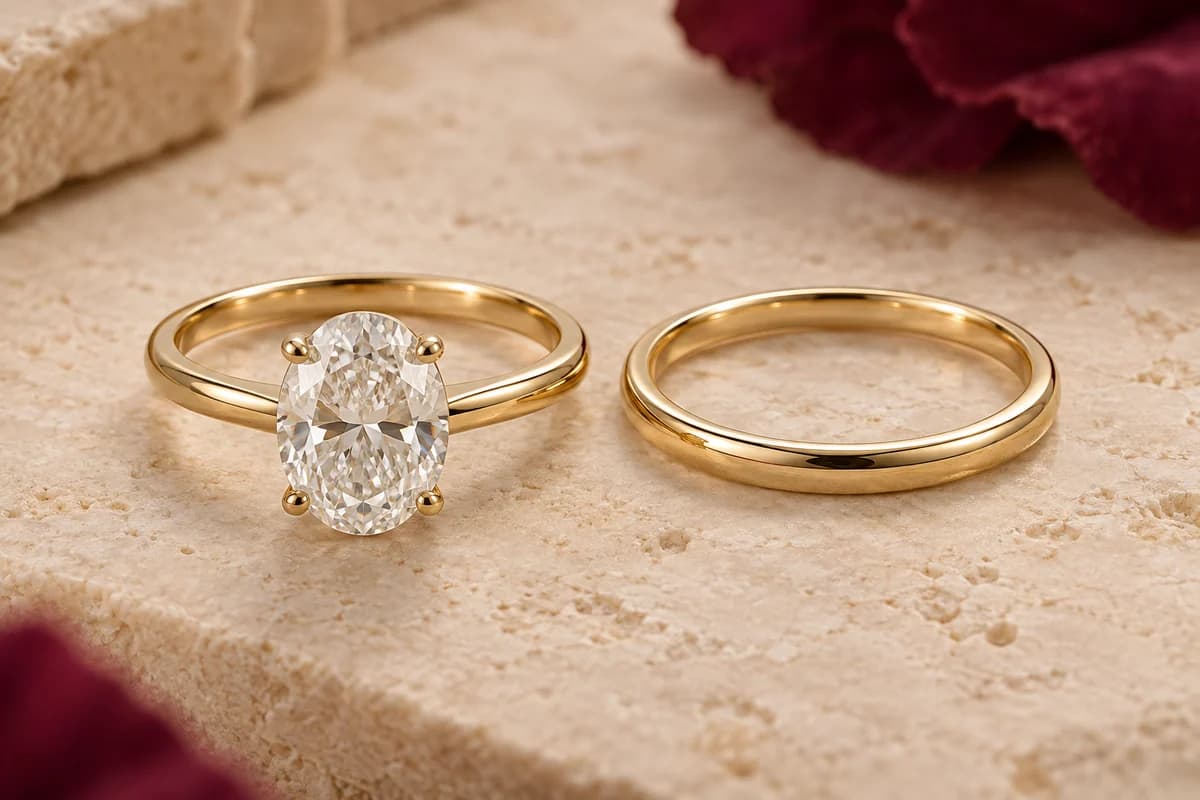
Interactive setting comparison
Compare the relationship—not a generic band by itself
Start with the real engagement-ring outline. A permitted top view, side view, and useful measurements make this exploration more meaningful.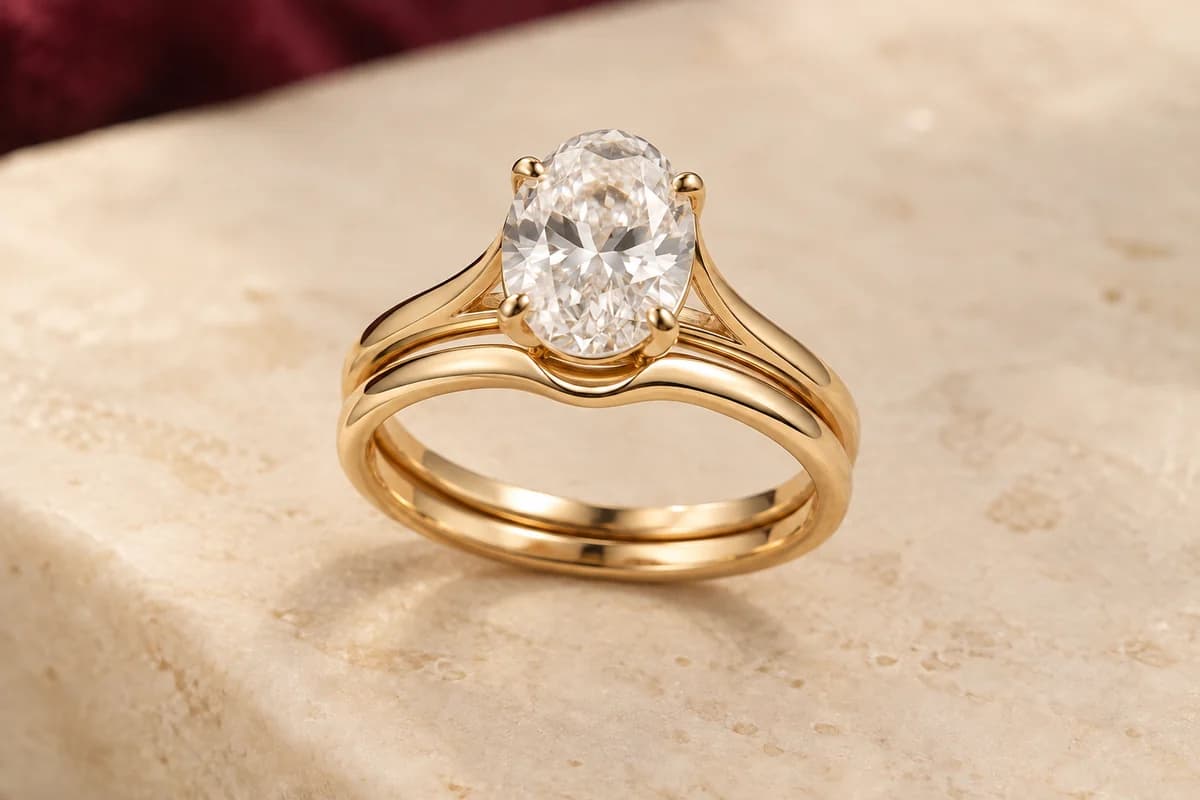
- Close-looking lineThe pair reads as one continuous composition.
- Intentional gapA small space becomes part of the visual rhythm.
- InterlockingA shaped relationship helps the rings register together.
A thoughtful answer before the next step
How do I choose a wedding band that works with my engagement ring?
What matters here
Compare base clearance, desired gap, outline, widths, metal, stone placement, and how both rings feel together; carry a permissioned photo or the actual design reference into the wedding-band brief.
Real ways this can begin
Find the path that feels closest to yours
A wearer may intentionally choose a small visible gap because it keeps both rings distinct and avoids forcing a deep contour.
Keep what you already know, then compare the open choices without starting over.
When the direction feels ready, start a design with these preferences and continue with the next open choice.
Compare the decision in context
Band relationships
This guide helps when you want the band to meet the engagement ring in a deliberate way—flush, contoured, interlocking, or evenly spaced. Use permitted top and side photographs plus real measurements; a front view alone cannot establish fitted geometry.
| Direction | Best fit | Watch | What still needs review |
|---|---|---|---|
| Straight | enough side clearance or a welcomed gap | whether the spacing stays even | Use permitted top and side photographs plus real measurements; a front view alone cannot establish fitted geometry. |
| Curved | a center setting that interrupts a straight band | how the curve looks when worn alone | Use permitted top and side photographs plus real measurements; a front view alone cannot establish fitted geometry. |
| Contour | a distinctive outline the companion should follow | fit around the real engagement ring | Use permitted top and side photographs plus real measurements; a front view alone cannot establish fitted geometry. |
| Interlocking | a pair intended to stay together | whether either ring should work independently | Use permitted top and side photographs plus real measurements; a front view alone cannot establish fitted geometry. |
See how the choice changes
Three ways coordinating two rings as one wearable pair can begin
These examples show how coordinating two rings as one wearable pair may begin. They are planning scenarios, not customer stories or finished-piece promises.
Straight: one useful way to compare
It fits best when the engagement ring has enough side clearance or a welcomed gap. This guide helps when you want the band to meet the engagement ring in a deliberate way—flush, contoured, interlocking, or evenly spaced.
- Direction
- Review whether the spacing stays even. A flush goal may force unnecessary height or curvature when a comfortable intentional gap would better suit the engagement ring.
- Why it helps
- Use permitted top and side photographs plus real measurements; a front view alone cannot establish fitted geometry.
Curved: one useful way to compare
It fits best when the engagement ring has a center setting that interrupts a straight band. Review total width, contact, spinning, cleaning, separate wear, and whether the rings may be soldered later.
- Direction
- Review how the curve looks when worn alone. A photo can begin the design, but the finished companion still needs dimensions and fit review around the real ring.
- Why it helps
- Review total width, contact, spinning, cleaning, separate wear, and whether the rings may be soldered later.
Contour: one useful way to compare
It fits best when the engagement ring has a distinctive outline the companion should follow. Use permitted top and side photographs plus real measurements; a front view alone cannot establish fitted geometry.
- Direction
- Review fit around the real engagement ring. Carry the exact engagement-ring reference and selected relationship into Atelier, then compare a controlled band variation.
- Why it helps
- A photo can begin the design, but the finished companion still needs dimensions and fit review around the real ring.
Questions people ask in plain language
Answers for coordinating two rings as one wearable pair
Open the answer that helps with coordinating two rings as one wearable pair. Each response stays tied to “How do I choose a wedding band that works with my engagement ring?”
Must bands sit flush?
No. This guide helps when you want the band to meet the engagement ring in a deliberate way—flush, contoured, interlocking, or evenly spaced.
Can a straight band work?
When clearance or a gap allows. A flush goal may force unnecessary height or curvature when a comfortable intentional gap would better suit the engagement ring.
Is a photo enough?
Not for final fit. Use permitted top and side photographs plus real measurements; a front view alone cannot establish fitted geometry.
Can metals differ?
Yes. A deliberate contrast can work when color, wear, and maintenance are considered together.
Can stone sizes differ?
Yes. Keep the scale change intentional and review the setting security and shared rhythm.
Carry the useful details forward
Keep the brief clear when you continue
Compare base clearance, desired gap, outline, widths, metal, stone placement, and how both rings feel together; carry a permissioned photo or the actual design reference into the wedding-band brief.
Flush: Minimize space.
Curved: Use a gentle arc.
Contour: Follow the exact outline.
Gap: Keep even separation.
Metal: Match or contrast deliberately.
Stones: Coordinate scale and setting.
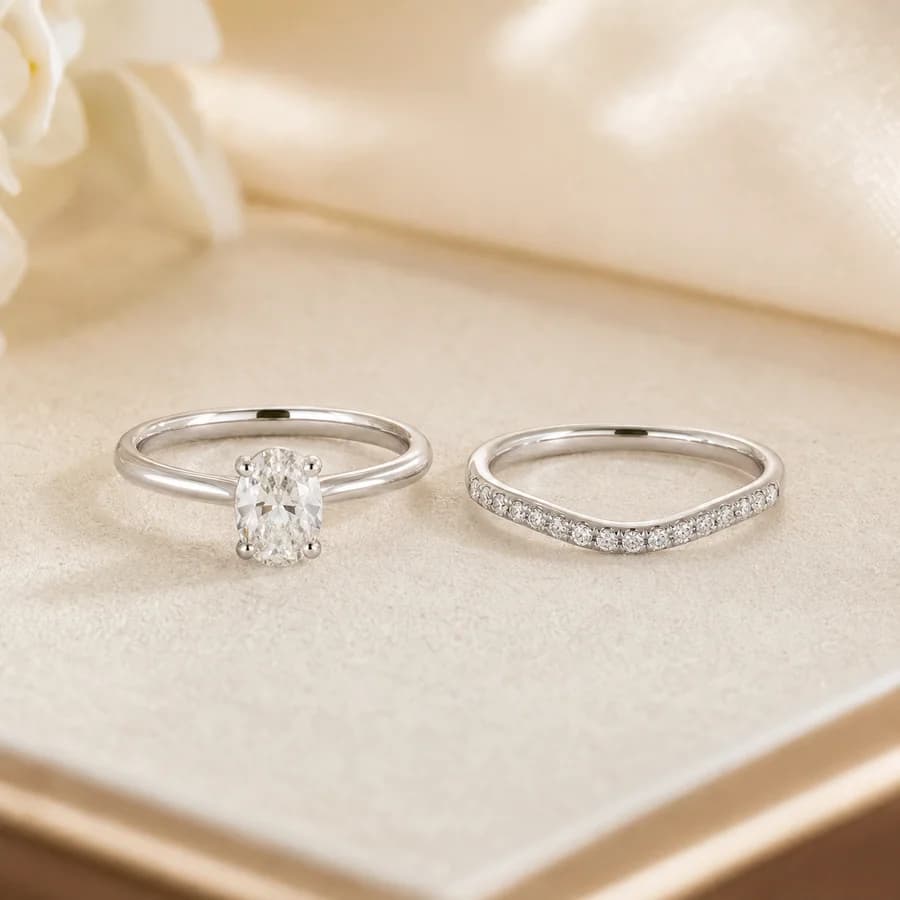
A visual map of this brief
See what stays known—and what remains open
This guide begins with “Match the band to the engagement ring's real outline and your preferred relationship.” The next choices stay grouped, editable, and connected to that same Atelier brief.
- Companion-band shapeBegin with the complete band line. The exact curve must follow the engagement ring rather than a generic template.
- How should the rings meet?Choose the visual relationship. Exact contact points require the real engagement-ring profile and measurements.
Start with what matters on this page
Begin with the engagement ring, then shape the band around it
Choose the companion-band line and how the rings should meet. Reference photos and measurements stay private as you continue.Published customer proof
Real experiences, kept separate from promises
Only approved purchase-linked reviews appear here. An illustrative scene is never presented as a customer, and one person’s experience is never treated as a promise for another piece.See what Leyloon customers have shared
Read recent shop reviews on Etsy, then come back when you are ready to shape your own setting direction.
These reviews reflect individual Leyloon service experiences. Your setting direction and quote request are reviewed on their own.