Look at support, height, and side view
Cathedral vs. non-cathedral settings: compare shoulders, height, and band fit.
Compare how the shoulders rise, how much of the stone is visible from the side, the total height, cleaning access, and wedding-band relationship.
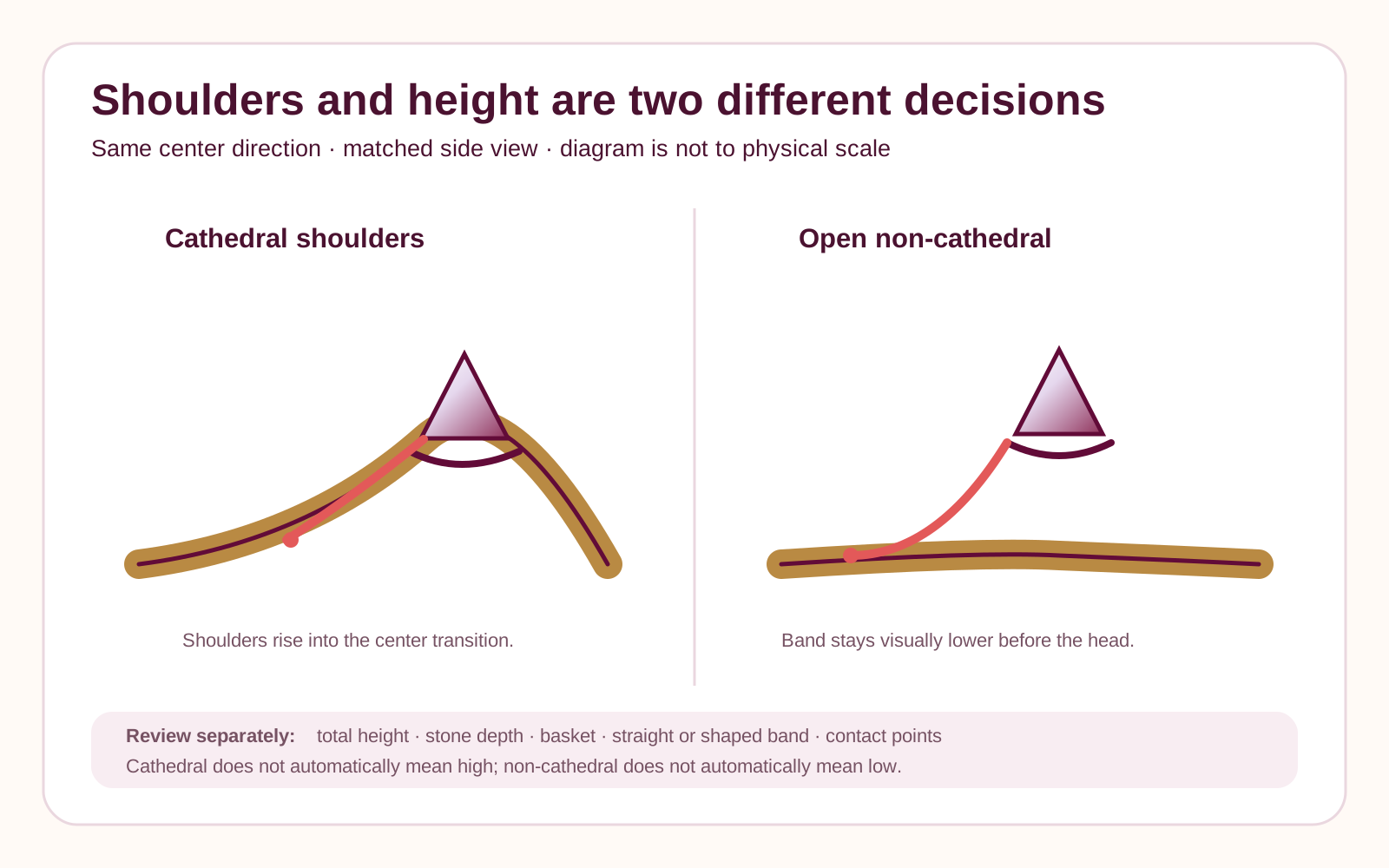
Interactive setting comparison
Separate the shoulder rise from the total ring height
Choose a shoulder direction, then change the viewing question. The center outline stays fixed so one feature does not get confused with the whole profile.- Cathedral shouldersThe shoulders visibly rise toward the center.
- Open non-cathedralThe band stays visually quieter before a separate head or gallery.
- Compare bothHold the center, band width, and metal steady.
A thoughtful answer before the next step
Should I choose a cathedral or non-cathedral ring setting?
What matters here
Compare how the shoulders meet the center, side-view openness, snag concerns, wedding-band relationship, and the stone's scale; neither structure is automatically stronger in every design.
Real ways this can begin
Find the path that feels closest to yours
Cathedral shoulders can create a framed rise toward the center for someone who enjoys visible architecture from the side.
Keep what you already know, then compare the open choices without starting over.
When the direction feels ready, start a design with these preferences and continue with the next open choice.
Compare the decision in context
Setting profiles
This comparison helps when shoulder line, side-view presence, cleaning access, or wedding-band clearance matters as much as the top view. Compare the exact side profile around the same center stone, ring size, band width, and intended wedding-band relationship.
| Direction | Side impression | Review | What still needs review |
|---|---|---|---|
| High cathedral | Dramatic rise | Snagging and band clearance | Compare the exact side profile around the same center stone, ring size, band width, and intended wedding-band relationship. |
| Low cathedral | Soft support line | Gallery access | Compare the exact side profile around the same center stone, ring size, band width, and intended wedding-band relationship. |
| Non-cathedral head | Distinct center mount | Connection strength | Compare the exact side profile around the same center stone, ring size, band width, and intended wedding-band relationship. |
| Integrated low setting | Compact silhouette | Contour-band need | Compare the exact side profile around the same center stone, ring size, band width, and intended wedding-band relationship. |
See how the choice changes
Three ways comparing raised shoulders with an open approach can begin
These examples show how comparing raised shoulders with an open approach may begin. They are planning scenarios, not customer stories or finished-piece promises.
High cathedral: one useful way to compare
From the side, expect a dramatic rise. This comparison helps when shoulder line, side-view presence, cleaning access, or wedding-band clearance matters as much as the top view.
- Direction
- Review snagging and band clearance. Cathedral does not automatically mean high or secure, and non-cathedral does not automatically mean low or delicate.
- Why it helps
- Compare the exact side profile around the same center stone, ring size, band width, and intended wedding-band relationship.
Low cathedral: one useful way to compare
From the side, expect a soft support line. Check height, exposed edges, shoulder contact, gallery openings, cleaning, and how a neighboring band meets the ring.
- Direction
- Review gallery access. The setting label describes one relationship; the full head, gallery, prongs or bezel, and proportions decide the real result.
- Why it helps
- Check height, exposed edges, shoulder contact, gallery openings, cleaning, and how a neighboring band meets the ring.
Non-cathedral head: one useful way to compare
From the side, expect a distinct center mount. Compare the exact side profile around the same center stone, ring size, band width, and intended wedding-band relationship.
- Direction
- Review connection strength. Carry the preferred shoulder line and center height into Atelier, then view it from both the side and top.
- Why it helps
- The setting label describes one relationship; the full head, gallery, prongs or bezel, and proportions decide the real result.
Questions people ask in plain language
Answers for comparing raised shoulders with an open approach
Open the answer that helps with comparing raised shoulders with an open approach. Each response stays tied to “Should I choose a cathedral or non-cathedral ring setting?”
What makes a setting cathedral?
Its shoulders rise toward the center setting. This comparison helps when shoulder line, side-view presence, cleaning access, or wedding-band clearance matters as much as the top view.
Is cathedral always high?
No. The rise and total center height vary. Cathedral does not automatically mean high or secure, and non-cathedral does not automatically mean low or delicate.
Is non-cathedral lower?
Not automatically; inspect the exact side geometry. Check height, exposed edges, shoulder contact, gallery openings, cleaning, and how a neighboring band meets the ring.
Which is more secure?
Security depends on the complete construction, not the label alone.
Can a straight band sit flush?
Only if the gallery and shoulders leave clearance. Carry the preferred shoulder line and center height into Atelier, then view it from both the side and top.
Carry the useful details forward
Keep the brief clear when you continue
Compare how the shoulders meet the center, side-view openness, snag concerns, wedding-band relationship, and the stone's scale; neither structure is automatically stronger in every design.
Cathedral rise: Choose subtle, sweeping, or architectural shoulders.
Non-cathedral: Keep the band line lower beside the center.
Center height: Choose low, balanced, or elevated direction.
Gallery: Shape the space beneath the center.
Band pairing: Plan flush, contour, or gap.
Side detail: Keep plain, pavé, hidden, or engraved.
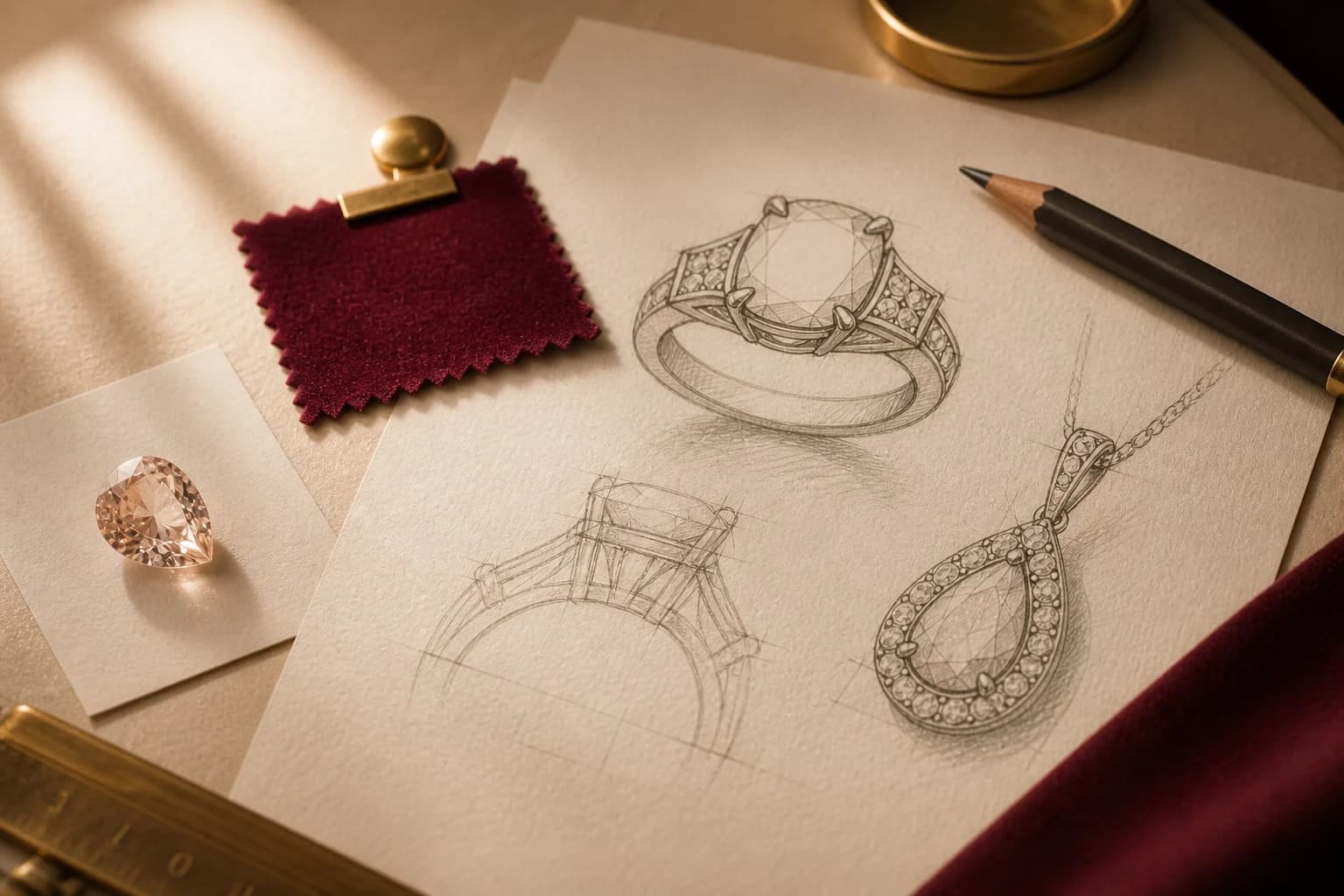
A visual map of this brief
See what stays known—and what remains open
This guide begins with “Cathedral shoulders change the ring's side view and center transition.” The next choices stay grouped, editable, and connected to that same Atelier brief.
- Shoulder directionChoose how the band should approach the center. This does not decide total height by itself.
- Ring heightChoose the side-view height you want to compare. Stone depth and basket construction can still change what is practical.
Start with what matters on this page
Choose the shoulder relationship before the stone details
Start with cathedral or non-cathedral shoulders, then compare height and wedding-band clearance. The center stone, metal, and decoration can remain open.Published customer proof
Real experiences, kept separate from promises
Only approved purchase-linked reviews appear here. An illustrative scene is never presented as a customer, and one person’s experience is never treated as a promise for another piece.See what Leyloon customers have shared
Read recent shop reviews on Etsy, then come back when you are ready to shape your own setting direction.
These reviews reflect individual Leyloon service experiences. Your setting direction and quote request are reviewed on their own.