A small space can be intentional
Choose a flush or softly spaced stack by looking at the rings from every angle.
Treat the space between rings as a design and wear choice. A close-looking pair, a soft intentional gap, and an interlocking direction each need the real side profile before fit can be confirmed.
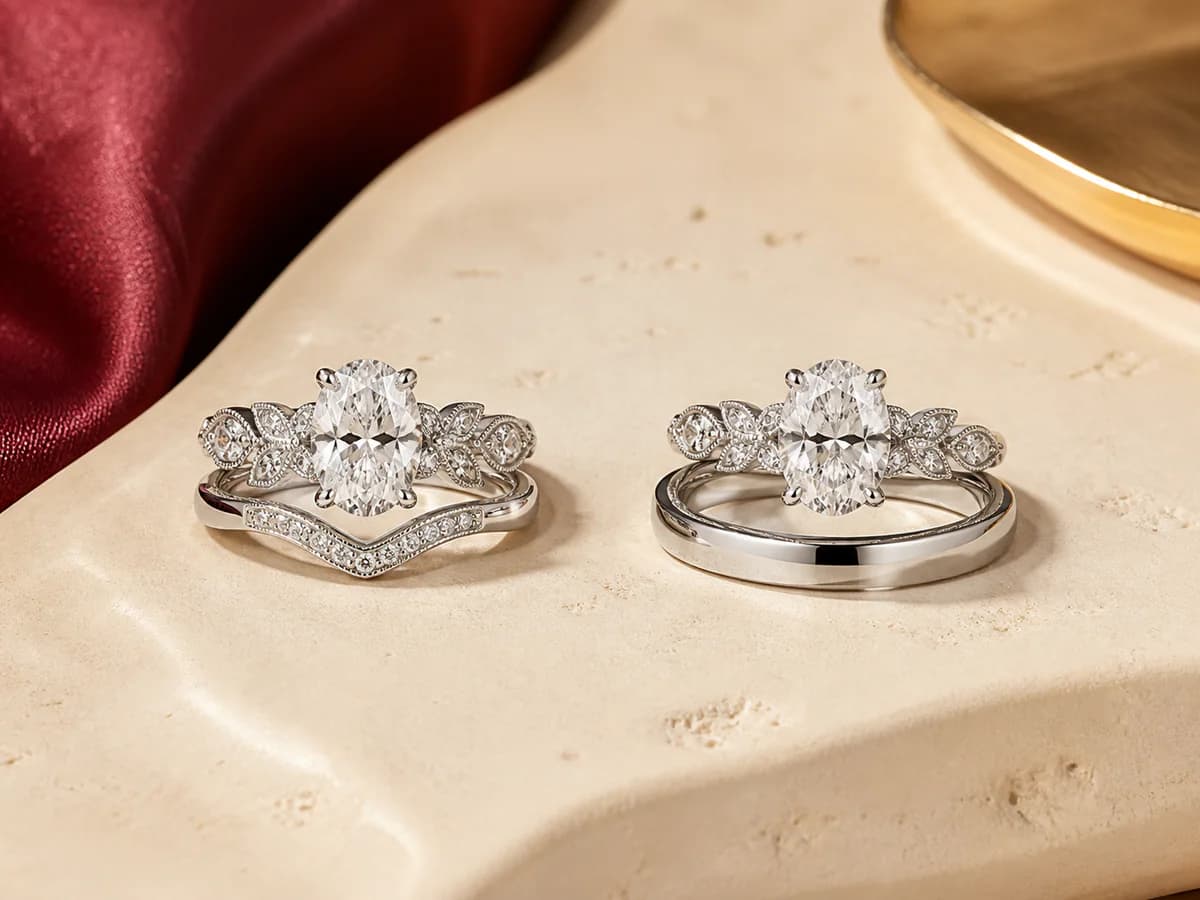
Start with the space you want to see
Choose the ring relationship before anyone promises a fit.
A soft gap can frame both rings. A close-looking pair can create one calmer line. An interlocking direction may hold a more registered relationship. Keep the exact contact open for the real ring.Space can be part of the design
Should a wedding-ring stack sit flush or keep a gap?
A close-looking stack can feel quiet and connected. A soft intentional gap can keep both profiles visible and avoid forcing one ring into the other’s geometry.
Look at the pair from the top and side. The basket, contour, movement, combined fit, and contact points matter more than the word flush.
Study the side profile
The center setting and gallery often decide whether a straight band can sit close.
Choose the visible relationship
Close-looking, softly spaced, and interlocking directions each create a different composition.
Review movement and contact
Two rings may shift, touch, or wear differently depending on their exact construction and daily use.
Compare the relationship, not a label
What changes between close, spaced, and interlocking stacks
Use the real engagement ring as the fixed reference.
| What changes | Close-looking | Soft gap | Interlocking |
|---|---|---|---|
| Visible line | Quiet and connected | Both profiles remain distinct | A registered paired shape |
| Geometry | Needs clearance | Allows deliberate space | Needs coordinated shape |
| Movement | May still shift | Can move independently | Relationship may be more fixed |
| Review focus | Contact and basket | Spacing and balance | Alignment and solo wear |
Flush-looking is not automatically safer or more comfortable, and a gap is not evidence of a mismatch.
Two ways this choice can begin
Keep the useful clue. Leave the exact answer open.
Illustrative planning example—not customer proof
A low center setting leaves a natural space
The wearer likes the engagement ring exactly as it is and does not want to raise it only to remove a gap.
- Keep
- The original profile and a soft intentional space.
- Leave open
- Final band line and contact points.
Illustrative planning example—not customer proof
A close line matters most
The wearer wants the pair to read as one composition from the top.
- Keep
- The close-looking priority and exact ring reference.
- Leave open
- Whether a contour or interlocking direction is most practical.
Questions worth asking
Clear answers without rushing the fit
Is a gap between rings a problem?
Not by itself. It can come from the setting geometry or be an intentional part of the design.
Does flush-looking mean the rings touch everywhere?
No. A close visual line does not prove uniform contact or movement.
Can a contour band remove every gap?
A contour can follow more of the outline, but the exact ring still determines the final space and contact.
Should the rings be soldered together?
That is a separate service and wear decision. It should be discussed for the exact rings rather than assumed from the desired look.
A calm five-point check
Before you carry this direction into Atelier
Look at both the top and side views of the ring pair.
Name whether a visible line of space feels welcome or distracting.
Keep movement and contact questions separate from appearance.
Review combined width and fit on the intended finger.
Let the written quote describe the reviewed band direction and available options.
Sources and boundaries
What supports this guidance
Independent sources support technical and consumer-information boundaries. Leyloon links explain Leyloon’s own design and quote path.
- GIA: Guide to ring settingsSetting structure and side-view vocabulary for comparing how rings may meet.Accessed 2026-08-27 · Open independent source ↗
- GIA: Guide to stacking ringsPractical context for building a ring stack while keeping fit and wear in view.Accessed 2026-08-27 · Open independent source ↗
- Design a matching band from a permitted ring photoBegin with a customer-owned or otherwise permitted reference while keeping exact fit open for review.Open Leyloon guide →
Published customer proof
Real experiences, kept separate from promises
Only approved purchase-linked reviews appear here. An illustrative scene is never presented as a customer, and one person’s experience is never treated as a promise for another piece.See what Leyloon customers have shared
Read recent shop reviews on Etsy, then come back when you are ready to shape your own setting direction.
These reviews reflect individual Leyloon service experiences. Your setting direction and quote request are reviewed on their own.