Begin with the choice that matters most
Shape an engagement-ring direction without solving every detail at once.
Begin with the engagement-ring decision you genuinely know. Keep size, stone, setting, budget, and timing open until you choose or review them.
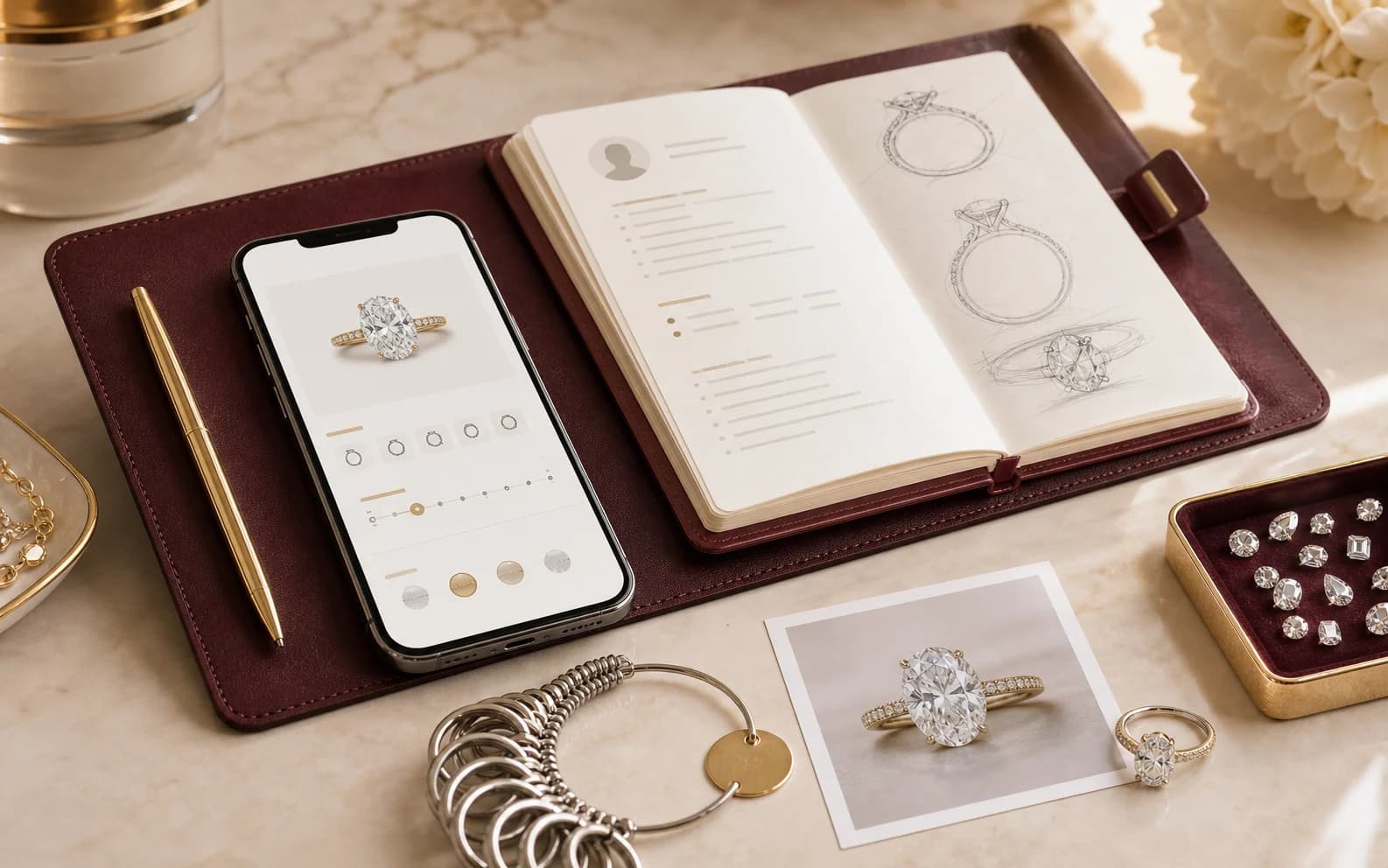
A clear first engagement-ring decision
Begin with the part you know and leave every other answer open.
The ring is known. Style, size, stone, setting, metal, budget, and timing are not assumed. Choose one honest starting point, then add only the details you want to keep.One known fact can open the right path
- KeepCarry the fact you trust.
- Leave openDo not turn guesses into answers.
- ContinueBegin with the first question you left open.
Details you may already know
Choose only what you already know.
Leave any detail blank when you are unsure. You can choose it later.A calm map for a meaningful purchase
What should I decide first when buying an engagement ring?
Begin with the person: what they enjoy, how they use their hands, and what kind of presence feels natural on them. Then choose the one decision that will lead the ring—style, an exact stone, a setting relationship, or a comfortable overall budget direction.
You do not need every answer at once. Compare exact information where it exists, keep estimates labelled as estimates, and let Leyloon review the preferred direction before a written quote or purchase decision.
- Person
- Taste, routine, meaning, and comfort
- Ring
- Silhouette, profile, setting, and metal
- Stone
- Identity, appearance, dimensions, and report when supplied
- Choice
- A reviewed request and written quote before buying
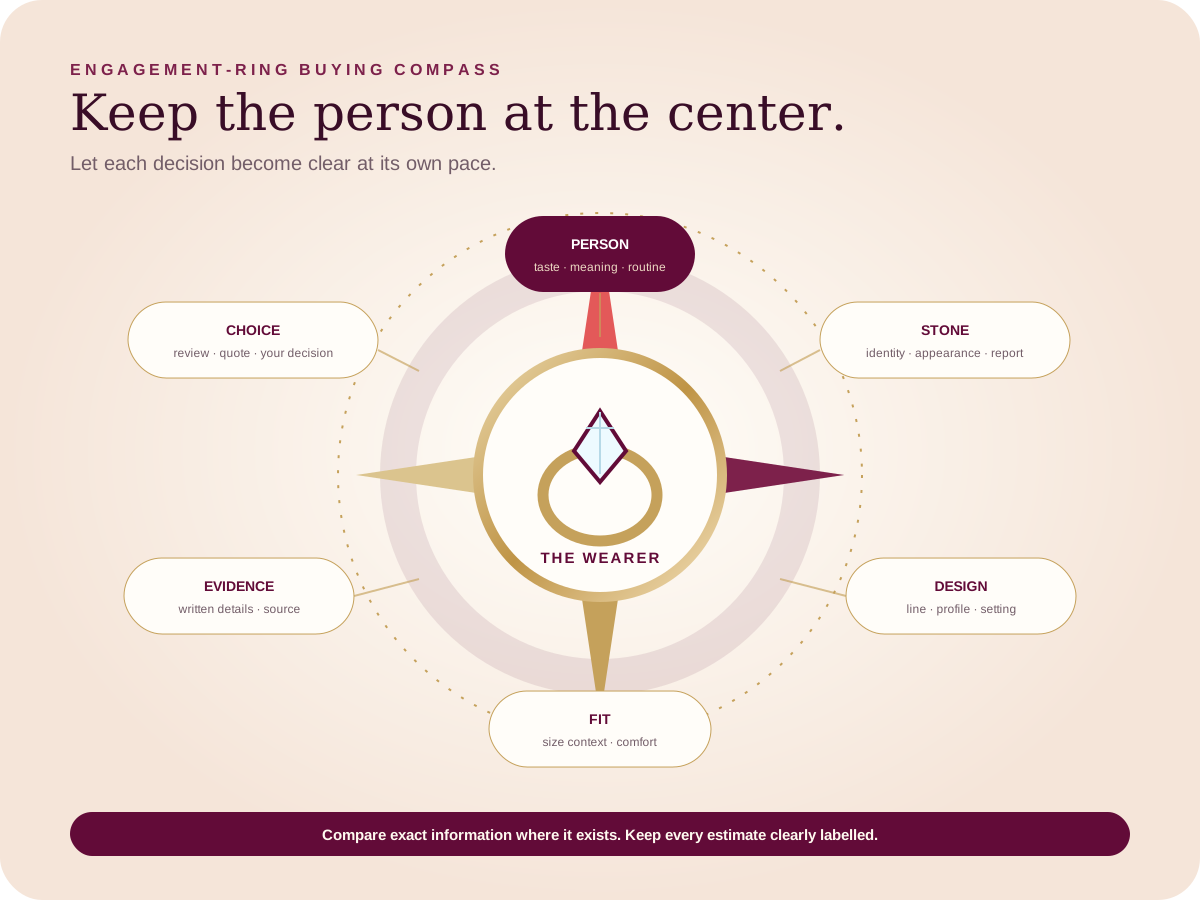
Pick a useful lead
Compare four ways into the same engagement-ring decision
Start where the evidence is strongest. The other areas can remain visible without becoming guesses.
| Lead with | Works well when | Keep beside it | Do not assume |
|---|---|---|---|
| The wearer | Their taste and routine are clearer than the ring. | Observed preferences and comfort clues. | One clue answers every design question. |
| The stone | An exact stone or clear shape and appearance direction leads. | The report or record and real dimensions when available. | Carat alone tells the whole visual size. |
| The design | A silhouette, profile, setting, or reference is the clearest part. | What you admire and what should change. | A preview proves feasibility or final proportions. |
| The budget direction | You want to protect the overall comfort of the purchase. | Ranked visible priorities and flexible choices. | A generic formula should decide what you spend. |
Exact price belongs to the reviewed stone, materials, size, construction, and included choices—not to a generic example.
Two human ways this decision can begin
See what to keep—and what can stay open
Illustrative planning example—not customer proof
The stone is open, but the wearer is clear
They prefer quiet lines, work with their hands, and rarely wear tall jewelry.
- Keep in the brief
- Keep a close-to-the-hand, calm direction and a clear comfort priority.
- Leave open
- Compare exact stones and setting structures after the visual direction feels right.
Illustrative planning example—not customer proof
An exact stone leads the ring
You already have a stone record and love its elongated outline.
- Keep in the brief
- Carry the exact stone identity and dimensions with the preferred silhouette.
- Leave open
- Review protection, profile, band relationship, fit, and price around that stone.
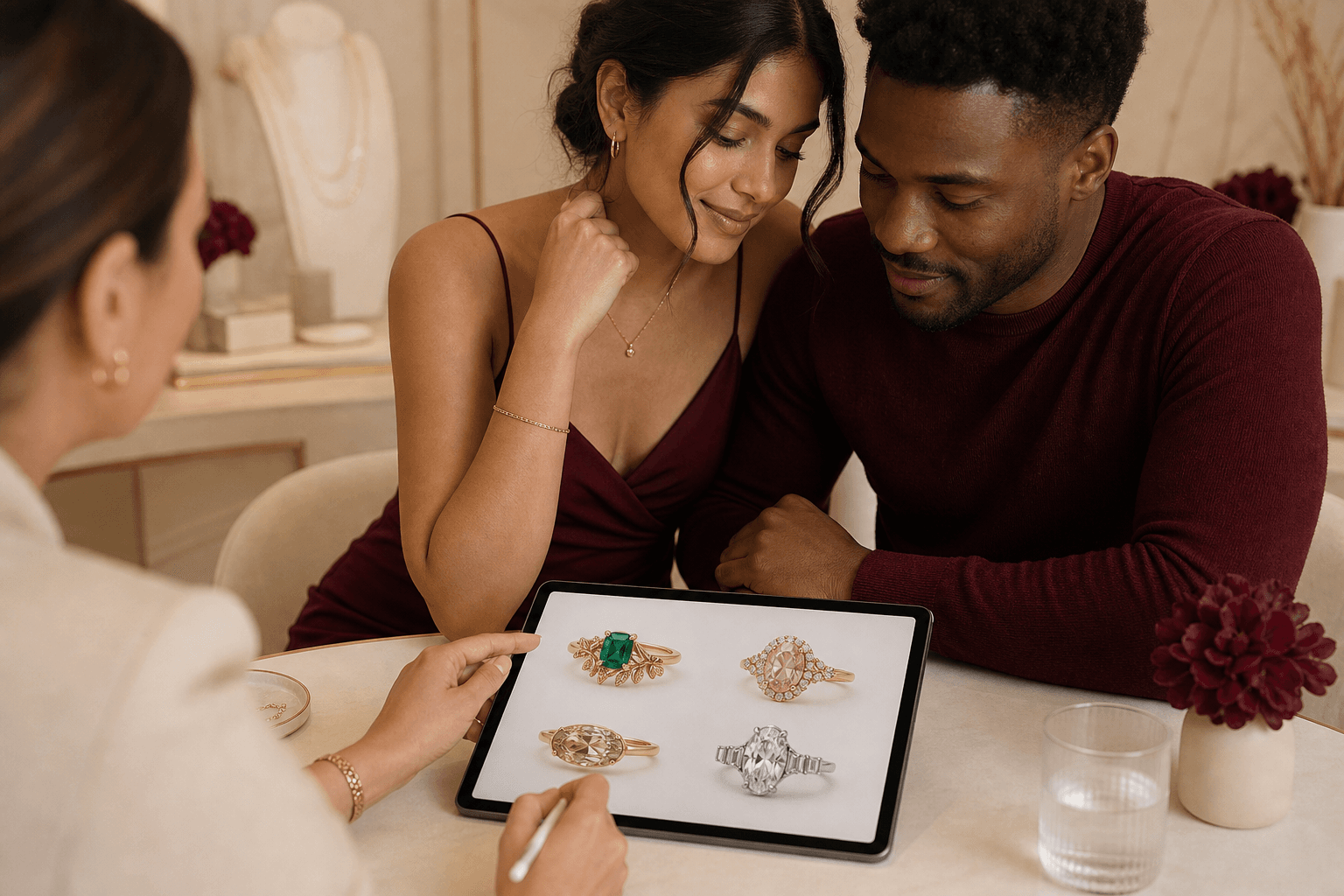
Questions worth asking before you continue
Clear answers, without pushing you to decide too soon
Is there one correct order for buying an engagement ring?
No. Start with the clearest fact, keep the unknowns visible, and avoid letting one early choice silently decide everything else.
Should I choose the stone before the ring design?
Either can lead. An exact stone gives real dimensions to design around; a design-first path can keep stone criteria open until the silhouette and priorities are clearer.
How do I compare two diamonds fairly?
Use the same priorities and look at exact identity, grading information when supplied, dimensions, appearance, and how each stone works with the intended ring—not one number alone.
When does the price become clear?
After a direction is specific enough for Leyloon to review the exact stone or stone criteria, material, size, construction, and included work. The written quote is yours to consider before buying.
A calm five-point check
Before you carry this direction into Atelier
Write one sentence about the wearer and daily life.
Choose the decision that should lead the ring.
Separate exact facts from preferences and estimates.
Keep stone evidence and fit notes with the design.
Review the written quote before deciding to buy.
What happens after this page
Your direction remains yours at every step
A visual preview is not a finished specification, approval, price, or purchase. These five states keep the creative choice and the making decision clear.
- Understand the wearer
Begin with taste, routine, comfort, and the meaning of the ring.
- Choose a lead
Let the person, stone, design, or budget direction guide the first comparison.
- See and refine
Compare a small number of controlled design previews.
- Review exact details
Leyloon reviews the stone, fit, material, structure, and other open questions.
- Receive a quote and choose
Consider the written quote, request a revision if needed, or choose whether to buy.
Sources and boundaries
What supports this guidance
Independent sources support technical or consumer-information boundaries. Leyloon sources explain Leyloon’s own design and quote path.
- GIA · 10 tips for buying an engagement ringIndependent education on the 4Cs, shape, lighting, metal, setting, ring size, seller choice, and grading reports.Accessed August 26, 2026 · Open independent source ↗
- FTC Consumer Advice · buying gemstones, diamonds, and pearlsConsumer guidance on seller research, stone identity, treatments, grading information, written details, weight, and dimensions.Accessed August 26, 2026 · Open independent source ↗
- Leyloon engagement-ring style quizThe first-party route for turning visual preferences into an editable Atelier direction.Open Leyloon guide →
Published customer proof
Real experiences, kept separate from promises
Only approved purchase-linked reviews appear here. An illustrative scene is never presented as a customer, and one person’s experience is never treated as a promise for another piece.See what Leyloon customers have shared
Read recent shop reviews on Etsy, then come back when you are ready to shape your own custom jewelry direction.
These reviews reflect individual Leyloon service experiences. Your custom jewelry direction and quote request are reviewed on their own.