Keep the piece close
Good jewelry care begins with knowing the piece, the stone, and the way you wear it.
Start with the materials and care guidance for the exact piece. Small, consistent habits can help you notice when Leyloon should review cleaning, wear, or repair questions.
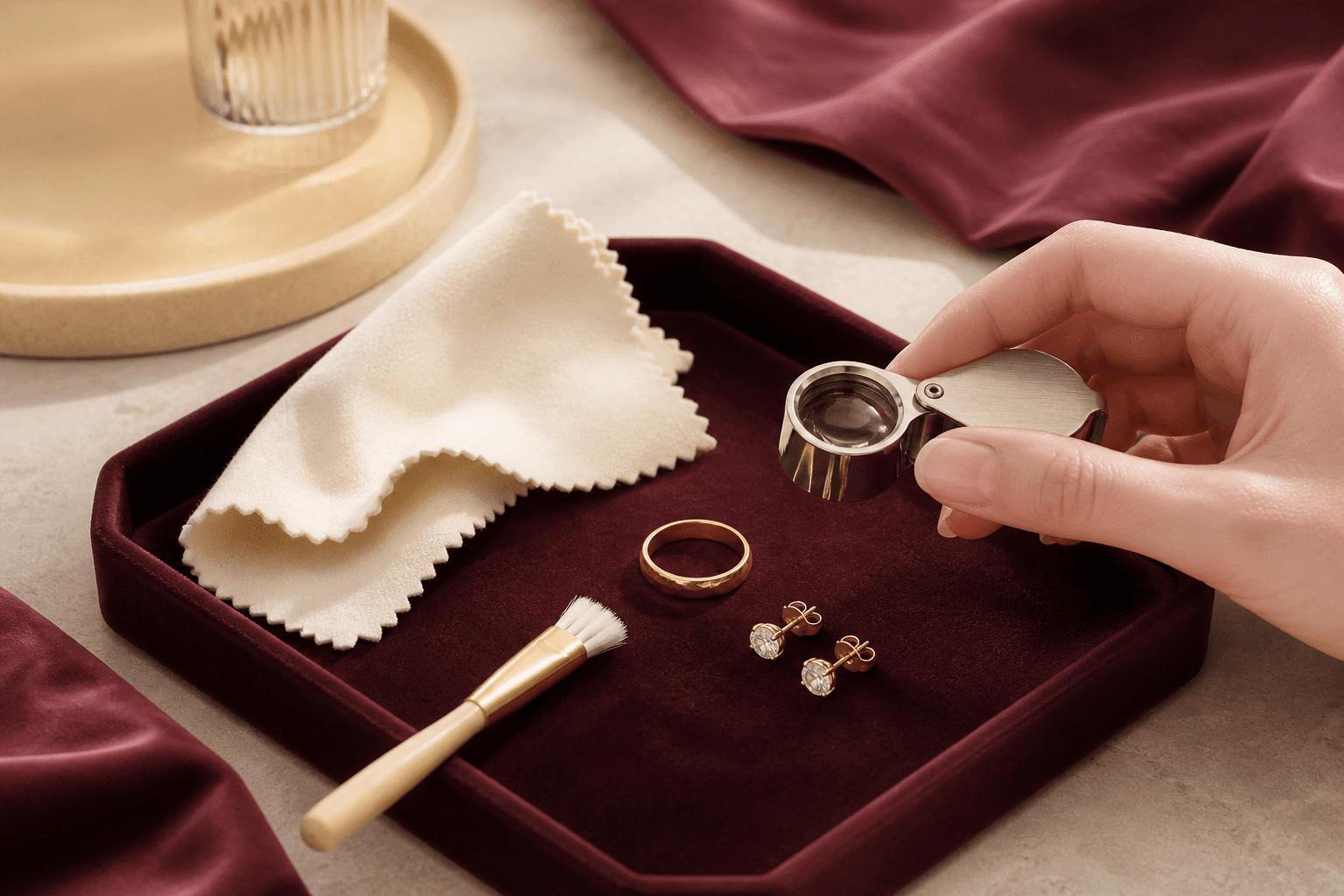
Fit, wear & care—considered together
A clearer decision, with the important context kept beside it
Begin with what the piece is made of and what changed. The safest care path can be cleaning, storage, inspection, or simply pausing wear.
Use this page when
- You know some part of the metal, stone, treatment, setting, or history.
- You need to choose between home care and professional inspection.
Pause and choose another path when
- A stone is loose, a clasp is failing, metal is bent, or damage may worsen with handling.
- You want one cleaning recipe for an unknown or mixed-material piece.
Where this choice often matters
- Routine care for a known everyday piece.
- Checking an heirloom, gift, or rarely worn piece before wearing it again.
Compare the details
Care begins with identification and condition
Start with the piece’s known material and current condition; uncertainty or damage needs identification or inspection before cleaning.
| State | Do now | Avoid | Destination |
|---|---|---|---|
| Known and secure | Use sourced material-specific care | Universal cleaner | Care guide |
| Unknown material/treatment | Pause and identify | Heat, chemicals, ultrasonic | Message/review |
| Loose or damaged | Stop wearing and contain safely | Testing or bending | Inspection |
| Clean but storing | Separate, dry, protected storage | Tangling and abrasion | Storage guidance |
Keep your direction organised
The complete choice groups for this decision
Begin with what the piece is made of and what changed. The safest care path can be cleaning, storage, inspection, or simply pausing wear. The groups below keep related choices together, and every selection stays editable when you continue.
What do you need today?
Choose one direction.
- Clean a known secure pieceUse exact material guidance.
- Store it safelySeparate and protect surfaces.
- Check a changeStop unnecessary handling.
- Identify unknown materialsDo not guess from appearance.
What do you know?
Keep every direction that fits.
- Metal and finishSolid, plated, alloy, or unknown.
- Stone identityInclude treatment if supplied.
- Setting or assemblyProngs, bezel, glue, string, or other.
- Age and previous repairKeep uncertainty visible.
Questions worth asking
Open the concern that sounds like yours
Choose the question that sounds like yours. Each answer keeps the next step clear without closing decisions that still need review.
Can I clean all fine jewelry with mild soap?
Not every stone, treatment, adhesive, plating, or antique construction has the same care needs.
How do I know if it needs repair?
Movement, snagging, a changed sound, bent parts, loose stones, or a failing closure are reasons to stop and seek inspection.
Can Leyloon identify it from a photo?
A photo can show the concern, but exact identity or repair scope may require physical review.
A private first step
Let Leyloon review the exact piece with you
A private message is the clearest place to begin when a photo, history, condition, or personal measurement matters. Your choices stay editable as you continue.
- Clear permitted photos of the whole piece and concernKeep it open if you are still deciding
- Known materials, supplied care, what changed, and whenA useful next question
A visual map of this brief
See what stays known—and what remains open
This guide begins with “Care starts with the exact piece and the way you wear it.” The next choices stay grouped, editable, and connected to that same Atelier brief.
- Piece to designChoose one piece. The following questions adapt inside Atelier.
- Laboratory-grown gemstoneChoose the gemstone first. The color choices will adapt to an exact named choice; choose another gemstone to leave its type open for Atelier.
- Color directionThese choices follow the gemstone above. Exact shade still belongs to the stone you review.
- Stone shapeChoose the complete outline family you want to start from.
Start with what matters on this page
Choose the stone before its color and setting
Start with the piece and gemstone choice. The later choices should follow that decision, not compete with it.Published customer proof
Real experiences, kept separate from promises
Only approved purchase-linked reviews appear here. An illustrative scene is never presented as a customer, and one person’s experience is never treated as a promise for another piece.See what Leyloon customers have shared
Read recent shop reviews on Etsy, then come back when you are ready to shape your own jewelry question.
These reviews reflect individual Leyloon service experiences. Your jewelry question and quote request are reviewed on their own.