Choose the diamond for the ring you want to wear
Start with shape and presence, then compare exact stones rather than buying from a general example.
Measurements, grading information, media, price, availability, and the planned setting make the choice useful. The stone and ring should be reviewed together.
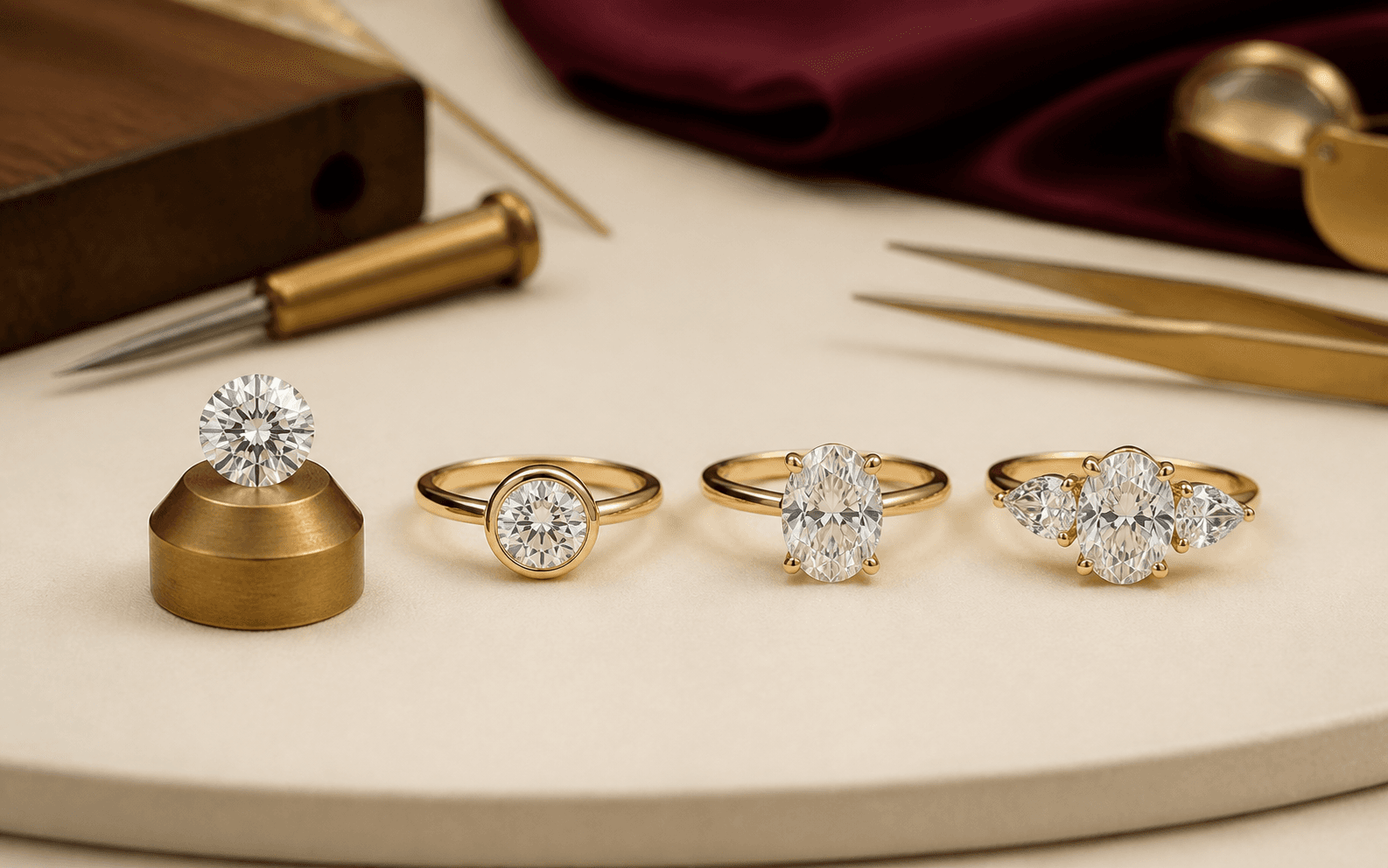
Custom-ring starting point
Choose the outline before comparing unrelated rings
Keep laboratory-grown diamond origin and the custom-ring goal steady. Changing one outline at a time makes the next design directions easier to read.- Known from this guide
- Laboratory-grown diamond · custom ring
- Still yours to choose
- Exact stone, piece details, and every unanswered Atelier step
Your choice stays editable before you open Atelier.
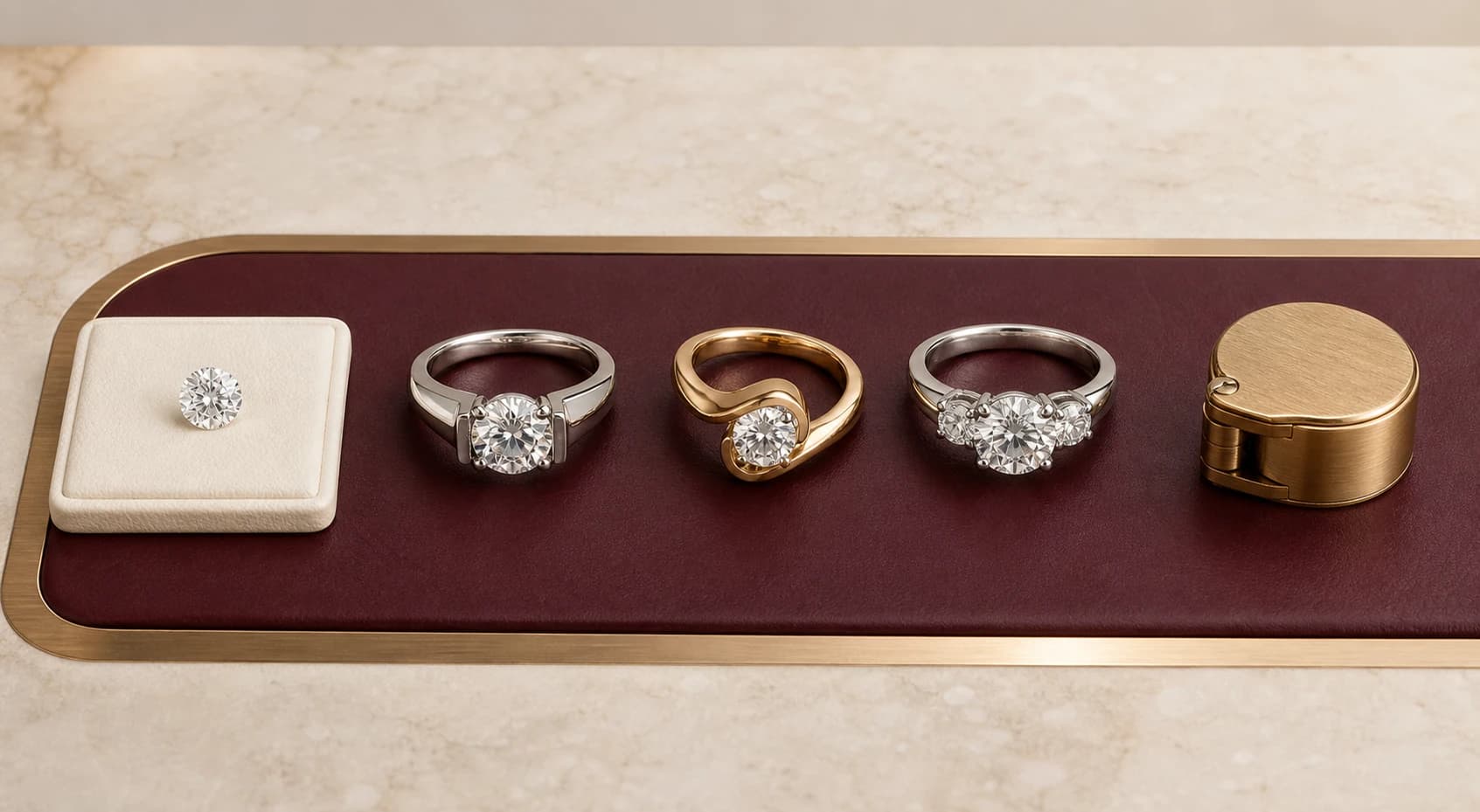
Look: Compare the same outline and scale before judging color, sparkle, or presence.
A clear answer for this stone choice
Choose an exact laboratory-grown diamond or a flexible diamond brief for a custom engagement ring.
Choose the diamond and the ring together. Shape, face-up dimensions, light pattern, color, clarity, and the supplied report matter, but their value to you depends on the setting, profile, metal, fit, and total design direction.
If a current stone already feels right, carry its public catalog identity into Atelier. If not, save a clear priority instead; Leyloon can review viable stones and place price, options, and status on the same quote request once the design direction is ready.
Who this can help
See whether this feels like your decision
- A proposal shopper with a ring idea but no center stone
- A client who found a current diamond and wants a custom setting around it
- A couple balancing visible size, report details, and the complete ring budget
Ways it may become part of your story
Meaning does not have to follow one occasion
- Surprise proposal
- Shared engagement-ring design
- Milestone ring upgrade
Birthstone contextDiamond is April's birthstone, and it can also mark a proposal, anniversary, personal milestone, or design chosen simply because it feels right.
One useful decision at a time
What should lead the diamond search?
Use what should lead the diamond search? to narrow “Choose an exact laboratory-grown diamond or a flexible diamond brief for a custom engagement ring.”. When one feels right, choose it in the selector on this page and carry that exact starting point into Atelier.
- Shape and finger coverageBegin with the outline and real millimeter spread.
- Light and movementCompare stones under consistent media conditions.
- Color beside the metalKeep the planned metal and side stones in view.
- Report details in balanceUse grades as evidence rather than trophies.
- Fit with the settingLet profile, edge protection, and band pairing lead.
Compare without flattening the details
Stone first or design first?
| Starting point | It helps when | Next evidence |
|---|---|---|
| Exact current diamond | You already love a documented stone | Confirm availability and setting geometry |
| Shape direction | The outline matters more than one listing | Compare several current dimensions |
| Finished-ring brief | Profile and style are already clear | Shortlist stones against the design |
| Open expert review | Several tradeoffs still feel equal | State must-haves and flexible points |
An exact catalog stone can be identified by its public reference, while personal notes and uploads stay private.
Questions worth asking before you decide
Open the question that is already on your mind
Should I buy the stone before designing the setting?
Either order can work; an exact stone helps engineering, while a strong setting brief can narrow the useful stone search.
Is carat the best way to compare size?
Carat is weight. Compare length, width, shape, proportions, and the finished setting too.
Can a report choose the prettiest diamond for me?
A report organizes evidence; it does not replace comparable media, movement, and personal preference.
From a direction to a piece you can approve
Know what happens after the first design
For “Choose an exact laboratory-grown diamond or a flexible diamond brief for a custom engagement ring.”, a design preview is the beginning, not an automatic production promise. Leyloon reviews the stone, fit, materials, price, and making details with you before you choose whether to buy.
- Design reviewThe review begins with the selected diamond priority and the ring details that could change it.
- Exact-stone reviewAn exact stone is checked through its current record, available media, measurements, and supplied documentation.
- Quote requestThe submitted design becomes one quote request where Leyloon adds available options, price, and status.
- Your approval choiceAny offered stone or pre-shipment media approval stays attached to the request rather than an informal promise.
- Requests & ordersThe customer can return to Requests & orders to see the request, messages, and resulting order state.
Continue without starting over
Atelier keeps what you already know
The details you have already chosen for “Choose an exact laboratory-grown diamond or a flexible diamond brief for a custom engagement ring.” remain selected and editable. You continue from the next relevant choice, without having to repeat the beginning.
Private details stay private. Any notes, personal measurements, uploaded references, or exact-stone documents used to refine “Choose an exact laboratory-grown diamond or a flexible diamond brief for a custom engagement ring.” stay with your design request and are not placed in a shareable web address.
- Piece
- Engagement Ring
- stone category
- Lab Grown
- stone
- Lab Diamond
- Next step
- Your next unanswered choice
A visual map of this brief
See what stays known—and what remains open
This guide begins with “Choose the diamond and ring as one composition.” The next choices stay grouped, editable, and connected to that same Atelier brief.
- Starting stone categoryChoose the broad origin or material direction first. The exact stone and color choices below will follow it.
- Exact stone typeChoose the stone itself before color. If you are comparing, keep this open with “Not sure.”
- Color directionNow choose the visible color family. The exact stone, lighting, and supplied record still decide what you will see.
- What should lead the comparison?This helps Leyloon understand your priority without turning it into a stone grade, size, or budget answer.
Start with what matters on this page
Keep the laboratory-grown diamond, then choose what should lead the ring
Keep the laboratory-grown diamond selected before color. Shape, size, and your private comparison priority remain editable when Atelier continues.Already carried from this page
Published customer proof
Real experiences, kept separate from promises
Only approved purchase-linked reviews appear here. An illustrative scene is never presented as a customer, and one person’s experience is never treated as a promise for another piece.See what Leyloon customers have shared
Read recent shop reviews on Etsy, then come back when you are ready to shape your own stone-led jewelry direction.
These reviews reflect individual Leyloon service experiences. Your stone-led jewelry direction and quote request are reviewed on their own.