Choose the outline you want to see every day
Diamond shape changes the ring's character, finger coverage, setting relationship, and side view.
Bring the shape into the wearer's life: their visual taste, daily routine, ring profile, and wedding-band relationship should lead the shortlist.
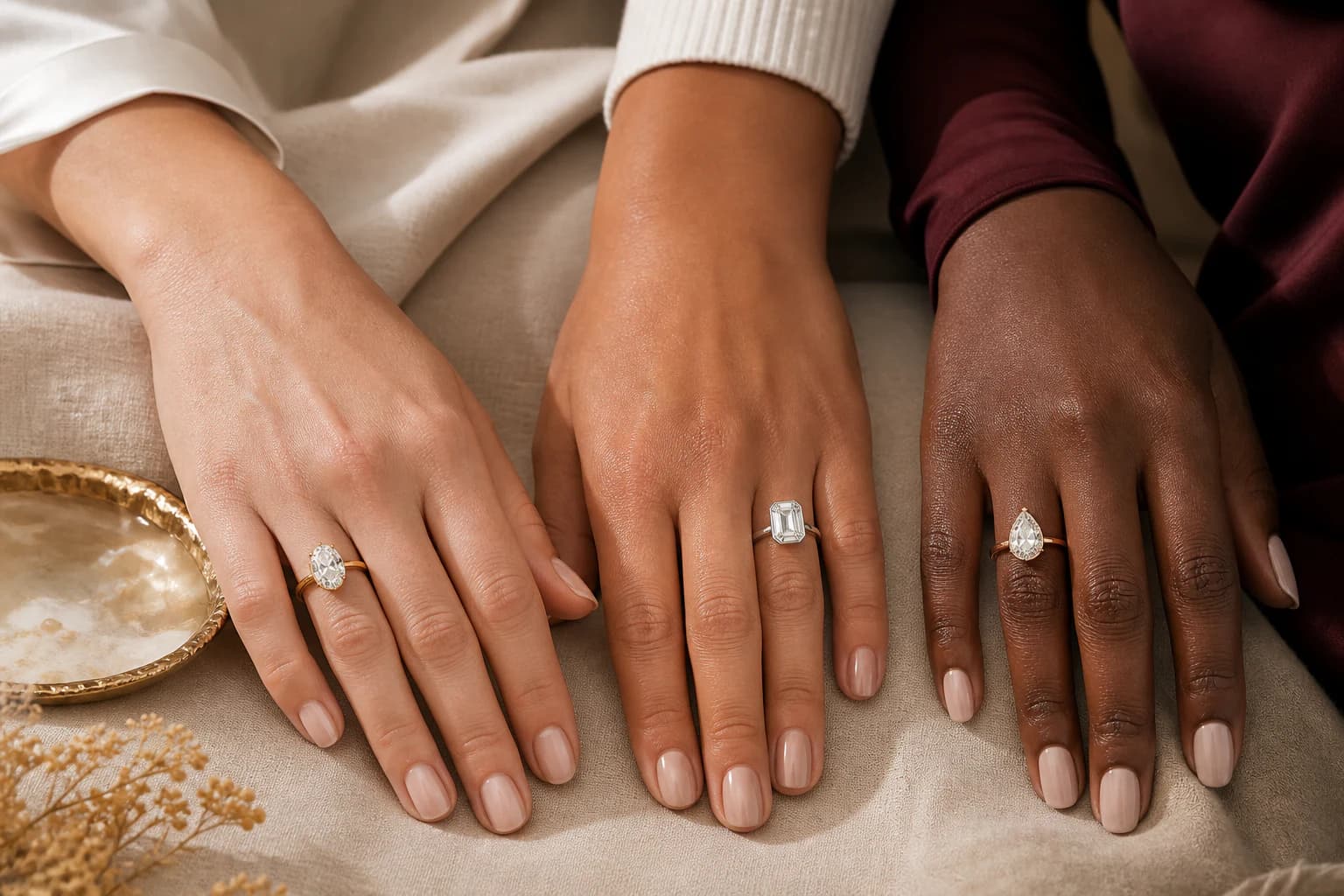
Shape the ring, not only the stone
Let the engagement-ring relationship guide the outline.
An outline lives inside a setting, on a hand, and sometimes beside a future band. Choose the relationship that matters first, then confirm the engagement-ring piece before you continue.A preview gives us a place to begin. Leyloon reviews the fit and making details with you before any quote or making decision.
Leyloon reviews the real request, references, stone needs, and open questions for feasibility.
When the direction is clear enough, request a written quote for the reviewed options.
You choose whether to approve or buy. Leyloon makes the piece only after the applicable decisions.
Choose the shape in the life of the ring
How do I choose a diamond shape for an engagement ring?
Choose shape through the wearer and the whole ring, not through a popularity list. Notice the outlines they return to, how much visual movement they enjoy, how they use their hands, and whether the engagement ring should sit with a wedding band.
Shortlist two shape directions, place each in the same ring context, and compare only the differences that matter. Keep exact dimensions, stone identity, availability, price, and structural decisions open until you select a real stone and Leyloon reviews the design.
- Wearer
- The outlines and visual energy they already enjoy
- Daily life
- Hands-on work, gloves, snag concerns, and preferred presence
- Ring design
- Profile, setting, side view, and metal relationship
- Band pairing
- Whether a straight, curved, contour, or open relationship matters
Put the same person in every comparison
Let ring context—not a generic ranking—narrow the shape
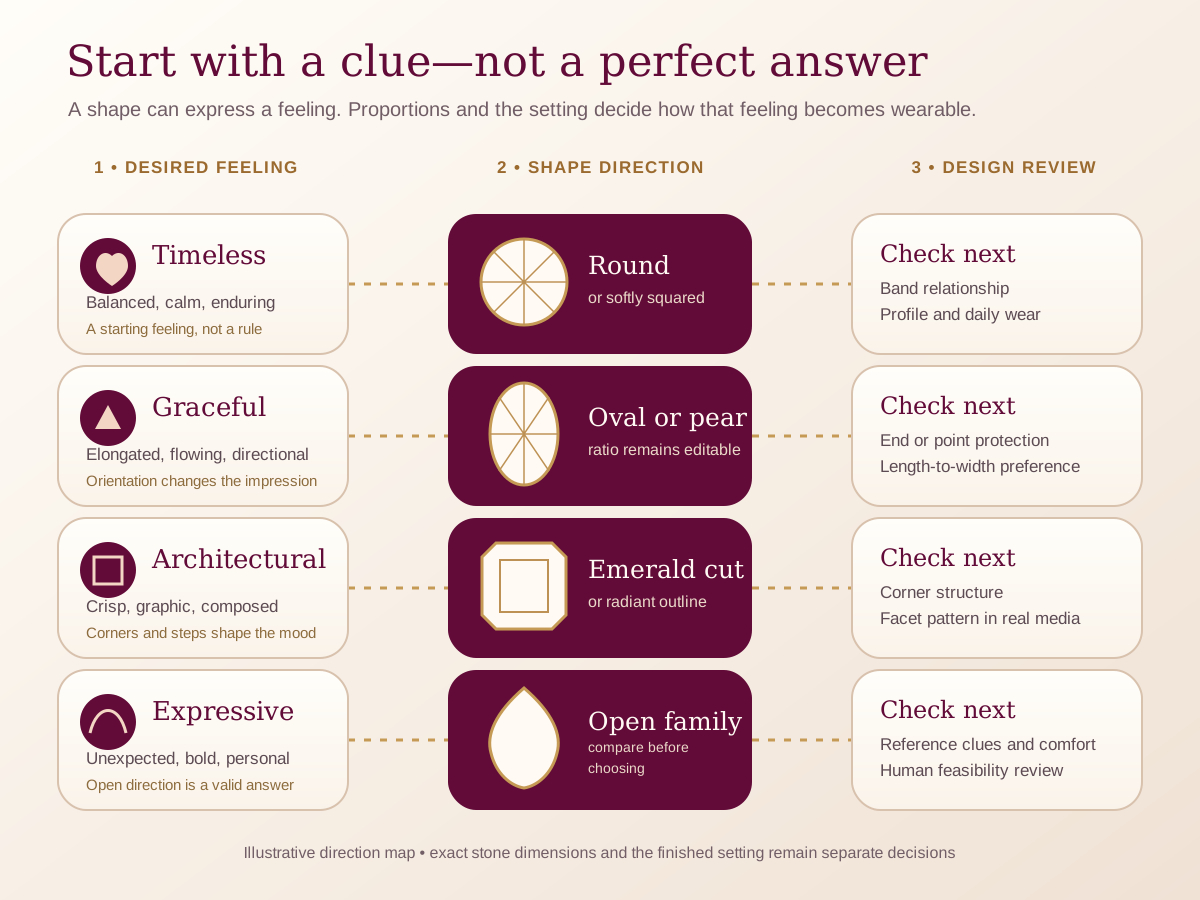
These starting directions translate real preferences into a useful shortlist without pretending one shape suits everyone.
| Wearer clue | Shape direction to explore | Keep constant | Still needs review |
|---|---|---|---|
| Quiet and balanced | Round, softly square, or restrained geometric outlines. | The same profile and band width. | Exact facet pattern, dimensions, and stone. |
| Graceful and directional | Oval, pear, marquise, or another elongated outline. | The same north-south or east-west orientation. | Proportion, symmetry, bow-tie pattern, and point protection. |
| Clean and architectural | Emerald, Asscher, radiant, or princess directions. | The same metal and side-view simplicity. | Corner support, visible clarity, and exact light pattern. |
| Personal and expressive | Heart, custom, asymmetric, or meaningful outline directions. | The same story and daily-wear needs. | Exact balance, setting structure, and long-term comfort. |
The shape family is a preference, not an exact stone selection. A real stone brings its own dimensions, report, appearance, availability, and price.
Two ways the evidence can change the choice
Keep the reliable clue. Leave the uncertain part open.
Illustrative planning example—not customer proof
A thoughtful surprise with limited clues
They wear simple jewelry, save elongated rings, and have never named a favorite shape.
- Keep in the comparison
- Keep the quiet design language and compare two elongated outlines privately.
- Leave open
- Do not infer ring size or a final stone; plan an editable path if the wearer wants a change.
Illustrative planning example—not customer proof
The wedding band matters from the beginning
The wearer wants a straight band to sit close to the engagement ring.
- Keep in the comparison
- Keep that band relationship visible in both shape directions.
- Leave open
- Review profile, setting footprint, stone dimensions, and band clearance together.
The questions people ask before choosing
Clear answers, with the limits kept visible
Should I choose the most popular engagement-ring shape?
Only if it feels right for the wearer. Popularity is not evidence about their taste, routine, or the ring they will enjoy living with.
Can I tell the best shape from a hand photo?
A photo can support a private visual comparison, but it cannot prove exact scale, comfort, fit, or what the wearer prefers.
What if I am choosing without my partner?
Use only real, permission-respecting clues. Keep uncertain size and style details open, and protect an easy path to refine the ring together.
Does choosing a shape finish the stone decision?
No. The exact stone still has dimensions, proportions, a facet pattern, identity, report details, availability, and price to review.
Five details to check
Before this diamond direction enters Atelier
Name two outlines the wearer already responds to.
Add one daily-wear or comfort clue.
Choose the intended orientation and overall ring profile.
Keep wedding-band pairing visible if it matters.
Compare exact stones only after the shape shortlist feels clear.
What happens after this page
Evidence becomes a reviewed jewelry direction
An educational comparison is not an exact stone, appraisal, price, design approval, or purchase. These steps keep the customer’s choice separate from Leyloon’s review.
- Gather real clues
Use the wearer's own choices, words, and permission-respecting references.
- Shortlist two shapes
Choose two meaningfully different outlines rather than every available option.
- Hold the ring constant
Compare the shapes in the same profile, metal direction, and band relationship.
- Choose or leave open
Carry one editable shape into Atelier, or keep it unanswered when the evidence is not strong enough.
- Review the exact stone
Leyloon reviews dimensions, setting fit, and the complete request before a written quote; you choose what happens next.
Authoritative and first-party sources
Check the evidence behind the guidance
Laboratory and consumer-protection sources support technical boundaries. Leyloon sources explain Leyloon’s own design and reviewed quote path.
- GIA · guide to diamond shapes for engagement ringsIndependent guidance on shape versus cutting style, face-up appearance, facet patterns, and setting considerations.Accessed August 26, 2026 · Open source ↗
- GIA · how to buy a diamondIndependent education on the 4Cs and on using them together when comparing diamonds.Accessed August 26, 2026 · Open source ↗
- FTC Consumer Advice · buying gemstones, diamonds, and pearlsConsumer guidance on seller research, stone identity, treatments, grading information, weight, dimensions, and written details.Accessed August 26, 2026 · Open source ↗
A clear answer for this stone choice
Choose an engagement-ring diamond shape by outline, proportions, setting fit, hand relationship, and everyday use.
Diamond shape is the face-up outline and facet arrangement, not a promise about visible size or personality. The best choice is the one you enjoy after comparing proportions, hand coverage, corner or point protection, setting, and wedding-band relationship.
Use one complete shape selector, then carry that shape into Atelier. Compare current stones by exact length, width, depth, report information, and media rather than assuming every oval, cushion, or emerald cut looks alike.
Who this can help
See whether this feels like your decision
- A first-time shopper who knows style words but not shape names
- A client deciding between elongated and balanced outlines
- A ring-stack planner concerned about protection and band pairing
Ways it may become part of your story
Meaning does not have to follow one occasion
- Proposal
- Engagement-ring reset
- Anniversary upgrade
Birthstone contextDiamond is April's birthstone, but shape should be chosen for the wearer and design rather than the month alone.
One useful decision at a time
Which outline would you like to see on the hand?
Use which outline would you like to see on the hand? to narrow “Choose an engagement-ring diamond shape by outline, proportions, setting fit, hand relationship, and everyday use.”. When one feels right, choose it in the selector on this page and carry that exact starting point into Atelier.
- Round brilliantBalanced circle and brilliant facet pattern.
- OvalElongated curve with variable length-to-width ratio.
- CushionSoft corners in square or elongated proportions.
- Emerald cutStep facets and a clean rectangular outline.
- PearCurved shoulder with one protected point.
- MarquiseLong outline with two protected points.
Compare without flattening the details
Shape decisions that change the ring
| Outline | Often changes | Inspect on exact stone |
|---|---|---|
| Round | Diameter and setting symmetry | Light pattern and proportions |
| Oval or marquise | Finger coverage and length-to-width ratio | Outline symmetry and dark-area pattern |
| Cushion or radiant | Corner softness and square/elongated balance | Facet pattern and dimensions |
| Emerald cut | Step-facet rhythm and clarity visibility | Transparency, proportions, corners |
| Pear | Orientation and asymmetry | Point, shoulders, and bow-tie pattern |
Appearance descriptions guide comparison; they are not quality grades.
Questions worth asking before you decide
Open the question that is already on your mind
Which shape looks largest?
Face-up dimensions and proportions matter; no shape name guarantees a larger appearance.
Are pointed shapes too fragile?
Points and corners call for deliberate setting protection, while exact risk depends on the stone and wear.
Does an emerald cut mean emerald stone?
No. Emerald cut is a shape and cutting style that can be used for diamond or other gems.
From a direction to a piece you can approve
Know what happens after the first design
For “Choose an engagement-ring diamond shape by outline, proportions, setting fit, hand relationship, and everyday use.”, a design preview is the beginning, not an automatic production promise. Leyloon reviews the stone, fit, materials, price, and making details with you before you choose whether to buy.
- Design reviewLeyloon reviews the design direction and the questions you deliberately carried forward.
- Exact-stone reviewAn exact stone remains open until you choose an identified stone and its evidence is reviewed.
- Quote requestA written quote follows review of the actual stone, materials, fit, and construction request.
- Your approval choiceYou choose whether to revise, pause, approve, or buy after seeing the reviewed options.
- Requests & ordersIf you order, Requests & orders keeps the next agreed steps and status together.
Continue from your own choices
Only the choices you confirm move forward
This guide does not treat its examples, title, carat range, or suggested jewelry as your answer. Use the decision area above to choose what is truly known. Your choices remain editable, and Atelier continues with the next detail that still needs you.
Private details stay private. Any notes, personal measurements, uploaded references, or exact-stone documents used to refine “Choose an engagement-ring diamond shape by outline, proportions, setting fit, hand relationship, and everyday use.” stay with your design request and are not placed in a shareable web address.
- Starting state
- Unanswered until you choose
- Next step
- Your next unanswered design choice
Published customer proof
Real experiences, kept separate from promises
Only approved purchase-linked reviews appear here. An illustrative scene is never presented as a customer, and one person’s experience is never treated as a promise for another piece.See what Leyloon customers have shared
Read recent shop reviews on Etsy, then come back when you are ready to shape your own stone-led jewelry direction.
These reviews reflect individual Leyloon service experiences. Your stone-led jewelry direction and quote request are reviewed on their own.