Design around presence with care
A larger stone direction makes proportion, height, protection, band balance, and daily wear especially visible.
State laboratory-grown origin clearly, then let the exact stone's dimensions and the complete ring structure lead this larger-center design direction.
Large-scale ring direction, carefully separated
Shape a 4–5 carat lab-grown diamond ring without guessing the stone.
Begin with an engagement ring and a lab-grown diamond direction. Carat, dimensions, grade, exact stone, price, structure, and making details remain open for review.A preview gives us a place to begin. Leyloon reviews the fit and making details with you before any quote or making decision.
Leyloon reviews the real request, references, stone needs, and open questions for feasibility.
When the direction is clear enough, request a written quote for the reviewed options.
You choose whether to approve or buy. Leyloon makes the piece only after the applicable decisions.
Let a larger center direction breathe without making assumptions
What should I consider when designing a ring around a 4–5 carat laboratory-grown diamond?
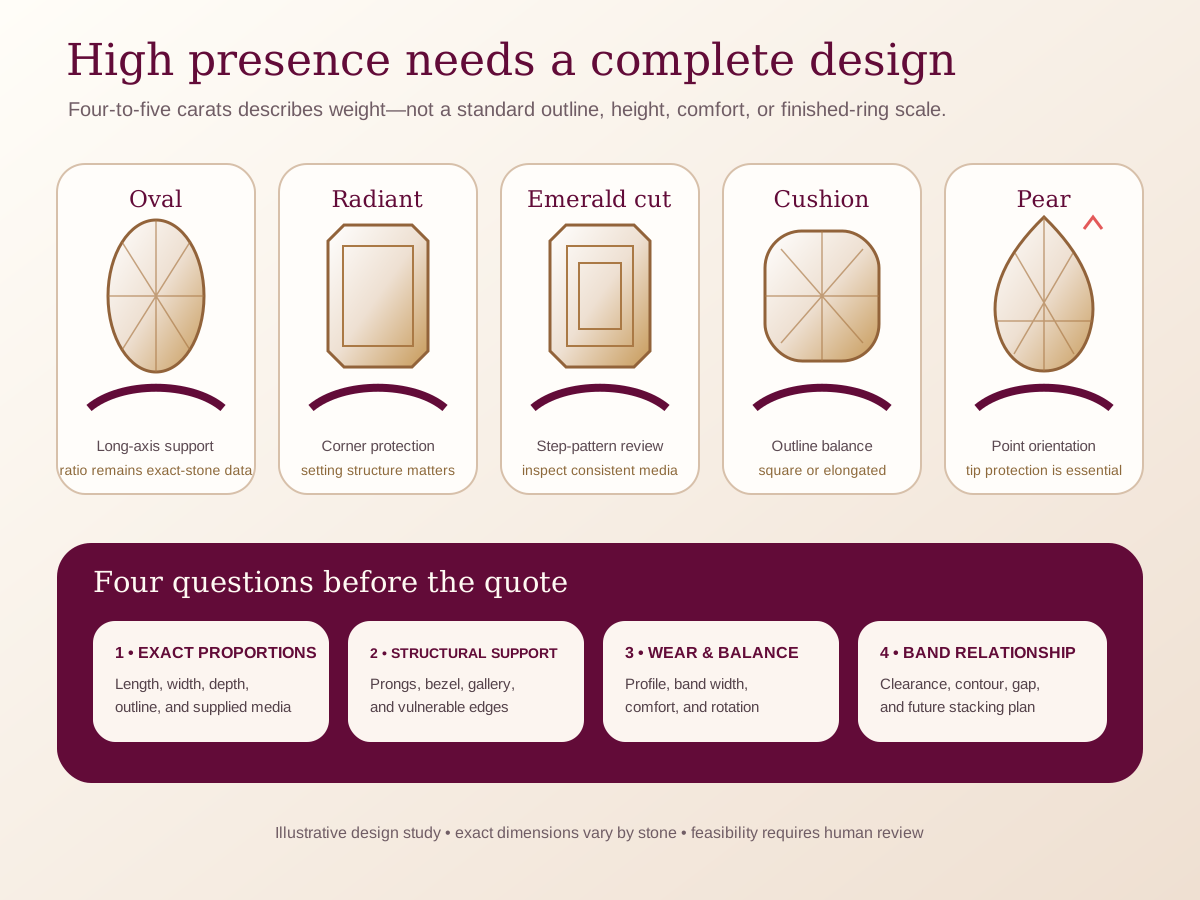
Begin by stating laboratory-grown origin clearly, then design around the exact stone rather than the weight label. At this scale direction, face-up dimensions, depth, outline, setting footprint, profile, support, band relationship, and daily wear all deserve deliberate review.
You can explore visual directions before selecting a stone, but no preview confirms inventory, price, exact scale, or feasibility. When an exact stone is chosen, keep its report and dimensions with your private design notes so Leyloon can review the complete request before a written quote.
- Origin
- Laboratory-grown stated clearly beside the diamond description
- Exact stone
- Shape, report, length, width, depth, and visible character
- Structure
- Setting footprint, support, profile, prong or bezel direction, and band
- Wear
- Comfort, movement, gloves, stacking, maintenance, and preferred presence
Compare complete ring directions
Let the exact stone lead the structure around it
These directions help organize design questions. They are not promises that every stone or structure is available or suitable.
| Direction | Visual feeling | Review closely | Keep open |
|---|---|---|---|
| Open solitaire | The center outline carries most of the visual presence. | Support, prong placement, profile, rotation, and band balance. | Exact stone, construction, material, and price. |
| Protective border | A bezel or partial border gives the outline a stronger frame. | Coverage, light access, edge protection, thickness, and cleaning. | Exact engineering and whether the stone suits the approach. |
| Side-stone balance | Smaller stones extend the composition beyond the center. | Proportion, total width, setting transitions, and wedding-band fit. | Exact side-stone specifications and quote. |
| Sculptural profile | The side view becomes part of the design story. | Height, support, comfort, snag exposure, and long-term service. | Feasibility until human review of the exact request. |
A weight range does not establish dimensions, visual scale, setting requirements, availability, or price. Those belong to the exact stone and reviewed design.
Two ways the evidence can change the choice
Keep the reliable clue. Leave the uncertain part open.
Illustrative planning example—not customer proof
The weight range is known, the shape is open
You want a strong center presence but are deciding between round and elongated outlines.
- Keep in the comparison
- Keep laboratory-grown origin, the intended ring character, and daily-wear priorities.
- Leave open
- Compare exact stones and dimensions before settling profile or support details.
Illustrative planning example—not customer proof
An exact elongated stone leads
You have a report for one laboratory-grown diamond and want a close-to-the-hand ring.
- Keep in the comparison
- Carry the exact stone reference, measurements, orientation, and low-profile preference privately.
- Leave open
- Let Leyloon review clearance, support, band relationship, material, and price rather than promising the profile from a preview.
The questions people ask before choosing
Clear answers, with the limits kept visible
Does 4–5 carats tell me how large the diamond will look?
No. It tells you a weight range. Exact face-up dimensions, shape, proportions, and setting context determine the visual comparison.
How should laboratory-grown origin be described?
Clearly and close to the word diamond. Do not let a generic diamond label imply mined origin.
Does a report make the ring design feasible?
No. It documents the stone within the report's scope. The setting, support, fit, materials, and making details still need human review.
Can I get a price from the example?
No. Price belongs to the exact stone, materials, size, construction, and included choices in a reviewed written quote.
Five details to check
Before this diamond direction enters Atelier
State laboratory-grown origin clearly.
Use the exact report and dimensions when a stone is selected.
Compare profile, support, setting footprint, and band relationship.
Add daily-wear, comfort, and maintenance priorities.
Treat every preview as a design direction until Leyloon reviews and quotes it.
What happens after this page
Evidence becomes a reviewed jewelry direction
An educational comparison is not an exact stone, appraisal, price, design approval, or purchase. These steps keep the customer’s choice separate from Leyloon’s review.
- Choose the presence
Name the shape, visual character, and daily-wear priorities without inventing an exact stone.
- Select or keep open
Carry an exact laboratory-grown diamond only when its identity and record are known.
- Explore ring directions
Compare profile, support, border, side-stone, and band relationships visually.
- Ask Leyloon to review
Bring the exact stone, fit, material, and structural questions together for human review.
- Receive a quote and choose
Consider the written quote and options, then decide whether to revise, pause, or buy.
Authoritative and first-party sources
Check the evidence behind the guidance
Laboratory and consumer-protection sources support technical boundaries. Leyloon sources explain Leyloon’s own design and reviewed quote path.
- GIA · natural and laboratory-grown diamond identificationIndependent identification science and laboratory methods used to distinguish natural and laboratory-grown diamonds.Accessed August 26, 2026 · Open source ↗
- FTC · truthful diamond and gemstone descriptionsU.S. business guidance on accurate weight descriptions and clear disclosure of laboratory-grown versus mined origin.Accessed August 26, 2026 · Open source ↗
- IGI · diamond reportsOfficial IGI information about origin identification, the 4Cs, and available diamond report types.Accessed August 26, 2026 · Open source ↗
Published customer proof
Real experiences, kept separate from promises
Only approved purchase-linked reviews appear here. An illustrative scene is never presented as a customer, and one person’s experience is never treated as a promise for another piece.See what Leyloon customers have shared
Read recent shop reviews on Etsy, then come back when you are ready to shape your own stone-led jewelry direction.
These reviews reflect individual Leyloon service experiences. Your stone-led jewelry direction and quote request are reviewed on their own.