Let the outline set the mood
Compare diamond shapes by outline, proportion, setting fit, and the way they meet the hand.
Compare outline, facet pattern, exact proportions, and edge geometry before any occasion or ring story narrows the full shape atlas.
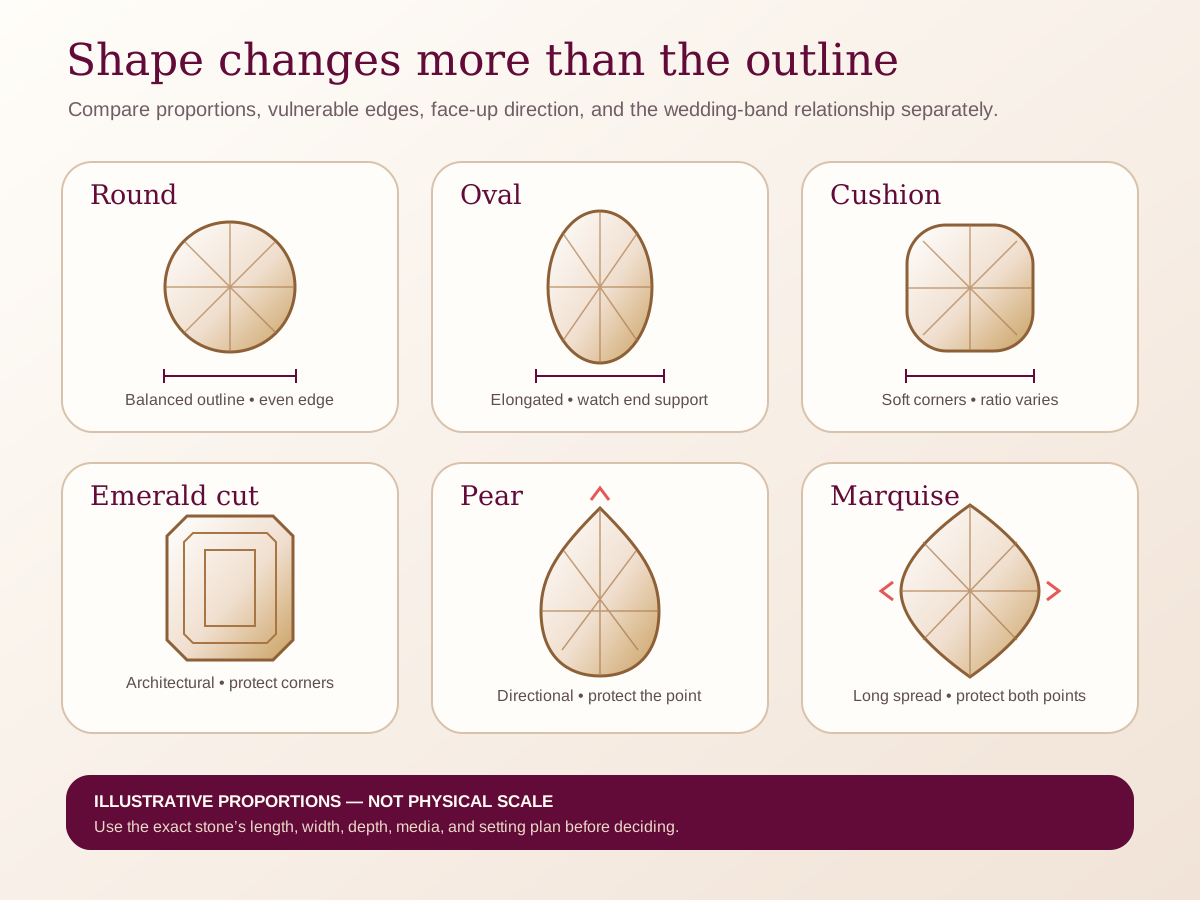
Outline before assumption
Choose the feeling you want from a diamond outline.
The outline can change coverage, direction, setting needs, and the way the piece feels. Start with the visual quality, then choose a shape only if you already know it.A preview gives us a place to begin. Leyloon reviews the fit and making details with you before any quote or making decision.
Leyloon reviews the real request, references, stone needs, and open questions for feasibility.
When the direction is clear enough, request a written quote for the reviewed options.
You choose whether to approve or buy. Leyloon makes the piece only after the applicable decisions.
A shape atlas for seeing real differences
How do diamond shapes differ in appearance, fit, and setting needs?
Shape is the face-up outline; cutting style is the facet arrangement that shapes how light and pattern appear. Begin with the outline you enjoy, then compare exact dimensions, length-to-width character, facet pattern, symmetry, and any points or corners that may need thoughtful protection.
This guide is the broad shape atlas. It helps you compare shape families before a particular occasion or ring story leads. It does not assign a standard millimeter size, promise that one outline will flatter every hand, or replace review of an exact stone.
- Outline
- Round, oval, square, rectangular, tapered, pointed, or custom
- Proportion
- The exact length-to-width character and face-up dimensions
- Facet pattern
- Brilliant, step, mixed, or another cutting style
- Edge geometry
- Curves, corners, points, and their setting relationship
Compare shape families before choosing a favorite
Notice the visual language each family brings
These are observation prompts, not promises about price, size, rarity, or what every stone in the family will look like.
| Shape family | Notice first | Inspect on the exact stone | Discuss for the setting |
|---|---|---|---|
| Round brilliant | A circular outline and brilliant facet pattern. | Diameter range, symmetry, light pattern, and report scope. | How the profile and prongs frame the circle. |
| Oval, pear, or marquise | An elongated line with different ends and directional character. | Length-to-width balance, symmetry, bow-tie pattern, and exact dimensions. | Orientation and protection for points where present. |
| Emerald or Asscher | Broad step facets and a quieter geometric pattern. | Outline, corner shape, windowing or extinction, color impression, and visible clarity characteristics. | Corner support, profile, and band relationship. |
| Cushion, radiant, or princess | Square-to-rectangular geometry with distinct corner and facet behavior. | Length-to-width character, facet pattern, symmetry, and exact measurements. | How cropped or pointed corners are held and protected. |
A family label is only the beginning. Two diamonds with the same shape name can differ in proportions, facet pattern, dimensions, and visible character.
Two ways the evidence can change the choice
Keep the reliable clue. Leave the uncertain part open.
Illustrative planning example—not customer proof
Two elongated shapes feel close
You enjoy both oval and pear outlines and want a graceful north-south line.
- Keep in the comparison
- Keep the same approximate presence and setting context while comparing the outline and end shape.
- Leave open
- Choose the exact proportions and point protection only after seeing real stones.
Illustrative planning example—not customer proof
You love geometry but not one sparkle pattern
Emerald, radiant, and elongated cushion directions all feel possible.
- Keep in the comparison
- Keep the rectangular silhouette and intended ring profile.
- Leave open
- Compare step, brilliant, and mixed facet behavior without assuming the outline decides the light pattern.
The questions people ask before choosing
Clear answers, with the limits kept visible
Are diamond shape and diamond cut the same thing?
Not exactly. Shape names the face-up outline. Cutting style describes the facet arrangement, although some familiar trade names combine both ideas.
Which shape looks largest?
There is no guaranteed winner from the name alone. Compare exact face-up dimensions, proportions, and outline; carat weight by itself does not set visible size.
Which shape is most flattering?
That is personal. Compare the line you enjoy on the intended hand and ring, without using finger shape or body characteristics as a rule.
Do pointed shapes always break?
No, but points and corners deserve deliberate setting protection and wear discussion. The exact stone and structure need review.
Five details to check
Before this diamond direction enters Atelier
Separate the outline from the cutting style.
Compare exact length, width, depth, and length-to-width character.
Watch the stone in movement and consistent lighting.
Inspect symmetry, bow-tie, windowing, extinction, and visible characteristics where relevant.
Discuss points, corners, orientation, and setting support before quoting.
What happens after this page
Evidence becomes a reviewed jewelry direction
An educational comparison is not an exact stone, appraisal, price, design approval, or purchase. These steps keep the customer’s choice separate from Leyloon’s review.
- Choose two outline families
Begin with the face-up lines you genuinely enjoy.
- Name the facet feeling
Compare lively brilliant patterns, broad step flashes, and mixed patterns.
- Read exact dimensions
Use the real stone's measurements rather than a standard size promise.
- Place each in context
Compare orientation, profile, band relationship, and edge protection.
- Carry one shape forward
Keep the shape you chose editable in Atelier and leave the exact stone open until selected.
Authoritative and first-party sources
Check the evidence behind the guidance
Laboratory and consumer-protection sources support technical boundaries. Leyloon sources explain Leyloon’s own design and reviewed quote path.
- GIA · guide to diamond shapes for engagement ringsIndependent guidance on shape versus cutting style, face-up appearance, facet patterns, and setting considerations.Accessed August 26, 2026 · Open source ↗
- GIA · diamond shape, weight, and perceived sizeIndependent guidance explaining why carat weight, dimensions, proportions, shape, and setting context should not be treated as the same thing.Accessed August 26, 2026 · Open source ↗
- FTC Consumer Advice · buying gemstones, diamonds, and pearlsConsumer guidance on seller research, stone identity, treatments, grading information, weight, dimensions, and written details.Accessed August 26, 2026 · Open source ↗
A clear answer for this stone choice
Compare diamond shapes through outline, proportions, setting protection, hand coverage, and style without personality stereotypes.
A diamond shape changes outline, facet pattern, face-up proportions, protection needs, and how the stone relates to the hand. It does not assign a personality or guarantee that one carat will look a standard size.
Select a shape, then compare exact length, width, depth, symmetry, media, and setting fit. Your shape remains selected while you consider metal, profile, side stones, fit, and budget.
Who this can help
See whether this feels like your decision
- A visual shopper comparing curves and geometry
- A buyer seeking elongated finger coverage
- A custom client concerned about points, corners, and setting style
Ways it may become part of your story
Meaning does not have to follow one occasion
- Engagement
- Diamond reset
- Anniversary or self-purchase ring
Birthstone contextDiamond is April's birthstone, while shape is a design choice for any occasion.
One useful decision at a time
Choose the outline you want to study
Use choose the outline you want to study to narrow “Compare diamond shapes through outline, proportions, setting protection, hand coverage, and style without personality stereotypes.”. When one feels right, choose it in the selector on this page and carry that exact starting point into Atelier.
- Round brilliantA balanced circular outline.
- OvalA softly elongated curve.
- CushionA soft-cornered square or rectangle.
- Emerald cutA geometric step-cut rectangle.
- PearA tapered directional curve.
- MarquiseA long outline with two points.
Compare without flattening the details
Shape, appearance, and setting
| Decision | What it answers | What remains |
|---|---|---|
| Round | Balanced outline | Diameter, light pattern, prong symmetry |
| Oval/marquise | Elongated coverage | Ratio, symmetry, central dark pattern |
| Cushion/radiant | Soft or angular corners | Facet pattern, ratio, measurements |
| Emerald cut | Step-facet geometry | Transparency, corners, proportions |
| Pear | Directional taper | Shoulders, point, orientation |
The descriptions support comparison, not a quality grade or personality label.
Questions worth asking before you decide
Open the question that is already on your mind
Which shape looks biggest?
Exact face-up dimensions matter more than a universal shape ranking.
Are elongated shapes always flattering?
Hand relationship is personal; compare the outline without body rules.
Which shape is safest?
Corners, points, girdle, setting, and routine all affect protection.
From a direction to a piece you can approve
Know what happens after the first design
For “Compare diamond shapes through outline, proportions, setting protection, hand coverage, and style without personality stereotypes.”, a design preview is the beginning, not an automatic production promise. Leyloon reviews the stone, fit, materials, price, and making details with you before you choose whether to buy.
- Design reviewLeyloon reviews the design direction and the questions you deliberately carried forward.
- Exact-stone reviewAn exact stone remains open until you choose an identified stone and its evidence is reviewed.
- Quote requestA written quote follows review of the actual stone, materials, fit, and construction request.
- Your approval choiceYou choose whether to revise, pause, approve, or buy after seeing the reviewed options.
- Requests & ordersIf you order, Requests & orders keeps the next agreed steps and status together.
Continue from your own choices
Only the choices you confirm move forward
This guide does not treat its examples, title, carat range, or suggested jewelry as your answer. Use the decision area above to choose what is truly known. Your choices remain editable, and Atelier continues with the next detail that still needs you.
Private details stay private. Any notes, personal measurements, uploaded references, or exact-stone documents used to refine “Compare diamond shapes through outline, proportions, setting protection, hand coverage, and style without personality stereotypes.” stay with your design request and are not placed in a shareable web address.
- Starting state
- Unanswered until you choose
- Next step
- Your next unanswered design choice
Published customer proof
Real experiences, kept separate from promises
Only approved purchase-linked reviews appear here. An illustrative scene is never presented as a customer, and one person’s experience is never treated as a promise for another piece.See what Leyloon customers have shared
Read recent shop reviews on Etsy, then come back when you are ready to shape your own stone-led jewelry direction.
These reviews reflect individual Leyloon service experiences. Your stone-led jewelry direction and quote request are reviewed on their own.