Choose the path that suits the ring
Compare a current finished piece with a ring shaped around your own brief.
Compare what can be seen now with what can be shaped around the wearer, then keep the undecided route open for review.

Choose the kind of certainty you want
Compare a ring you can inspect now with a direction shaped around your brief.
Ready-made, custom, and in-between paths answer different needs. None is automatically faster, less expensive, more meaningful, or more durable.Two beginnings, one careful decision
- Inspect nowUse exact product facts when a current ring leads.
- Shape your ownUse a private brief when the wearer leads.
- Review the exact pathPrice and timing follow the real choice.
Details you may already know
Choose only what you already know.
Leave any detail blank when you are unsure. You can choose it later.Choose the route that already fits your truth
Is a custom engagement ring or a ready-made ring the better choice for me?
Choose a ready-made ring when an existing, currently available piece already suits the wearer, size options, stone evidence, design, and purchase needs. Choose custom when you need several specific preferences to live together or want to begin from a personal idea, exact stone, permitted reference, or fit consideration.
Neither route is automatically more meaningful, affordable, or suitable. Compare the exact piece or reviewed custom request, the information supplied with it, what can still change, and the written terms before you choose.
- Match
- How much of an existing ring is already right
- Flexibility
- Which details must change or stay open
- Evidence
- What exact stone, size, material, and policy details are supplied
- Review
- What must be confirmed before buying or making
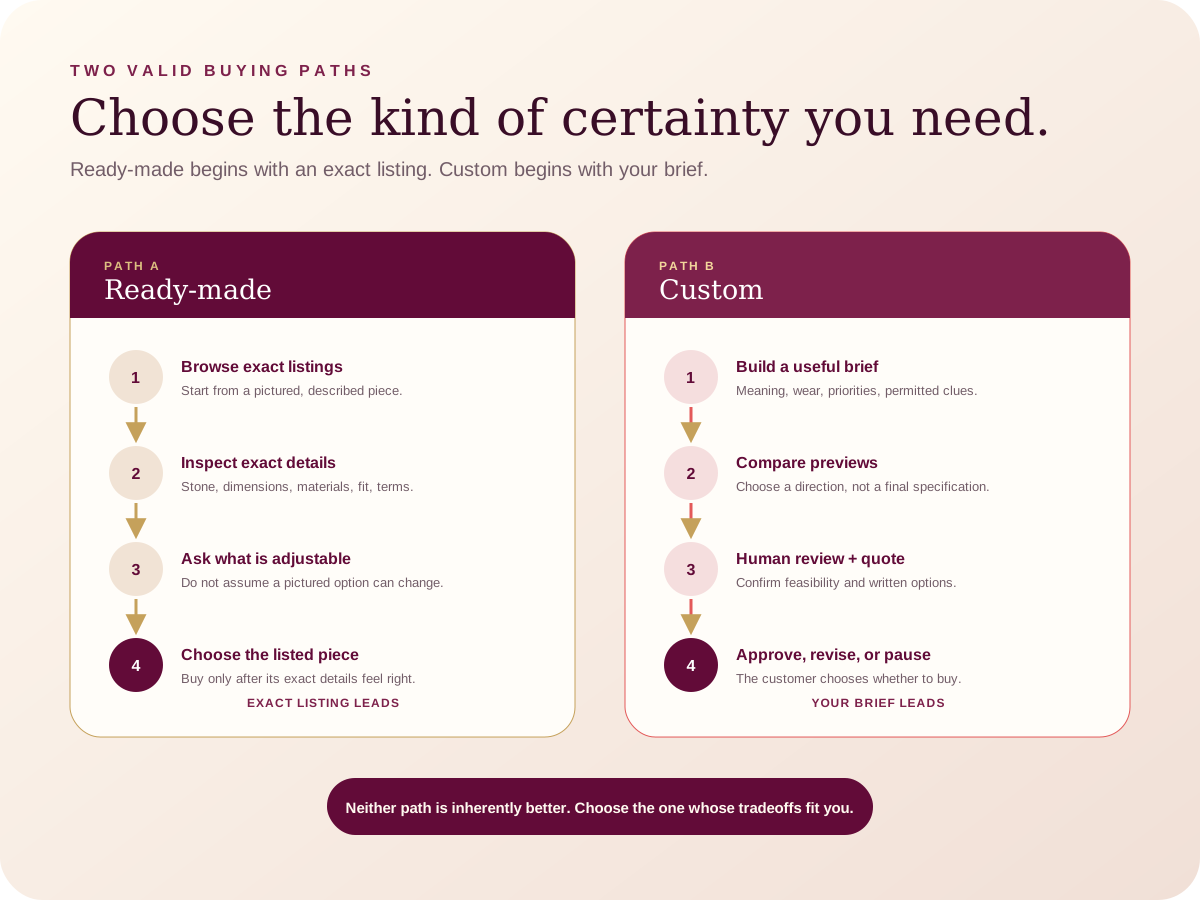
Three routes, three different advantages
Compare the actual next step—not a romantic label
A current ring, a distinct variation, and a new custom direction each begin with different evidence and open questions.
| Route | Begin with | Useful strength | Review carefully |
|---|---|---|---|
| Ready-made | A specific current product and its stated options. | You can judge the photographed piece and available details. | Exact variant, size, stone information, terms, and availability. |
| Adapt a direction | A Leyloon piece or permitted reference plus a clear change. | You keep a familiar starting point without pretending it is the final answer. | Whether the requested change affects structure, stone, fit, price, or timing. |
| Custom | The wearer, purpose, exact stone, idea, or must-keep detail. | Several personal and practical choices can be shaped together. | The reviewed design, materials, fit, quote, and making details. |
| Still deciding | A short list of priorities and one open question. | You can compare the routes without committing to either. | What evidence would make the choice clearer. |
For a ready-made ring, confirm the current product details and available options. Treat a design preview as a direction until Leyloon reviews the exact request.
Two human ways this decision can begin
See what to keep—and what can stay open
Illustrative planning example—not customer proof
A current ring is nearly right
You enjoy the silhouette, but want a different stone direction and a quieter side view.
- Keep in the brief
- Use the Leyloon piece as a starting reference and name the two changes clearly.
- Leave open
- Review whether the variation changes structure, fit, availability, price, or making details.
Illustrative planning example—not customer proof
The meaning cannot be found ready-made
A private symbol and an inherited stone need to belong in one wearable ring.
- Keep in the brief
- Lead with the meaning, the exact stone context, and how the wearer lives in jewelry.
- Leave open
- Let Leyloon review the stone, design, fit, materials, and feasibility before a quote.
Questions worth asking before you continue
Clear answers, without pushing you to decide too soon
Is custom always more expensive?
No universal comparison is honest. Price depends on the exact stone, materials, size, construction, detail, and included work. Compare an exact current product with a reviewed custom quote.
Is ready-made less personal?
Not necessarily. A current ring can feel deeply right for the person and moment. Meaning comes from the choice and the relationship, not the category label.
Can Leyloon copy a ring I found elsewhere?
Use only a reference you may share and point to the qualities you admire. Ask for an original direction shaped around your wearer rather than a duplicate of another maker’s complete design.
Can I start custom and decide not to buy?
You can explore and refine a direction, then consider Leyloon’s written quote. A preview or quote request is not automatic approval or purchase.
A calm five-point check
Before you carry this direction into Atelier
Name the detail that must be right for the wearer.
Compare a specific current piece with a specific custom need.
Check exact stone, material, size, and seller information in writing.
Keep reference rights and originality clear.
Choose only after the current product details or written custom quote are clear.
What happens after this page
Your direction remains yours at every step
A visual preview is not a finished specification, approval, price, or purchase. These five states keep the creative choice and the making decision clear.
- Define the must-keep detail
Begin with the quality that decides whether a ring truly suits the wearer.
- Compare exact routes
Review a current product, a distinct variation, and a custom direction only where useful.
- Gather the evidence
Keep stated stone, material, size, policy, and design information with each option.
- Ask for review
Leyloon reviews the exact custom or variation request before quoting it.
- Choose with clarity
Compare the current product details or written quote, then decide whether to buy.
Sources and boundaries
What supports this guidance
Independent sources support technical or consumer-information boundaries. Leyloon sources explain Leyloon’s own design and quote path.
- FTC Consumer Advice · buying gemstones, diamonds, and pearlsConsumer guidance on seller research, stone identity, treatments, grading information, written details, weight, and dimensions.Accessed August 26, 2026 · Open independent source ↗
- FTC · Jewelry GuidesThe U.S. guidance used here only to keep material, stone, quality, size, origin, and value descriptions clear rather than implied.Accessed August 26, 2026 · Open independent source ↗
- Leyloon custom design journeyThe first-party path for comparing previews, review, quote, customer choice, and making.Open Leyloon guide →
Published customer proof
Real experiences, kept separate from promises
Only approved purchase-linked reviews appear here. An illustrative scene is never presented as a customer, and one person’s experience is never treated as a promise for another piece.See what Leyloon customers have shared
Read recent shop reviews on Etsy, then come back when you are ready to shape your own custom jewelry direction.
These reviews reflect individual Leyloon service experiences. Your custom jewelry direction and quote request are reviewed on their own.