Start with a real measurement
Can height and weight predict ring size?
No—height and weight cannot predict one person’s ring size. Measure the intended finger with a ring gauge, or check a round ring that fits that same finger. Keep the hand, finger, method, and planned band width with the result.
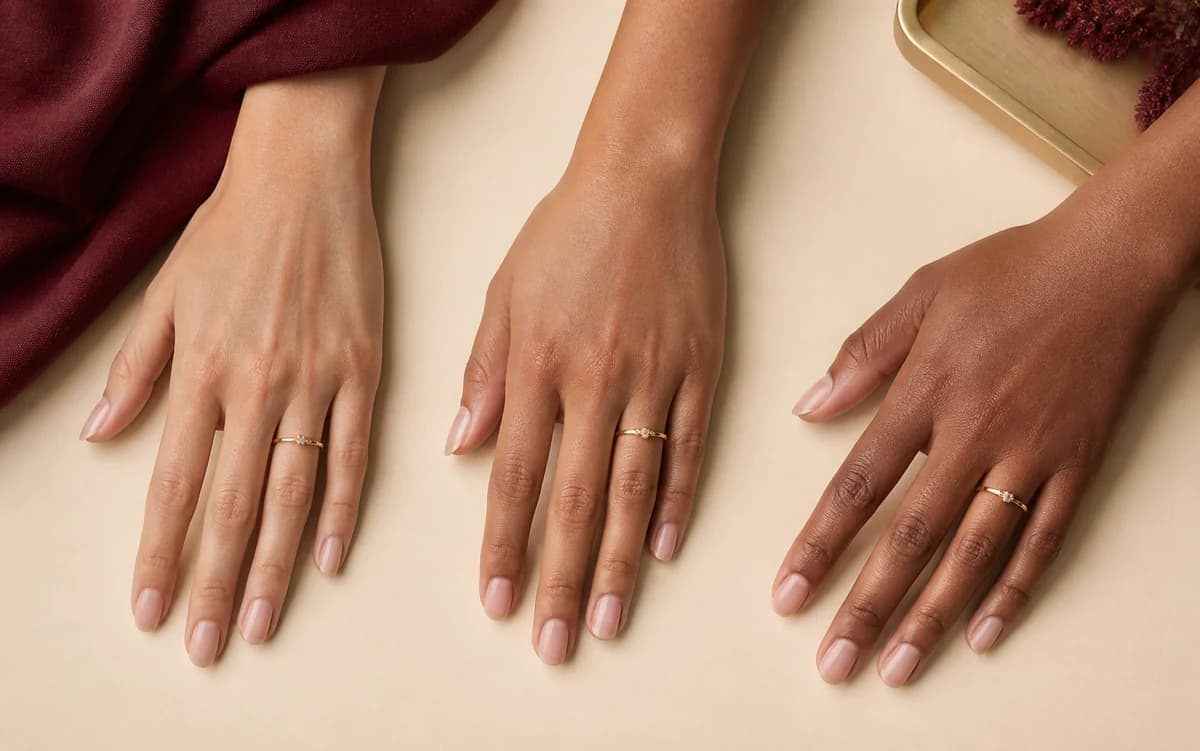
Illustrative ring-wear context, not a size comparison. Height and weight cannot identify an individual ring size; use the sizing tools below.
- Measure the intended fingerUse a physical ring gauge and check comfortable passage over the knuckle.
- Check a ring that fitsChoose a round ring worn on that same finger; measure its empty inside across the center.
- Keep the contextSave the hand, finger, method, and band width with the reading. Review profile visibility before sharing.
Ring-size clue check
Which clue can you trust?
Height and weight cannot predict one person’s ring size. Start with a ring gauge on the intended finger or a round ring that fits that same finger.Explore Leyloon
Fit, wear & care—considered together
A clearer decision, with the important context kept beside it
Height and weight cannot predict one person’s ring size. A physical gauge on the intended finger or a round ring that fits that same finger gives you a more useful starting point.
Use this page when
- You are planning a surprise and need to choose a reliable sizing clue.
- You want to keep the source and uncertainty beside the ring design.
Pause and choose another path when
- You need to turn height, weight, or a photo into a personal size.
- A ring is painful, stuck, or causing numbness or color change; use appropriate in-person help.
Where this choice often matters
- A proposal where the size should remain a surprise.
- A gift whose final size can be confirmed before making.
Compare the details
Which size clue deserves the most trust?
The safest note keeps the source and uncertainty visible instead of hiding them behind one number.
| Clue | What it tells you | Confidence | Next step |
|---|---|---|---|
| Professional finger gauge | The intended finger with a physical size set | Strongest starting point | Keep band width with the result |
| Well-fitting ring | Inside diameter for one known finger | Useful when identity is certain | Measure inner edge and check roundness |
| Trusted person or saved profile | A known or previously recorded size | Useful with source context | Confirm hand, finger, and date |
| Height or weight | A broad population clue only | Too weak for a personal size | Leave final size open until you have a stronger clue |
Questions worth asking
Open the concern that sounds like yours
Choose the question that sounds like yours. Each answer keeps the next step clear without closing decisions that still need review.
Can height or weight estimate a ring size?
No. They describe population averages, not the size of one person’s intended finger. Use a gauge, a same-finger ring that fits, or a trusted recorded size.
What if I only have a guess?
Keep it labeled as a guess. You can continue exploring a design while leaving the final size open for a physical fit check.
How do I keep the surprise?
Ask a trusted person or use a saved profile with permission. Keep who supplied the clue and which finger it fits attached to the note.
Ready when you are
Carry this direction into your design
Leyloon can keep these choices together while you continue. Every detail stays editable. Your choices stay editable as you continue.
- Who is this ring for?Needed before the direction is complete
- What size clue do you have, and how was it obtained?A useful next question
- What band width or stack do you imagine?Keep it open if you are still deciding
- Should final size stay open for confirmation?Needed before the direction is complete
Start with what matters on this page