Keep the measurement method attached
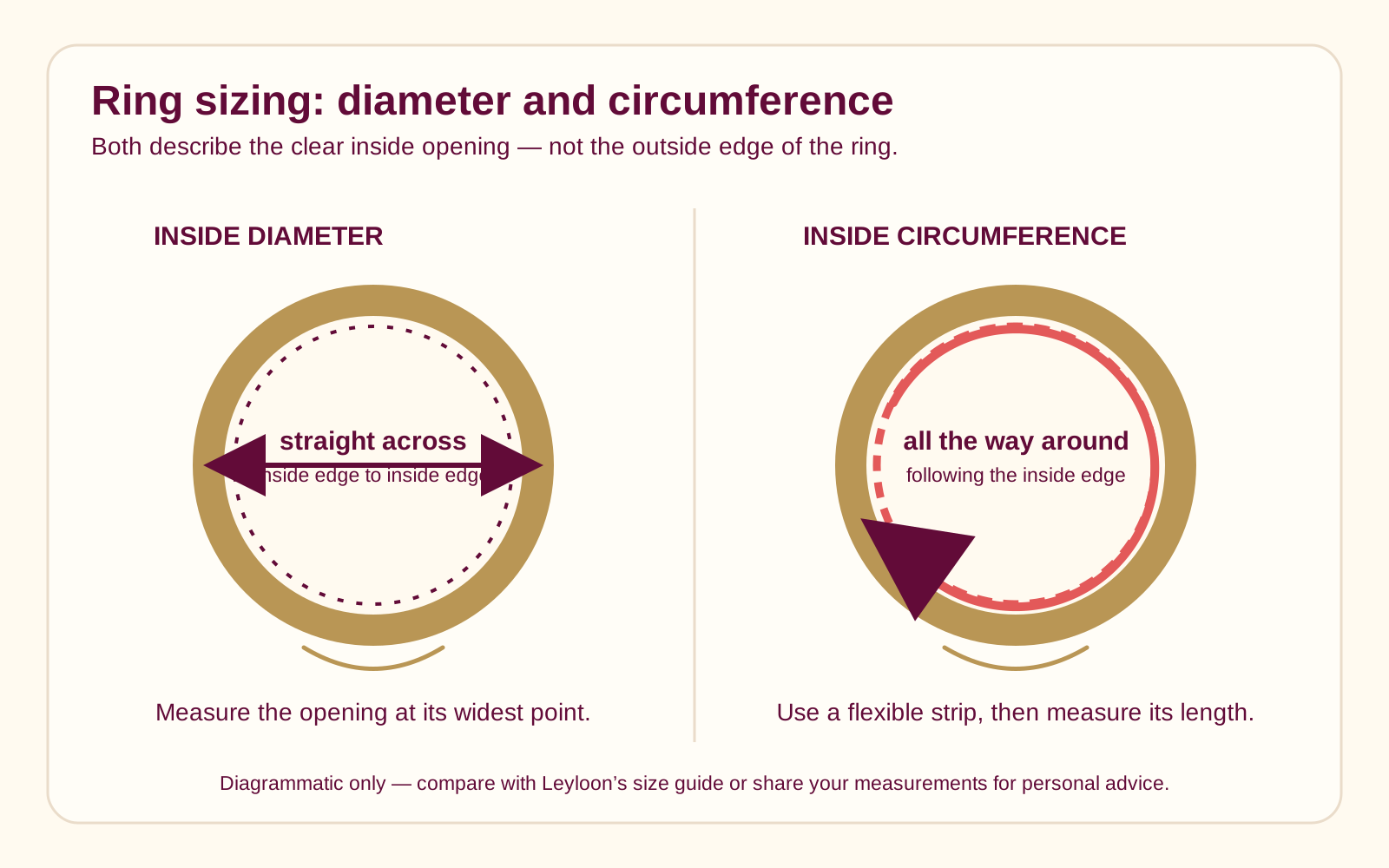
Diameter and circumference describe the inside of the ring in different ways; neither should be guessed from a photo.
Convert carefully, keep units visible, and confirm the intended finger and band width before using the result in a design or quote request.
Working bidirectional converter
Convert inside diameter and finger circumference with the method visible.
The geometry is exact; the measurement may not be. Repeat it, keep the unit and intended finger attached, and consider band width before selecting a ring size.Measure the empty interior from inner edge to inner edge through the true center.
Fit, wear & care—considered together
A clearer decision, with the important context kept beside it
Diameter crosses the ring’s empty interior; circumference goes around it. The tool can convert the geometry only after you identify which one you measured.
Use this page when
- You have a millimeter number and know whether it came from a ring or a finger.
- You want to check why two charts show values near 17 and 54 for the same ring.
Pause and choose another path when
- You do not know the unit or measurement type.
- The ring is not round or the finger measurement was taken loosely over the knuckle.
Where this choice often matters
- Reading a jeweler’s ring chart from another country.
- Checking a measurement before using the ring size calculator.
Compare the details
Diameter and circumference are related, but not interchangeable labels
The conversion is mathematical; the quality of the original measurement remains an open fit question.
| Measured item | Typical form | Geometry | Keep visible |
|---|---|---|---|
| Round ring interior | Diameter in mm | Circumference = diameter × π | Inside edge and roundness |
| Finger path | Circumference in mm | Diameter = circumference ÷ π | Tension and knuckle |
| EU size label | Rounded circumference convention | Named conversion table | Original standard and maker |
| US or UK size | Named scale | Named conversion table row | Nearby physical dimensions |
Ring-size reference chart
Compare named sizes with inside measurements
Keep your original system and maker’s chart. This table is a comparison aid, not a universal fit promise.
| US & Canada | UK, Europe & Australia | Asia | Inside diameter | Inside circumference |
|---|---|---|---|---|
| 3 | F | 4 | 14.1 mm | 44.3 mm |
| 3.5 | G | — | 14.5 mm | 45.6 mm |
| 4 | H | 7 | 14.9 mm | 46.8 mm |
| 4.5 | I | 8 | 15.3 mm | 48.1 mm |
| 5 | J | 9 | 15.7 mm | 49.3 mm |
| 5.5 | K | 10 | 16.1 mm | 50.6 mm |
| 6 | L | 11 | 16.5 mm | 51.8 mm |
| 6.5 | M | 13 | 16.9 mm | 53.1 mm |
| 7 | N | 14 | 17.3 mm | 54.3 mm |
| 7.5 | O | 15 | 17.7 mm | 55.6 mm |
| 8 | P | 16 | 18.1 mm | 56.9 mm |
| 8.5 | Q | 17 | 18.5 mm | 58.1 mm |
| 9 | R | 18 | 19.0 mm | 59.7 mm |
| 9.5 | S | 19 | 19.4 mm | 60.9 mm |
| 10 | T | 20 | 19.8 mm | 62.2 mm |
| 10.5 | U | 22 | 20.2 mm | 63.5 mm |
| 11 | V | 23 | 20.6 mm | 64.7 mm |
| 11.5 | W | 24 | 21.0 mm | 66.0 mm |
| 12 | X | 25 | 21.4 mm | 67.2 mm |
| 12.5 | Y | 26 | 21.8 mm | 68.5 mm |
| 13 | Z.5 | 27 | 22.2 mm | 69.7 mm |
| 13.5 | Z1 | — | 22.6 mm | 71.0 mm |
Reviewed 2026-08-25. Source reference: GIA ring-size guide. This table follows GIA’s US and Canada, UK/Europe/Australia, and Asia columns; blank cells are not listed by GIA. Leyloon uses the nearest physical row without interpolation and keeps your original measurement beside it.
Questions worth asking
Open the concern that sounds like yours
Choose the question that sounds like yours. Each answer keeps the next step clear without closing decisions that still need review.
Why do I see 17.3 mm and 54.4 mm for one size?
One is inside diameter and the other is the related circumference.
Can I divide my finger measurement by pi?
Yes for a geometric diameter direction, but a finger is not a rigid circle and the fit still needs review.
Why does another chart round differently?
Named systems and tables can use different increments. Keep the original value and source rather than hiding the difference.
Ready when you are
Carry this direction into your design
Leyloon can keep these choices together while you continue. Every detail stays editable. Your choices stay editable as you continue.
- Original measurement type, value, unit, and converted valueNeeded before the direction is complete
- Planned widthA useful next question
- Source ring or intended finger, plus measurement confidenceKeep it open if you are still deciding
Start with what matters on this page
Name the measurement before converting it
Diameter crosses a ring's empty interior. Circumference follows the inside path or the intended finger. Keep the original method and value beside any calculated comparison.Published customer proof
Real experiences, kept separate from promises
Only approved purchase-linked reviews appear here. An illustrative scene is never presented as a customer, and one person’s experience is never treated as a promise for another piece.See what Leyloon customers have shared
Read recent shop reviews on Etsy, then come back when you are ready to shape your own fit and jewelry direction.
These reviews reflect individual Leyloon service experiences. Your fit and jewelry direction and quote request are reviewed on their own.