Use a ring that already feels right
Measure an existing ring while preserving the details that make it useful.
Choose a ring worn on the intended finger and hand, measure its inside diameter, and record the unit. A similar-looking ring worn elsewhere may lead to the wrong direction.
Existing-ring check
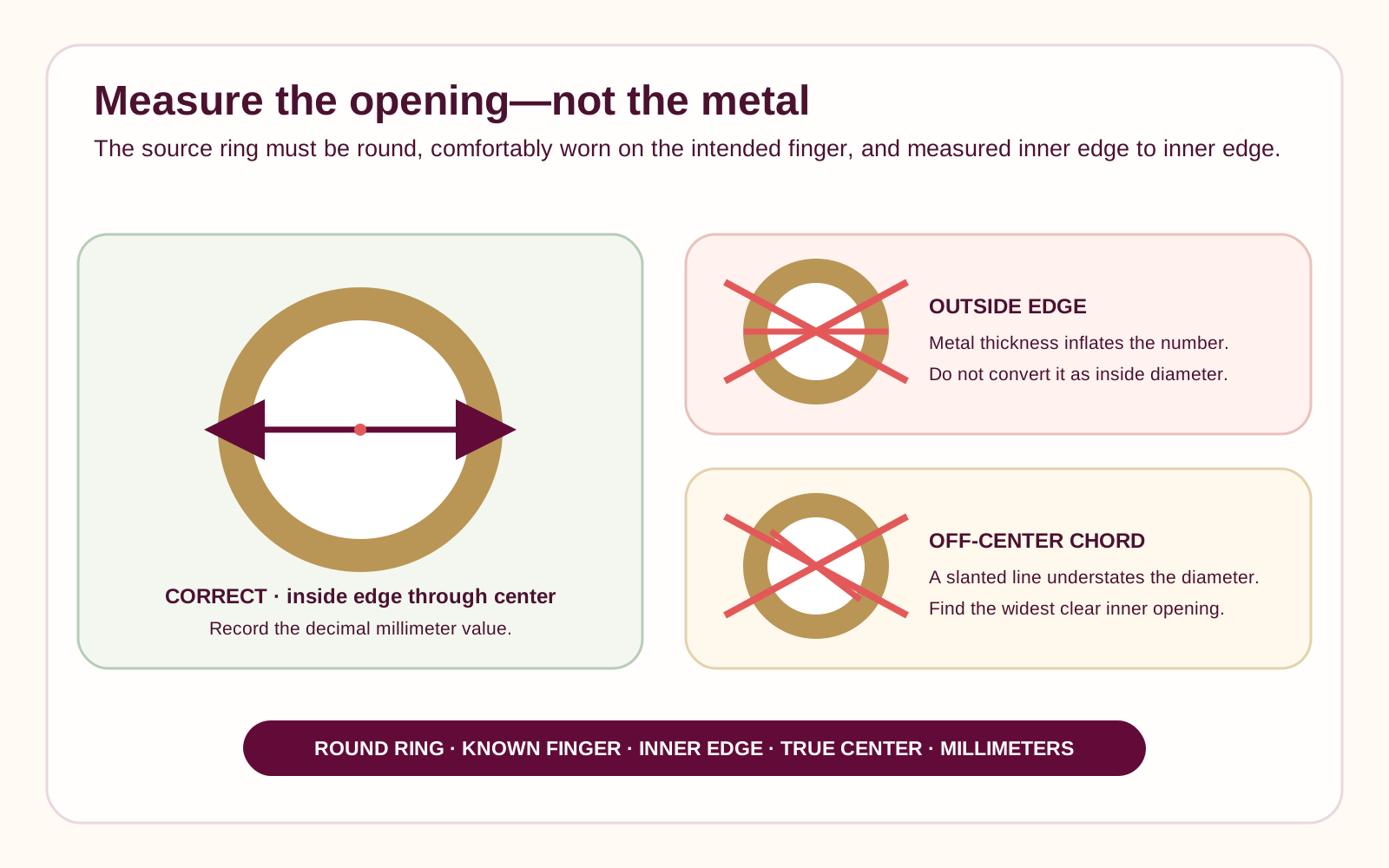
Measure the empty interior—not the outside of the ring.
This tool works best with a round ring that already fits the same finger. Keep the physical measurement and its limitations beside the result.Place the ring over a millimeter ruler and read inner edge to inner edge through the widest true center. This tool compares 14.1–22.6 mm, the range named in the governed chart.
Fit, wear & care—considered together
A clearer decision, with the important context kept beside it
Measure straight across the empty interior of a round ring that truly fits the intended finger—never across the outside metal.
Use this page when
- You can identify the source ring’s usual hand and finger.
- The ring is round and its inside edge is unobstructed.
Pause and choose another path when
- The ring is bent, oval, adjustable, or has an unusual inner profile.
- The source ring belongs on a different finger or only fits under unusual conditions.
Where this choice often matters
- Discreetly checking a partner’s ring for a proposal.
- Recreating the fit of a favorite everyday ring.
Compare the details
Four checks before reading the ruler
Keep the source ring, ruler, and measurement line visible together so the reading can be checked.
| Check | Correct | Wrong | Why it matters |
|---|---|---|---|
| Edge | Inner edge to inner edge | Outside edge | Outside metal overstates diameter |
| Line | Straight through the center | Off-center chord | A chord understates diameter |
| Shape | Round interior | Bent or oval | One axis cannot stand for the ring |
| Identity | Known intended finger | Similar-looking ring | Finger context can change the size |
Questions worth asking
Open the concern that sounds like yours
Choose the question that sounds like yours. Each answer keeps the next step clear without closing decisions that still need review.
Can I use a phone ruler?
Only if it is physically calibrated; a real millimeter ruler or jeweler’s mandrel is a clearer reference.
What if the ring sits between marks?
Record the actual millimeter reading and show both nearby size rows.
Can Leyloon use a photo?
A photo can explain the reference, but it needs a reliable scale and does not replace the actual inside measurement.
Ready when you are
Carry this direction into your design
Leyloon can keep these choices together while you continue. Every detail stays editable. Your choices stay editable as you continue.
- Inside diameter in millimetersNeeded before the direction is complete
- Optional permitted photo of the source ring and rulerKeep it open if you are still deciding
- Source-ring width and intended new widthA useful next question
- Usual hand, finger, shape, and confidenceKeep it open if you are still deciding
Start with what matters on this page
Begin with the ring that already fits
Confirm the source ring and measure its empty inside opening. Keep the finger, shape, width, tool, and raw millimeter reading together for Leyloon to review.Published customer proof
Real experiences, kept separate from promises
Only approved purchase-linked reviews appear here. An illustrative scene is never presented as a customer, and one person’s experience is never treated as a promise for another piece.See what Leyloon customers have shared
Read recent shop reviews on Etsy, then come back when you are ready to shape your own fit and jewelry direction.
These reviews reflect individual Leyloon service experiences. Your fit and jewelry direction and quote request are reviewed on their own.