A careful home measurement
Measure the intended finger without rushing the fit decision.
Use a consistent method, note the exact finger and hand, and repeat the measurement. A calm record is more useful than chasing one supposedly universal number.
Repeat-reading worksheet
Record two readings without averaging away the difference.
Use the same method twice. A difference is useful information: keep both readings, then decide whether another check or a professional gauge would feel more reassuring.Use 44.3–71.0 mm for this method. Keep the tool level and repeat at a comfortable temperature.
Fit, wear & care—considered together
A clearer decision, with the important context kept beside it
Choose the strongest home method available, measure the intended finger more than once, and keep every assumption visible.
Use this page when
- You can measure your own intended finger in a calm setting.
- You have a well-fitting round ring but no professional gauge.
Pause and choose another path when
- The finger is injured, unusually swollen, numb, or painful.
- You need certainty for a hard-to-resize ring and can arrange a professional fitting.
Where this choice often matters
- Shopping online for an everyday ring.
- Preparing fit notes before designing an engagement or milestone ring.
Compare the details
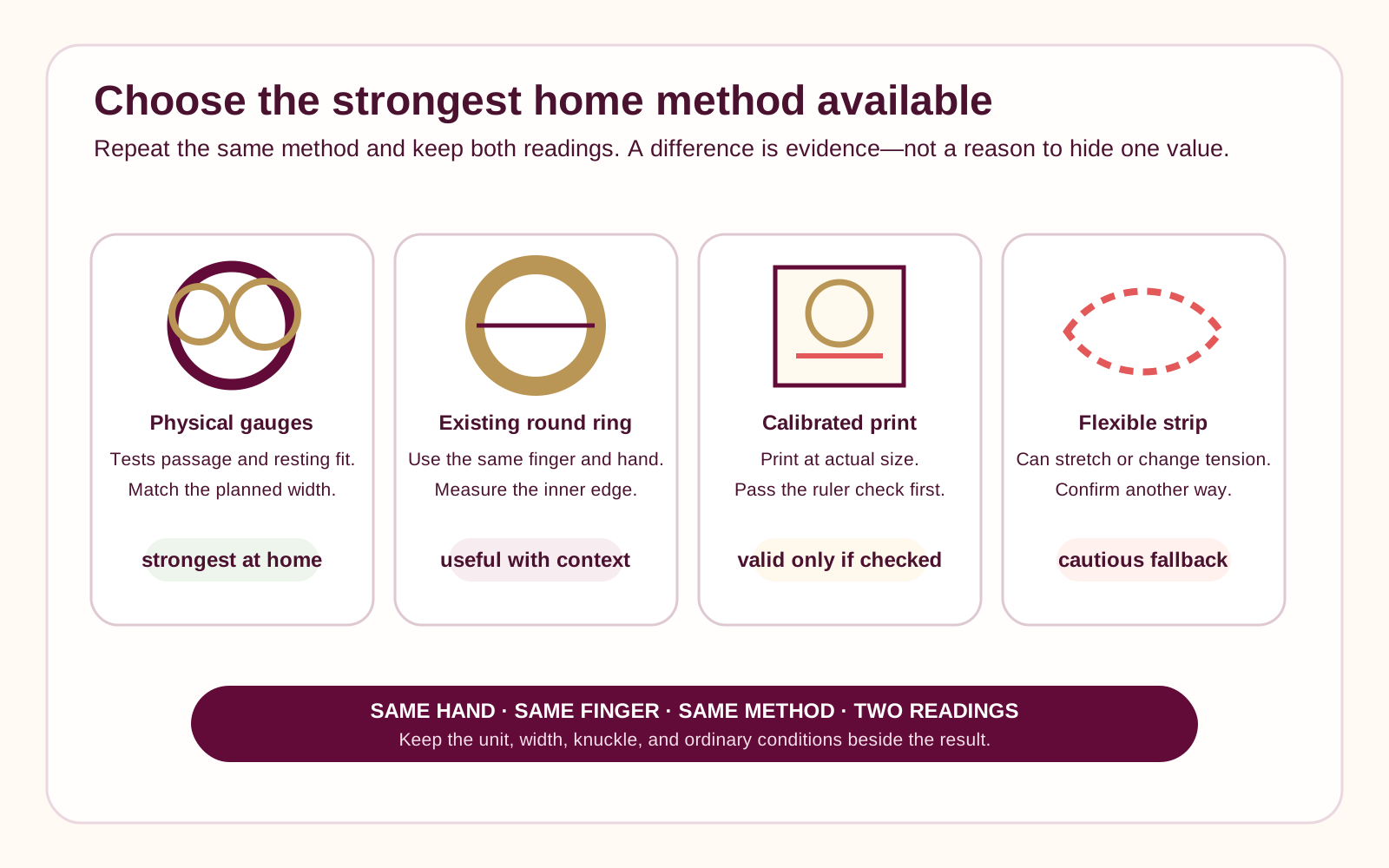
Home methods ranked by what they actually measure
GIA guidance treats string and paper as lower-confidence methods, so confirm either result with a physical gauge or a well-fitting ring before ordering.
| Method | Strength | Common error | Repair |
|---|---|---|---|
| Physical ring gauges | Tests passage and resting fit | Wrong width or finger | Match the intended band and finger |
| Existing round ring | Gives inside diameter | Wrong finger or outside edge | Verify identity and inner edge |
| Printable circles | Compares an existing ring | Printer scaling | Pass the ruler calibration first |
| Paper or string | Rough circumference only | Stretch, tension, knuckle omission | Repeat and confirm another way |
Questions worth asking
Open the concern that sounds like yours
Choose the question that sounds like yours. Each answer keeps the next step clear without closing decisions that still need review.
Can I use string?
Only as a cautious fallback. It can stretch and does not behave like a ring over the knuckle.
When should I measure?
Choose a comfortable, ordinary moment and repeat at another ordinary time instead of relying on an extreme hot or cold reading.
What should I save?
Save the hand, finger, method, unit, repeated values, band width, and how confident you are.
Ready when you are
Carry this direction into your design
Leyloon can keep these choices together while you continue. Every detail stays editable. Your choices stay editable as you continue.
- Measurement values, unit, and methodA useful next question
- Planned band width or stackKeep it open if you are still deciding
- Interior profile if knownKeep it open if you are still deciding
- Hand, finger, knuckle, repeated range, and confidenceKeep it open if you are still deciding
Start with what matters on this page
Choose the calmest measuring method available
Use the intended finger, repeat the method, and keep the ordinary fit context. The page helps you organize the evidence without pretending a home reading is final.Published customer proof
Real experiences, kept separate from promises
Only approved purchase-linked reviews appear here. An illustrative scene is never presented as a customer, and one person’s experience is never treated as a promise for another piece.See what Leyloon customers have shared
Read recent shop reviews on Etsy, then come back when you are ready to shape your own fit and jewelry direction.
These reviews reflect individual Leyloon service experiences. Your fit and jewelry direction and quote request are reviewed on their own.