A gentle path forward
Explore the idea, approve the design, then choose whether to have it made.
Explore a preview, agree paid design work, then continue through human review, a written quote, and your choice before making.
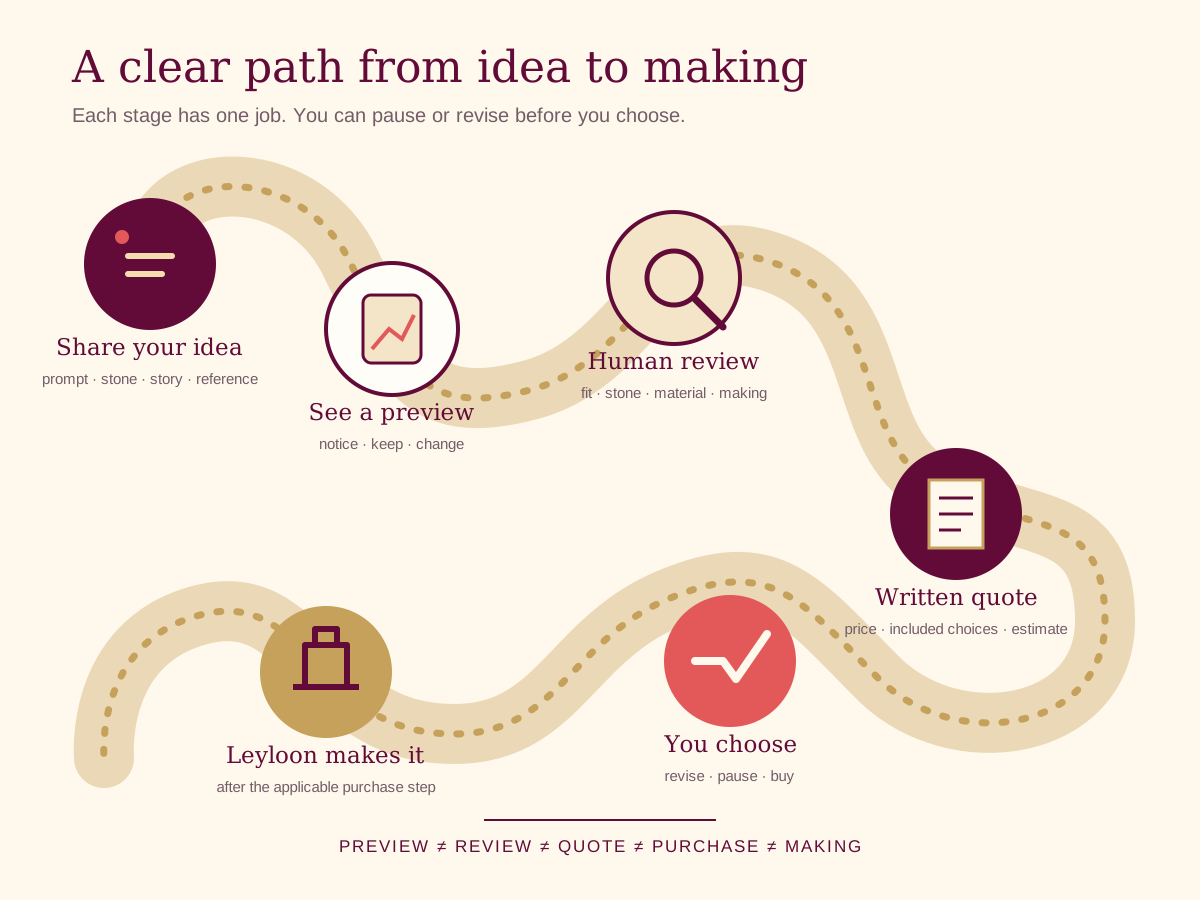
Find your honest next step
See where you are now, what Leyloon reviews next, and when you decide whether to buy.
Exploration, feasibility, a written quote, approval, and making are separate checkpoints. You can pause, revise, or ask a question before moving forward.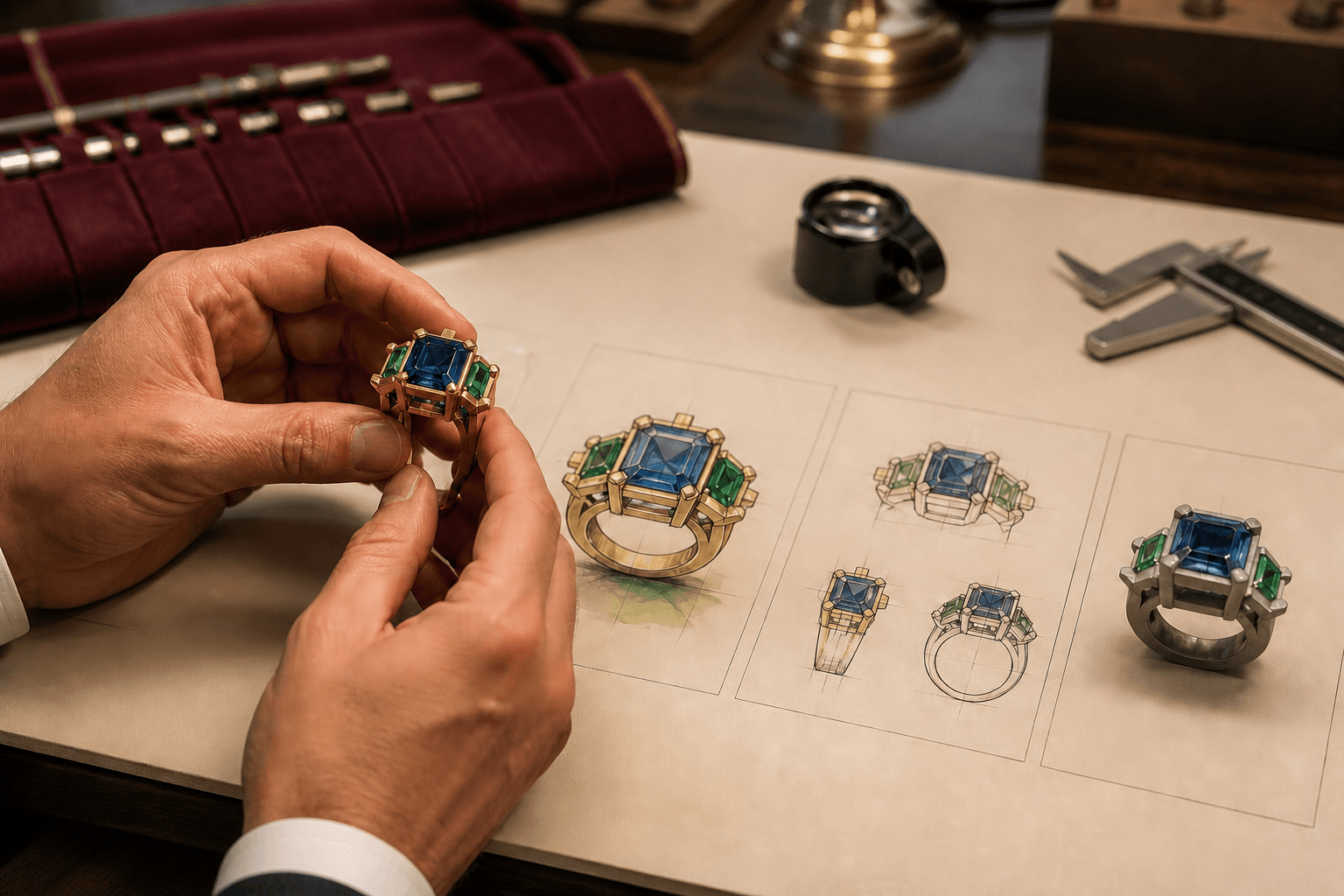
A journey you can understand before you begin
What happens from my first jewelry idea to a piece I can choose to buy?
Begin with an idea, reference, stone, or saved preference, or explore a visual direction in Atelier. Before a paid design order, agree its scope and fee. The agreed design work includes visual refinement and piece-specific 3D CAD or a hand drawing after you approve the visual design.
Leyloon reviews dimensions, selected-metal and stone details, and making costs for a separate written jewelry quote. The design payment includes no physical jewelry. Production follows your approval and separate physical-order payment; Leyloon shows the finished piece before shipping.
Clarity before commitment
Know what this step can decide—and what stays open
What can this page help me decide?
- Where your own journey should begin
- What to refine before asking for review
- When the active direction is clear enough for a quote request
What should stay open for Leyloon review?
- Exact details that still need human review
- Price or timing before a written quote
- Production before you choose and complete the applicable purchase step
One question per stage
Know what each step is meant to clarify
Keeping the stages separate helps you understand each commitment and ask about a change before approving the next step.
- IdeaWhat do I want this piece to express or do?Create a clear first brief
- PreviewWhat feels right when I can see it?Keep and change specific details
- Paid designWhat design work and fee have we agreed?Approve the visual, then develop piece-specific CAD or a hand drawing
- Written quoteWhat is included and what choices are available?Ask questions before deciding
A human example
Ask about the next step when you are ready
Two ring previews feel close, but you want to compare profile and wedding-band fit before choosing one for review.
- Keep
- Keep both directions and the shared stone preference together.
- Ask next
- Discuss the profile and wedding-band fit, then agree the design scope and fee. After visual approval and CAD or a hand drawing, review the separate written jewelry quote.
Illustrative planning scenario—not a customer story or finished-piece promise.
Before you continue
A short checklist for this decision
Begin with the clearest idea or existing clue.
Use previews to compare one meaningful change at a time.
Agree the design scope and fee before paying for design work.
Approve the visual before CAD or hand-drawing work begins.
Review the separate jewelry quote before paying for production.
The honest path forward
Preview, human review, written quote, your choice, then making
Each state answers a different question. Nothing here turns a visual direction into a final price, approval, purchase, or production step without the review and choice that belong between them.
- Brief received
Your starting idea and known choices stay together.
- Design direction
A preview gives you something visible to respond to.
- Paid design and refinement
Agree the scope and fee, refine the visual, then give your visual approval.
- CAD or hand drawing
After visual approval, the agreed design work develops piece-specific dimensions and reviews metal, stones, and making costs.
- Written quote
The reviewed request receives clear quoted options when ready.
- Your choice and making
Approve and pay for the separate physical order before production. Review the finished piece before shipping.
How this page stays grounded
First-party process and relevant independent guidance
Leyloon’s own guides describe the design and quote path. Independent sources are included only where they help with a specific rights, material, or pricing boundary.
Published customer proof
Real experiences, kept separate from promises
Only approved purchase-linked reviews appear here. An illustrative scene is never presented as a customer, and one person’s experience is never treated as a promise for another piece.See what Leyloon customers have shared
Read recent shop reviews on Etsy, then come back when you are ready to shape your own custom jewelry direction.
These reviews reflect individual Leyloon service experiences. Your custom jewelry direction and quote request are reviewed on their own.