Keep what feels right
Revisions are a conversation about the details you want to keep, change, or reconsider.
Name what stays, what changes, and what the next direction should answer before approving any stage.
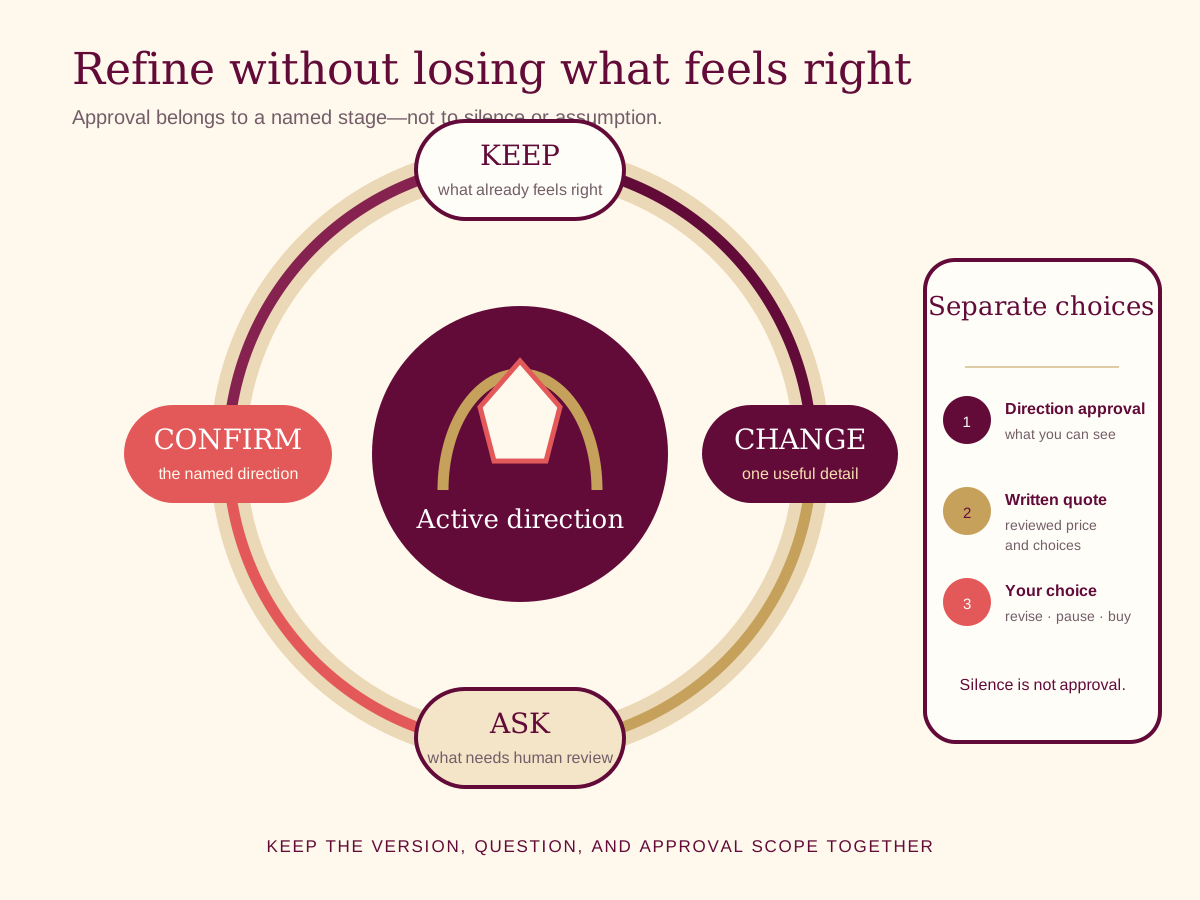
Change one thing without losing the rest
Make the current approval clear before asking for the next revision.
Saving an image, requesting a quote, or staying silent is not approval. Name what stays, what changes, and what still needs human review.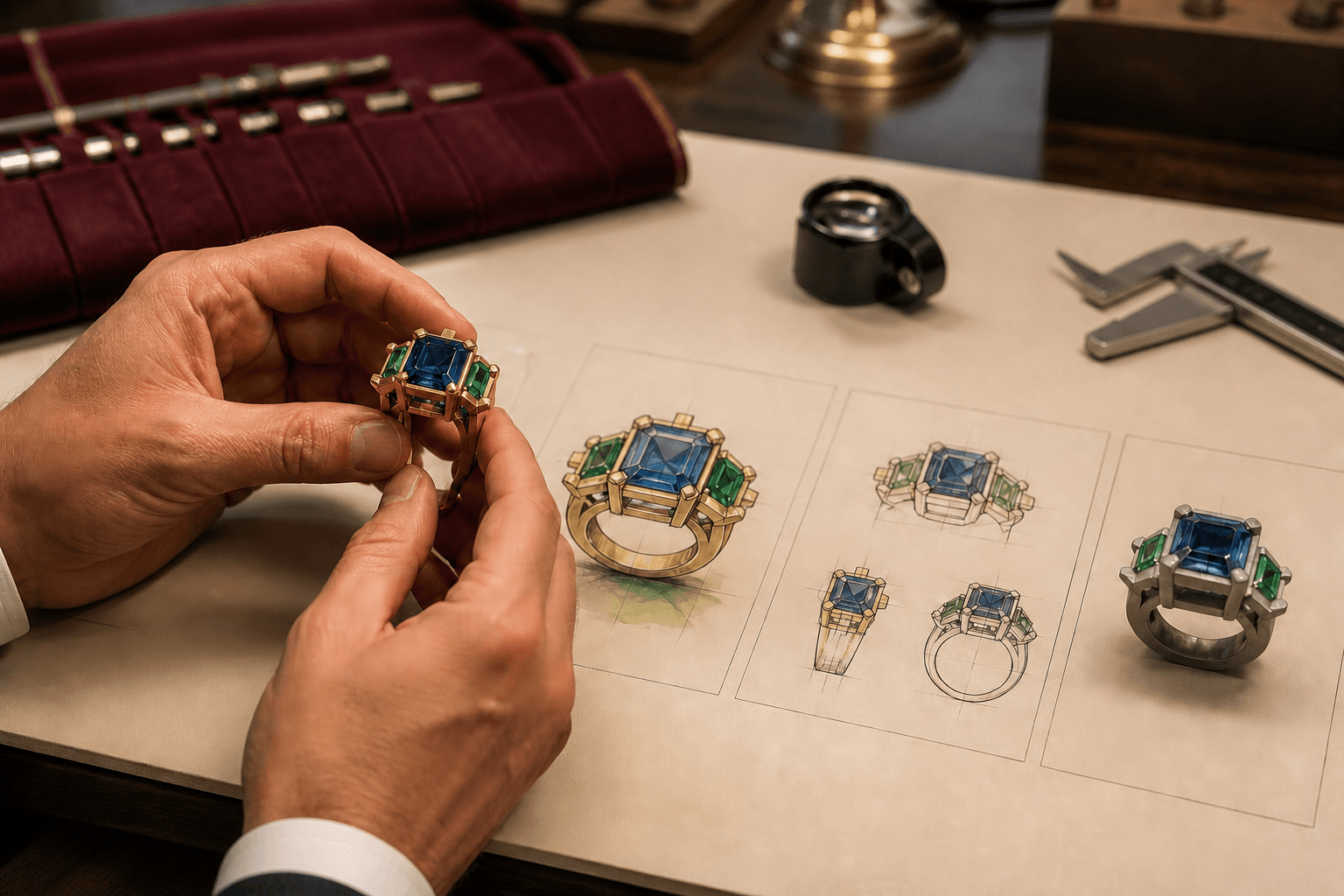
Change one thing without losing the heart
How should jewelry design revisions and approvals stay clear?
Begin each revision by naming what should stay, what should change, and the question you want the next direction to answer. This keeps the design connected instead of turning every revision into a restart.
A preview approval means only what the customer clearly agreed to at that stage. It is not silent approval of unreviewed materials, fit, price, or making. Leyloon reviews the active request and prepares a written quote before you choose whether to buy.
Clarity before commitment
Know what this step can decide—and what stays open
What can this page help me decide?
- The detail that must stay unchanged
- The one change worth seeing next
- What the current approval actually covers
What should stay open for Leyloon review?
- Unspoken or assumed approval
- Price, timing, or making details outside the reviewed request
- Production before the applicable quote and purchase decision
A revision note anyone can follow
Use keep, change, ask, and confirm
These four lines make each version easier to compare and keep the customer’s choice visible.
- KeepThe silhouette, story, stone feeling, or detail already workingName it before requesting a change
- ChangeOne proportion, material direction, angle, or visible detailAvoid replacing several unrelated parts at once
- AskThe fit, wear, material, stone, or making questionLet human review answer what a preview cannot
- ConfirmThe exact direction or quoted option you understandChoose explicitly; silence is not approval
A human example
A focused change keeps the design recognisable
The oval ring direction feels right, but the band competes with the center and sits higher than expected.
- Keep
- Keep the oval center feeling and the quiet side view.
- Ask next
- Compare a calmer band and lower profile, then review the exact setting and wedding-band relationship before quote.
Illustrative planning scenario—not a customer story or finished-piece promise.
Before you continue
A short checklist for this decision
Identify the version you are responding to.
Write one clear keep and one clear change.
Add the question that needs human review.
Confirm what you are approving at this stage.
The honest path forward
Preview, human review, written quote, your choice, then making
Each state answers a different question. Nothing here turns a visual direction into a final price, approval, purchase, or production step without the review and choice that belong between them.
- Choose the active direction
Keep one clear version at the center of the conversation.
- Name the revision
Protect the detail you enjoy and request one meaningful change.
- Review the result
Compare the new direction with the original request and open questions.
- Human review
Leyloon confirms the exact details needed before a written quote.
- Explicit choice
You approve only the named direction or quoted option you understand.
How this page stays grounded
First-party process and relevant independent guidance
Leyloon’s own guides describe the design and quote path. Independent sources are included only where they help with a specific rights, material, or pricing boundary.
Published customer proof
Real experiences, kept separate from promises
Only approved purchase-linked reviews appear here. An illustrative scene is never presented as a customer, and one person’s experience is never treated as a promise for another piece.See what Leyloon customers have shared
Read recent shop reviews on Etsy, then come back when you are ready to shape your own custom jewelry direction.
These reviews reflect individual Leyloon service experiences. Your custom jewelry direction and quote request are reviewed on their own.