Weight and appearance answer different questions
Compare carat weight with face-up dimensions before deciding how large a diamond may look.
Treat carat as weight, then use exact length, width, depth, shape, proportions, and ring context to understand visible presence.
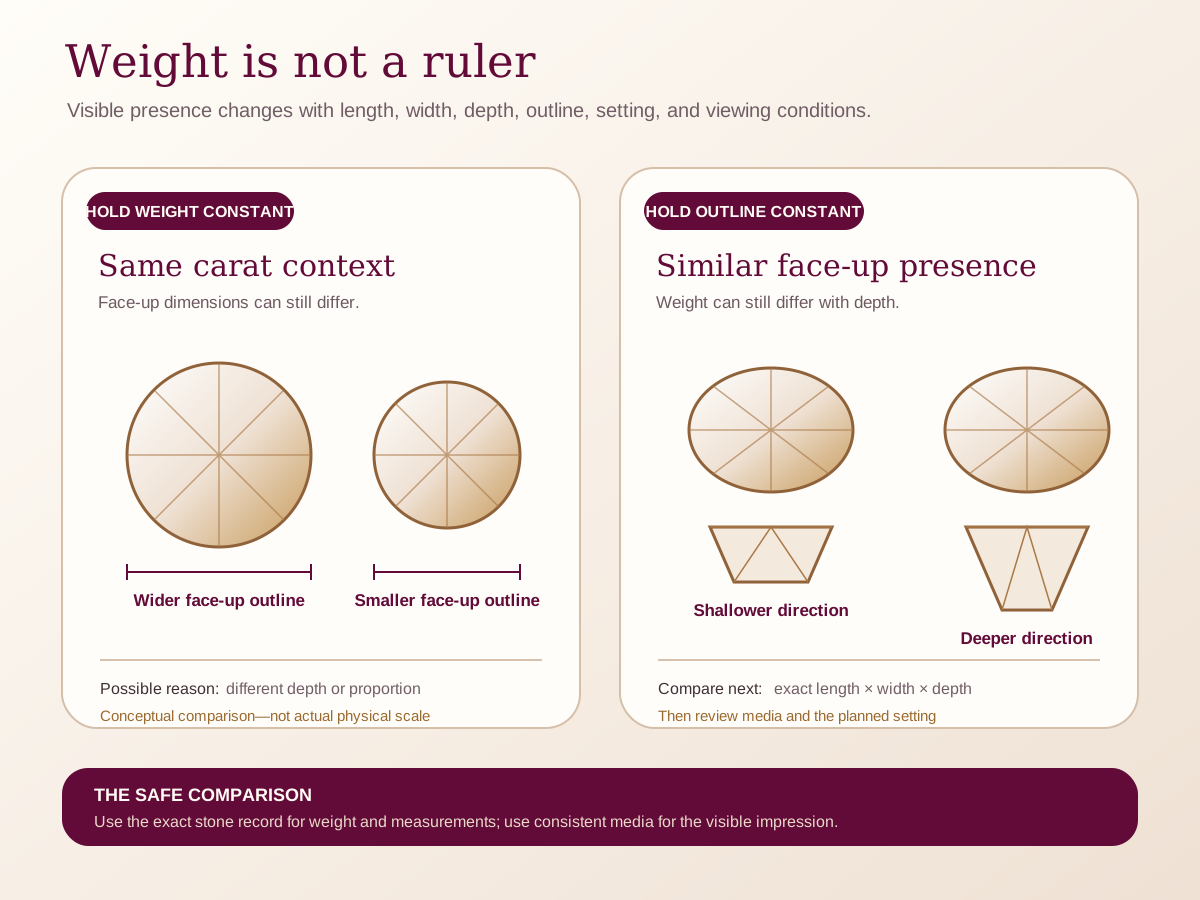
Weight and face-up size are different facts
Choose what you are truly trying to compare.
Carat is weight. Millimeters describe dimensions. Shape and proportions influence how large a diamond may appear from above, so this desk keeps each fact separate.A preview gives us a place to begin. Leyloon reviews the fit and making details with you before any quote or making decision.
Leyloon reviews the real request, references, stone needs, and open questions for feasibility.
When the direction is clear enough, request a written quote for the reviewed options.
You choose whether to approve or buy. Leyloon makes the piece only after the applicable decisions.
Weight is real; visible presence needs more context
Why can two diamonds with the same carat weight look different in size?
Carat measures weight, not face-up area. Shape, length, width, depth, proportions, girdle, and facet arrangement affect where that weight sits and how much of the diamond you see from above.
Use exact millimeter dimensions from the stone's record when available, then compare outline and light behavior—not spread alone. A screen diagram can explain relationships, but it is not a calibrated physical-size promise.
- Weight
- The carat value recorded for the exact stone
- Face-up dimensions
- Length and width—or a diameter range—measured in millimeters
- Depth and proportions
- Where weight sits and how the stone is shaped in three dimensions
- Visual context
- Outline, light behavior, setting, band, and hand visualization
Separate four ideas people often merge
Know what changed before calling one diamond larger
A fair comparison uses exact stones and names whether you mean weight, measurements, or perceived presence.
| Comparison | What may differ | Read next | Do not conclude |
|---|---|---|---|
| Same carat, same shape | Length, width, depth, girdle, and proportions. | Exact report dimensions and consistent imagery. | The wider stone is automatically better cut. |
| Same carat, different shapes | Outline and how the weight is distributed. | Length, width, facet pattern, and intended orientation. | One shape has a universal visible-size advantage. |
| Similar face-up dimensions | Depth, proportions, and total weight. | The complete report and visual behavior. | The weights or quality characteristics must match. |
| Same stone, different setting | Perceived border, contrast, profile, and finger coverage. | The exact setting design and a labelled visualization. | The stone's physical dimensions changed. |
Use exact dimensions for exact stones. Educational comparisons and try-on images are directional and should not be used as rulers.
Two ways the evidence can change the choice
Keep the reliable clue. Leave the uncertain part open.
Illustrative planning example—not customer proof
The heavier stone looks no wider
Two same-shape diamonds differ in carat weight but have similar face-up width.
- Keep in the comparison
- Keep both exact reports and compare depth, proportions, and visible behavior.
- Leave open
- Decide whether the additional weight answers a real preference rather than assuming it adds visible presence.
Illustrative planning example—not customer proof
An elongated outline feels more present
An oval and round have different length and width relationships at a similar weight.
- Keep in the comparison
- Keep the intended ring profile and compare exact dimensions.
- Leave open
- Choose based on outline and light pattern, not a generic conversion table.
The questions people ask before choosing
Clear answers, with the limits kept visible
Can carat tell me the millimeter size?
Not exactly. It can support a broad directional estimate only when shape assumptions are stated. Use the exact stone's measured dimensions for a real comparison.
Is the widest diamond always the best value?
No. Spread is one visible factor. Proportions, light behavior, outline, identity, report details, and ring fit still matter.
Will a try-on image show exact size?
No. It can help compare visual direction, but camera, screen, hand reference, and rendering conditions prevent it from being a measurement guarantee.
Does a halo make the diamond physically larger?
No. A surrounding design can change perceived presence, but it does not change the center stone's weight or dimensions.
Five details to check
Before this diamond direction enters Atelier
Record carat as weight, not shorthand for size.
Use the exact length, width, and depth when available.
Compare the same shape and viewing conditions first.
Judge spread together with light behavior and outline.
Keep every diagram and try-on labelled as directional, not actual size.
What happens after this page
Evidence becomes a reviewed jewelry direction
An educational comparison is not an exact stone, appraisal, price, design approval, or purchase. These steps keep the customer’s choice separate from Leyloon’s review.
- Choose the comparison
Decide whether you are comparing weight, dimensions, shapes, or setting context.
- Find exact measurements
Use the report or stone record for length, width, and depth when available.
- Look face-up and in motion
Compare outline, pattern, brightness, and any distracting areas consistently.
- Place it in the ring
Explore how profile, border, and band change perceived presence without changing stone dimensions.
- Review the exact direction
Carry exact facts privately for Leyloon review before a quote or purchase choice.
Authoritative and first-party sources
Check the evidence behind the guidance
Laboratory and consumer-protection sources support technical boundaries. Leyloon sources explain Leyloon’s own design and reviewed quote path.
- GIA · diamond shape, weight, and perceived sizeIndependent guidance explaining why carat weight, dimensions, proportions, shape, and setting context should not be treated as the same thing.Accessed August 26, 2026 · Open source ↗
- IGI · carat weight educationOfficial IGI education distinguishing gemstone weight from physical spread and explaining why equal weights can look different face-up.Accessed August 26, 2026 · Open source ↗
- FTC · truthful diamond and gemstone descriptionsU.S. business guidance on accurate weight descriptions and clear disclosure of laboratory-grown versus mined origin.Accessed August 26, 2026 · Open source ↗
A clear answer for this stone choice
Separate diamond weight from face-up dimensions and show why exact shape, proportions, and setting change visible scale.
Carat is a weight measurement, not a face-up size. Two diamonds with the same carat weight can have different length, width, depth, shape, and proportions, so they can look meaningfully different in a ring.
Use carat as context and millimeters as the visible outline input. Then compare the exact stone and setting together; halos, bezels, prongs, band width, and hand context change the composition without changing the center stone's measurements.
Who this can help
See whether this feels like your decision
- A buyer surprised that two equal-carat stones look different
- A shopper choosing elongated versus balanced spread
- A custom-ring client deciding how much presence comes from stone versus setting
Ways it may become part of your story
Meaning does not have to follow one occasion
- Engagement-ring sizing
- Diamond upgrade
- Stud or pendant scale comparison
Birthstone contextDiamond is April's birthstone; carat and dimension principles apply regardless of occasion.
One useful decision at a time
Which shape should the weight-versus-size example use?
Use which shape should the weight-versus-size example use? to narrow “Separate diamond weight from face-up dimensions and show why exact shape, proportions, and setting change visible scale.”. When one feels right, choose it in the selector on this page and carry that exact starting point into Atelier.
- RoundCompare the face-up diameter.
- OvalCompare length and width.
- Emerald cutCompare rectangular spread and depth.
- RadiantCompare square or elongated spread.
- PearCompare directional length and width.
Compare without flattening the details
Weight and appearance answer different questions
| Decision | What it answers | What remains |
|---|---|---|
| Carat | How much the diamond weighs | Not exact face-up dimensions |
| Length × width | Face-up outline | Not depth or setting height |
| Depth | Where some weight is distributed | Not finished profile alone |
| Setting | How the stone is framed | Does not alter center-stone measurements |
Any example dimensions are approximate until replaced by the exact stone's measurements.
A size guide, not a promise
Inputs for a directional comparison
| Shape | Primary face-up fields | Keep alongside |
|---|---|---|
| Round | Diameter | Carat and depth |
| Oval/pear/marquise | Length × width | Carat, depth, ratio |
| Emerald/radiant | Length × width | Carat, depth, corners |
| Cushion | Length × width | Carat, depth, outline character |
This is an input guide, not a standard-size chart.
Questions worth asking before you decide
Open the question that is already on your mind
Why does a heavier diamond sometimes look smaller?
More weight may sit in depth or a different proportion rather than face-up spread.
Can a halo change the carat?
No. It changes the surrounding composition, not center-stone weight or dimensions.
Are chart dimensions exact?
No. Use the actual report or listing measurements for an exact stone.
From a direction to a piece you can approve
Know what happens after the first design
For “Separate diamond weight from face-up dimensions and show why exact shape, proportions, and setting change visible scale.”, a design preview is the beginning, not an automatic production promise. Leyloon reviews the stone, fit, materials, price, and making details with you before you choose whether to buy.
- Design reviewLeyloon reviews the design direction and the questions you deliberately carried forward.
- Exact-stone reviewAn exact stone remains open until you choose an identified stone and its evidence is reviewed.
- Quote requestA written quote follows review of the actual stone, materials, fit, and construction request.
- Your approval choiceYou choose whether to revise, pause, approve, or buy after seeing the reviewed options.
- Requests & ordersIf you order, Requests & orders keeps the next agreed steps and status together.
Continue from your own choices
Only the choices you confirm move forward
This guide does not treat its examples, title, carat range, or suggested jewelry as your answer. Use the decision area above to choose what is truly known. Your choices remain editable, and Atelier continues with the next detail that still needs you.
Private details stay private. Any notes, personal measurements, uploaded references, or exact-stone documents used to refine “Separate diamond weight from face-up dimensions and show why exact shape, proportions, and setting change visible scale.” stay with your design request and are not placed in a shareable web address.
- Starting state
- Unanswered until you choose
- Next step
- Your next unanswered design choice
Published customer proof
Real experiences, kept separate from promises
Only approved purchase-linked reviews appear here. An illustrative scene is never presented as a customer, and one person’s experience is never treated as a promise for another piece.See what Leyloon customers have shared
Read recent shop reviews on Etsy, then come back when you are ready to shape your own stone-led jewelry direction.
These reviews reflect individual Leyloon service experiences. Your stone-led jewelry direction and quote request are reviewed on their own.