Reference with care
Use photos to show what speaks to you while keeping your own piece distinct.
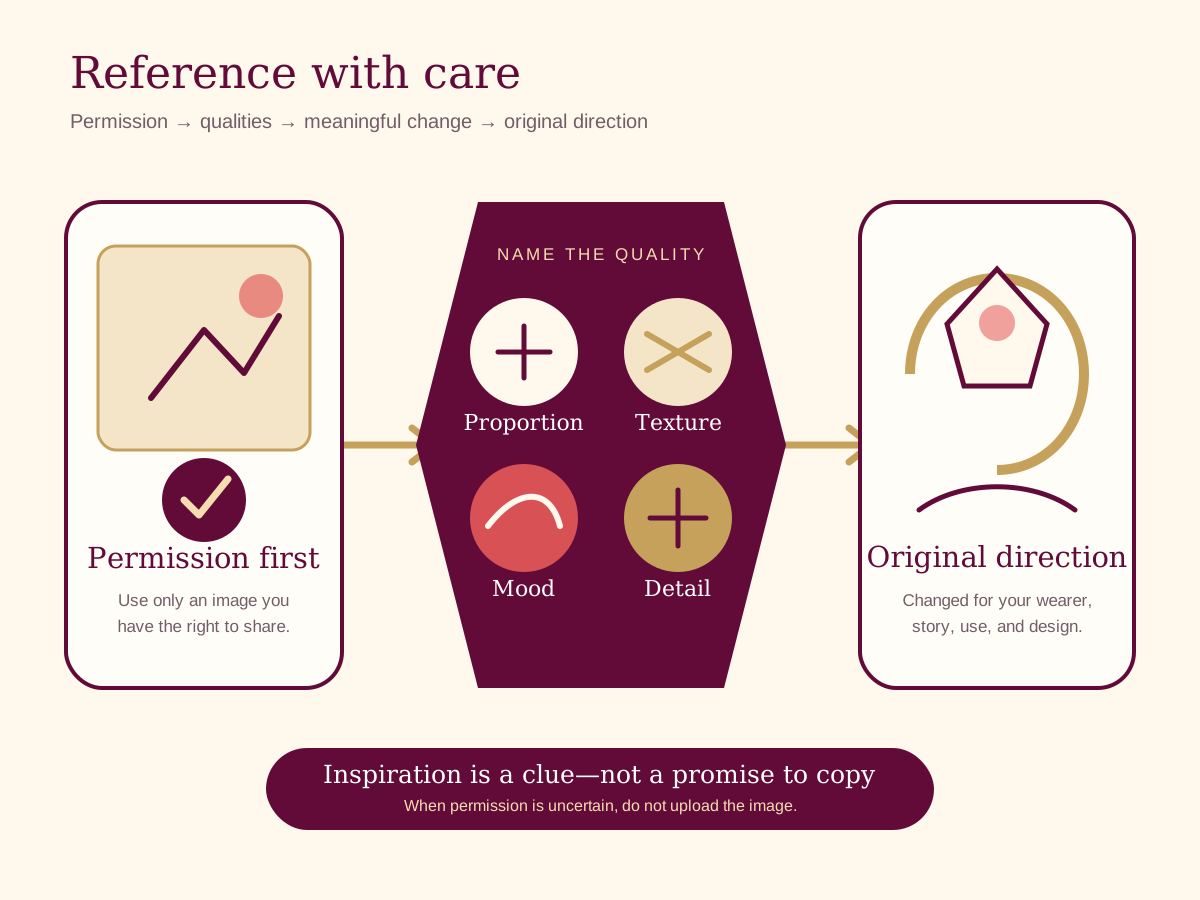
Use a permitted image to explain a quality you admire, then make the new direction meaningfully yours.
Permission before interpretation
Use a reference to explain what speaks to you—not to ask for someone else's design to be copied.
Choose what you have permission to share first. Add the actual image privately when you continue; it never becomes part of a public link.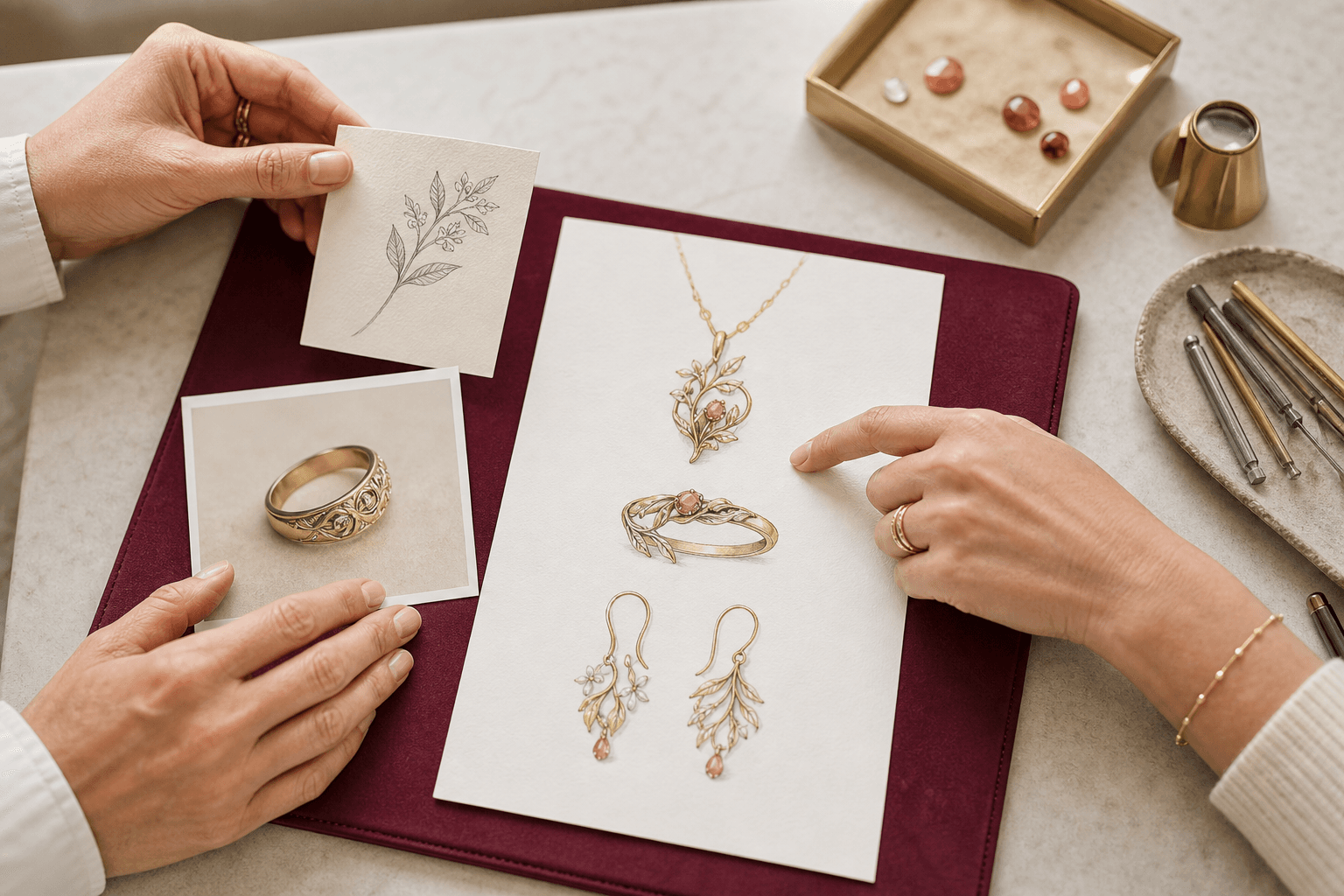
Use inspiration with care
How can I use a jewelry reference photo without asking Leyloon to copy it?
Share only an image you have the right or permission to use. Point to the quality you admire—a proportion, mood, texture, profile, or color relationship—rather than asking for the whole piece to be duplicated.
Then say what should change for your wearer, story, and daily life. Leyloon can explore an original direction and review the exact design details before a written quote is prepared.
Clarity before commitment
Know what this step can decide—and what stays open
What can this page help me decide?
- Whether you have the right or permission to share the image
- Which specific quality you admire
- What should change to make the new direction personal
What should stay open for Leyloon review?
- Use when ownership or permission is uncertain
- Any promise to copy another maker’s complete design
- Exact feasibility, material, fit, price, and making details
A respectful reference path
Separate permission, observation, and transformation
This protects the source, the customer, and the originality of the new design conversation.
- PermissionYou created it, own it, or have the right to share itIf unsure, do not upload it
- ObservationName one proportion, mood, texture, or relationshipAvoid requesting the complete arrangement
- ChangeAdd a different wearer, story, use, scale, or structureAsk for an original interpretation
- PrivacyPersonal images and notes deserve a private pathKeep sensitive context out of public links
A human example
A reference becomes a clue, not a template
You admire how a ring sits low on the hand, but the pictured piece belongs to another maker.
- Keep
- Keep only the low, calm profile as the quality to discuss.
- Ask next
- Create an original direction around your chosen stone, wearer, band relationship, and daily routine.
Illustrative planning scenario—not a customer story or finished-piece promise.
Before you continue
A short checklist for this decision
Confirm your right or permission to use every image.
Mark the exact quality you want to discuss.
Write what should be meaningfully different.
Keep personal photos and notes private as you continue.
The honest path forward
Preview, human review, written quote, your choice, then making
Each state answers a different question. Nothing here turns a visual direction into a final price, approval, purchase, or production step without the review and choice that belong between them.
- Confirm permission
Use only material you are entitled to share.
- Name the quality
Point to the proportion, mood, line, or detail that helps explain your taste.
- Create an original direction
Combine that clue with your wearer, story, and practical needs.
- Ask for human review
Leyloon reviews the exact design, materials, fit, and making questions.
- Receive a written quote
The quote belongs to the reviewed original direction; you choose whether to buy.
How this page stays grounded
First-party process and relevant independent guidance
Leyloon’s own guides describe the design and quote path. Independent sources are included only where they help with a specific rights, material, or pricing boundary.
- U.S. Copyright Office Compendium, Chapter 900A practical source on visual art, preexisting material, derivative works, and jewelry designs. This page is not legal advice.Accessed August 26, 2026Open independent source ↗
- Leyloon private reference pathThe first-party design path for a permitted reference and an original direction.Open Leyloon guide →
Published customer proof
Real experiences, kept separate from promises
Only approved purchase-linked reviews appear here. An illustrative scene is never presented as a customer, and one person’s experience is never treated as a promise for another piece.See what Leyloon customers have shared
Read recent shop reviews on Etsy, then come back when you are ready to shape your own custom jewelry direction.
These reviews reflect individual Leyloon service experiences. Your custom jewelry direction and quote request are reviewed on their own.