A gentle routine
Keep shower care simple, then explore future jewelry without mixing the two decisions.
Rinse gently, avoid twisting, and follow the aftercare for your exact placement. Style, scale, and closure choices belong after the piercing is ready.
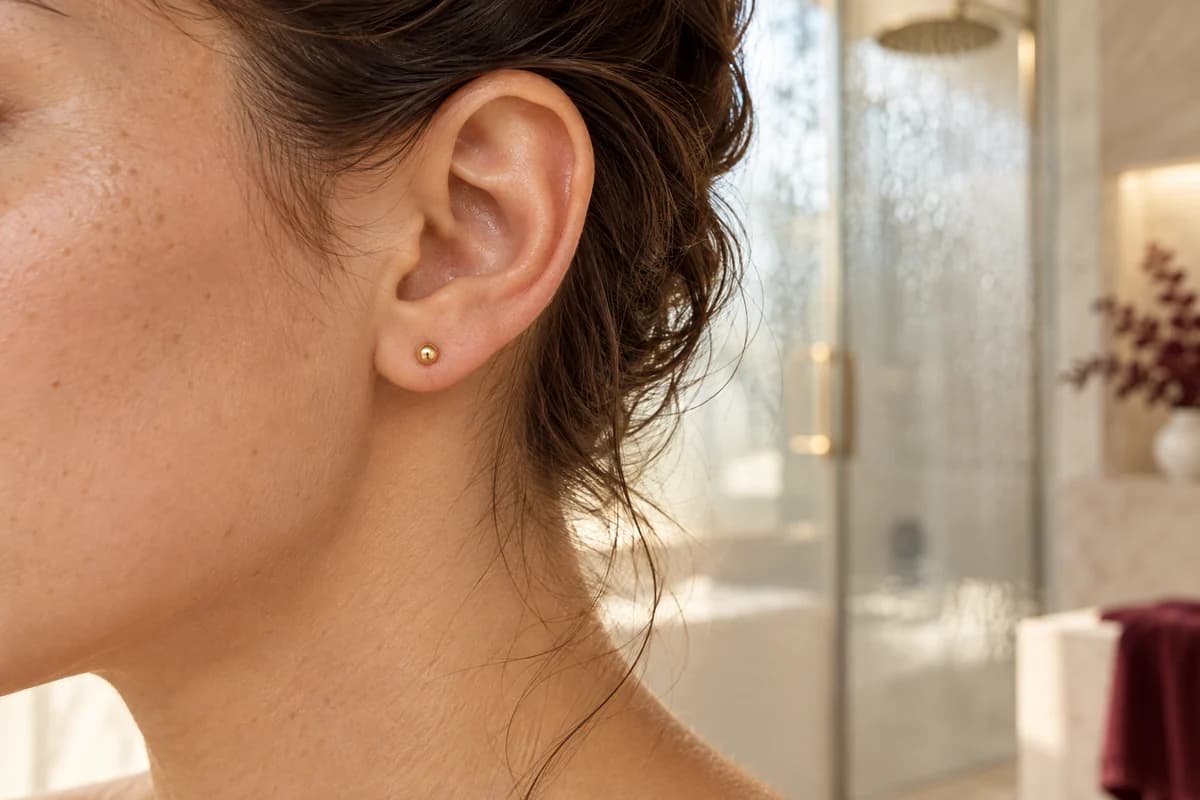
Care answer before jewelry choices
Keep the shower routine gentle and simple
Shows clean hands, a gentle running-water rinse, product awareness, and careful drying without turning a shower into a universal treatment plan.
Keep the shower gentle and uncomplicated. Clean hands, light rinsing, careful drying, and your piercer’s own instructions protect the care decision from unnecessary handling.
Use this page when
- You want a simple shower routine for a new ear piercing.
- You need to distinguish running water from pool, hot-tub, lake, or bath submersion.
Pause and choose another path when
- There is worsening pain, heat, marked swelling, drainage, fever, or you feel unwell; seek medical advice.
- You want this page to replace your piercer’s aftercare plan.
Where this choice often matters
- Washing hair during the healing period.
- Returning to an ordinary hygiene routine without unnecessary handling.
Compare the details
Shower sequence
A quick shower and soaking are different situations. Keep any pool, bath, hot-tub, lake, or ocean question with qualified aftercare guidance.
| Moment | Do | Avoid | Reason |
|---|---|---|---|
| Before | Wash hands and prepare clean drying material | Handling with unwashed hands | Reduces unnecessary contact |
| During | Let clean running water rinse gently | Scrubbing or rotating | Limits trauma |
| Products | Keep fragrance and hair products away when possible | Leaving residue | Reduces irritation |
| After | Rinse and dry as instructed | Snagging with shared towel | Protects the healing site |
Questions worth asking
Open the concern that sounds like yours
Choose the question that sounds like yours. Each answer keeps the next step clear without closing decisions that still need review.
Can water touch it?
Professional aftercare guidance includes gentle shower rinsing. Avoid rough handling and keep your piercer’s plan first.
Can I wash my hair?
Use care around products, hair, and snagging, then rinse residue away.
Is a bath the same as a shower?
No. The Association of Professional Piercers notes that showers tend to be safer than baths while a piercing heals.
Care comes first
Settle the care question before choosing new jewelry
Once the piercing or care concern is resolved, you can return to the design path without guessing. Your choices stay editable as you continue.
- Future earring formA useful next question
- Future back or closureKeep it open if you are still deciding
- Hair, phone, glasses, and wear preferences after healingKeep it open if you are still deciding
Gentle shower routine
Keep the routine simple: clean hands, a gentle rinse, and careful drying.
A shower is generally easier to keep clean than soaking. Follow the placement-specific instructions from your piercer, and do not rotate jewelry during healing.0 of 4 steps reviewed
A visual map of this brief
See what stays known—and what remains open
This guide begins with “Shower gently and keep the piercing routine uncomplicated.” The next choices stay grouped, editable, and connected to that same Atelier brief.
- Before choosing earringsKeep the care question separate from the future design. This is private context, not a diagnosis or a promise that a piercing is ready for a jewelry change.
- Which part of the shower routine needs attention?Keep the care note separate from future jewelry choices, and follow the instructions from your piercer.
- Earring formChoose the complete silhouette family before scale and closure.
Published customer proof
Real experiences, kept separate from promises
Only approved purchase-linked reviews appear here. An illustrative scene is never presented as a customer, and one person’s experience is never treated as a promise for another piece.See what Leyloon customers have shared
Read recent shop reviews on Etsy, then come back when you are ready to shape your own jewelry question.
These reviews reflect individual Leyloon service experiences. Your jewelry question and quote request are reviewed on their own.