From design direction to quote request
A design direction is where the conversation starts; Leyloon reviews the exact choices before quoting.
A preview shows a direction. The written quote follows review of the exact piece and requested variation.
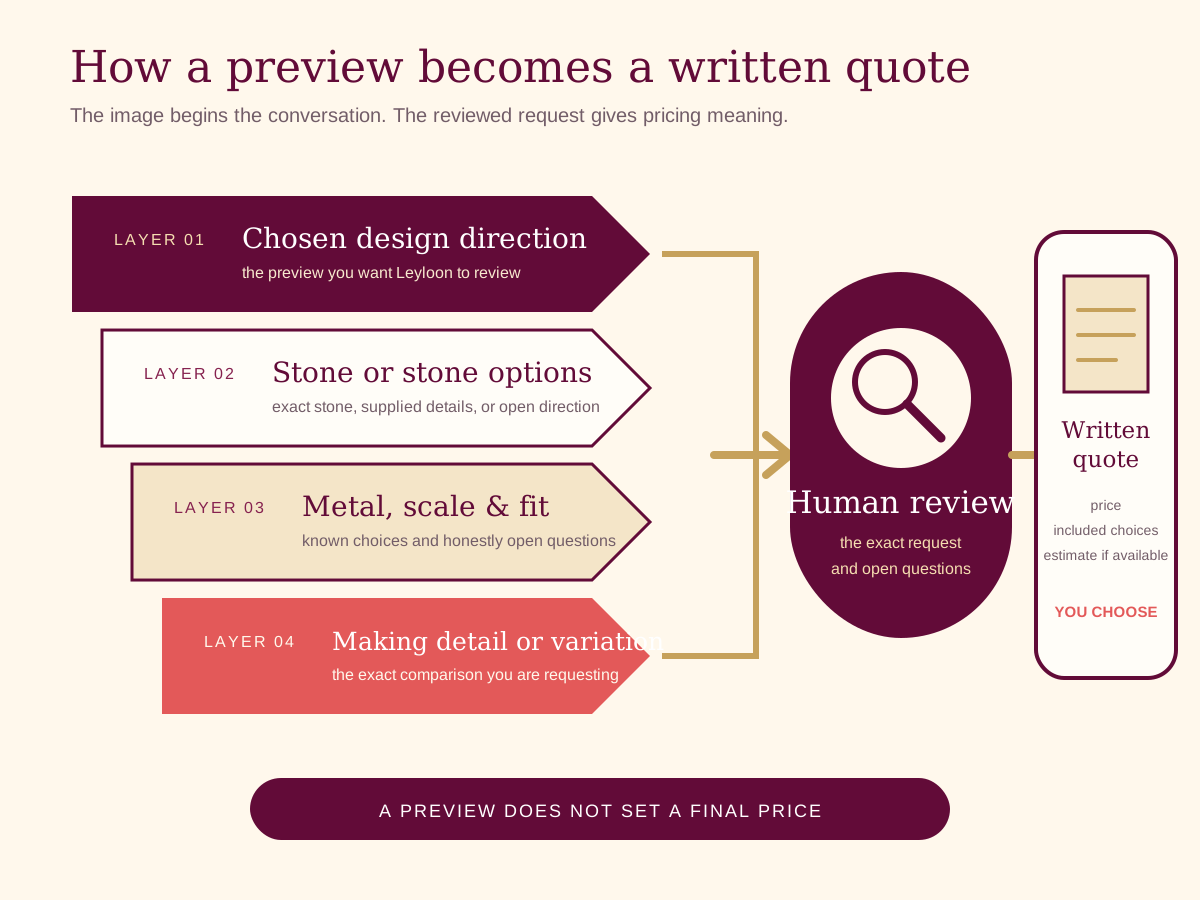
A generated image has no reliable price inside it
Name the exact direction and variation Leyloon should review for a written quote.
Piece, dimensions, fit, stone, materials, construction, and requested variation can all matter. Unknown details stay unanswered instead of falling back to a first option.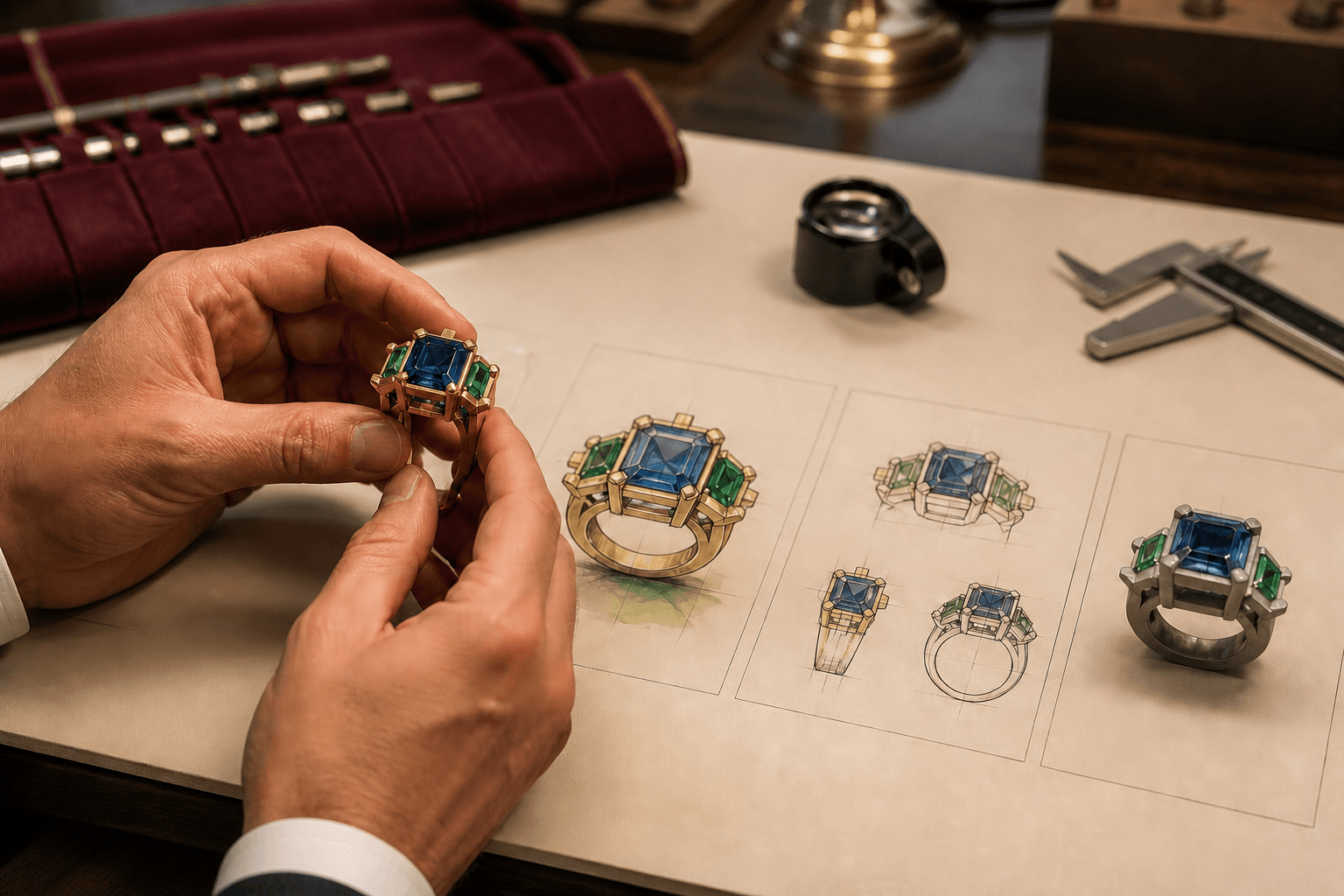
Price follows the reviewed request
How is a jewelry design priced after I choose a preview?
A design preview helps you choose a direction; it does not contain a reliable final price. Leyloon reviews the active piece, materials, stone needs, scale, fit, requested details, and any variations before preparing a written quote.
The quote stays tied to that reviewed request. You can ask about another variation without losing the earlier option, then choose whether you would like to buy and have Leyloon make the piece.
Clarity before commitment
Know what this step can decide—and what stays open
What can this page help me decide?
- Which active design direction you want priced
- Which exact choices or variations need comparison
- Whether the written quote matches the request you meant to make
What should stay open for Leyloon review?
- A final price inferred from the preview alone
- Unconfirmed stone, material, dimension, fit, or making assumptions
- A purchase or production step before your clear choice
What gives a quote meaning
Move from visible direction to reviewed details
The more clearly the active request is defined, the easier it is to understand what the written quote includes.
- Chosen previewThe visual direction you want to keepIdentify it clearly
- Exact requestPiece, stone, material, scale, fit, finish, and requested variationMark unknown details as open
- Human reviewThe questions the image cannot settleResolve what is needed for the quote
- Written quoteThe price, included work, options, and any timing estimate for the reviewed requestRead it before choosing
A human example
A visual change can change the quote question
You like one pendant preview but want to compare a different scale and chain direction for the same wearer.
- Keep
- Keep the symbol, overall silhouette, and personal detail unchanged.
- Ask next
- Have Leyloon review the two exact scale and chain requests, then prepare the applicable written options.
Illustrative planning scenario—not a customer story or finished-piece promise.
Before you continue
A short checklist for this decision
Choose the one design direction you want reviewed.
Confirm the piece, stone, material, scale, fit, and requested details you know.
Name every variation separately.
Compare the written quote with the active request before buying.
The honest path forward
Preview, human review, written quote, your choice, then making
Each state answers a different question. Nothing here turns a visual direction into a final price, approval, purchase, or production step without the review and choice that belong between them.
- Design selected
One active preview becomes the direction for review.
- Details gathered
Known materials, stone needs, scale, fit, and variations stay attached.
- Human review
Leyloon reviews the exact request and any questions that remain.
- Written quote
The current price and included choices belong to the reviewed request.
- Your choice
You can ask about a variation, pause, or buy and move toward making.
How this page stays grounded
First-party process and relevant independent guidance
Leyloon’s own guides describe the design and quote path. Independent sources are included only where they help with a specific rights, material, or pricing boundary.
- Leyloon quote-request guideThe first-party states and customer choices attached to the active request.Open Leyloon guide →
- FTC Guides Against Deceptive PricingIndependent U.S. guidance supporting clear pricing representations without invented savings or context-free comparisons.Accessed August 26, 2026Open independent source ↗
Published customer proof
Real experiences, kept separate from promises
Only approved purchase-linked reviews appear here. An illustrative scene is never presented as a customer, and one person’s experience is never treated as a promise for another piece.See what Leyloon customers have shared
Read recent shop reviews on Etsy, then come back when you are ready to shape your own custom jewelry direction.
These reviews reflect individual Leyloon service experiences. Your custom jewelry direction and quote request are reviewed on their own.