Make the budget part of the brief
Share a comfortable range so Leyloon can shape useful directions around it.
Share the range that feels comfortable, protect what matters most, and keep flexible choices open for comparison.
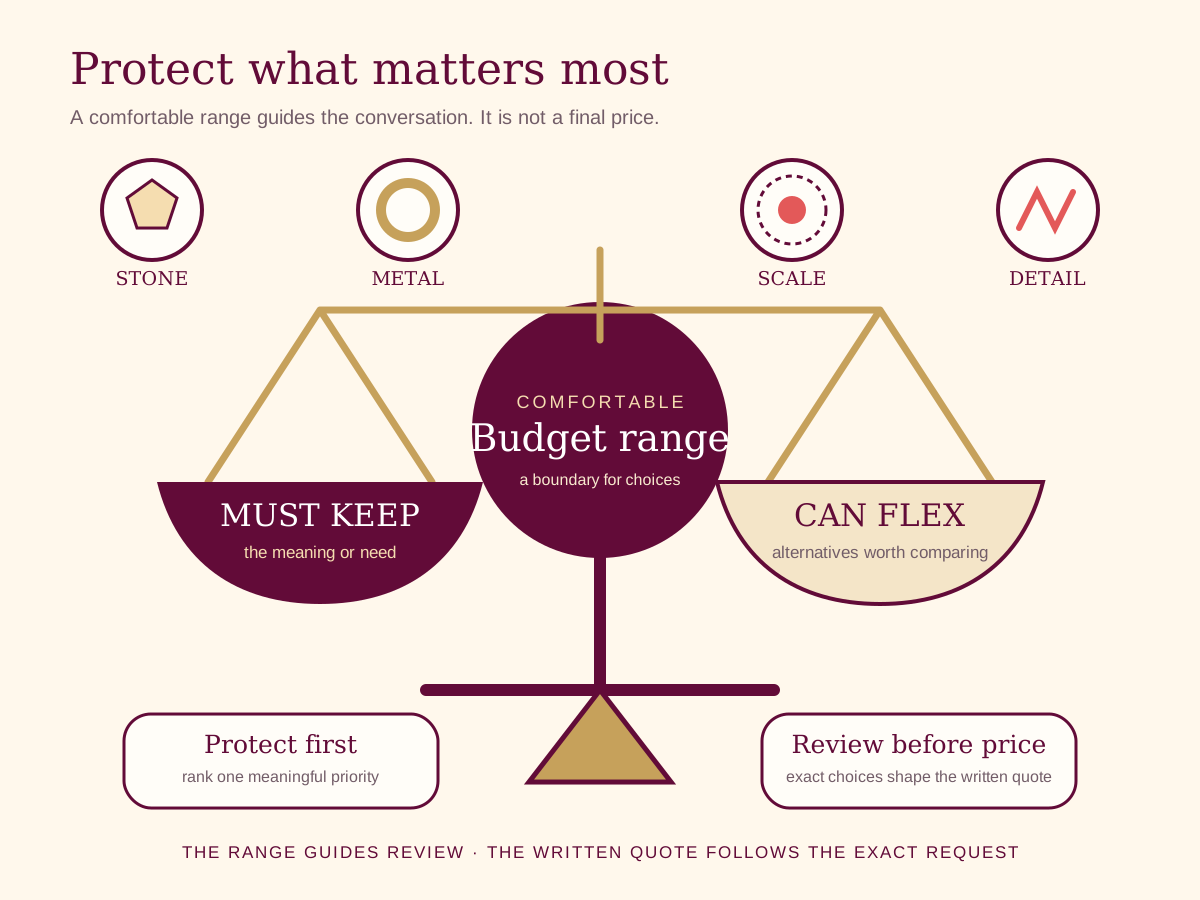
Keep priorities visible
Share a comfortable boundary and the detail you would protect first.
A budget brief guides tradeoff conversations; it does not create a price. Exact cost comes from the reviewed design, stone, materials, and construction.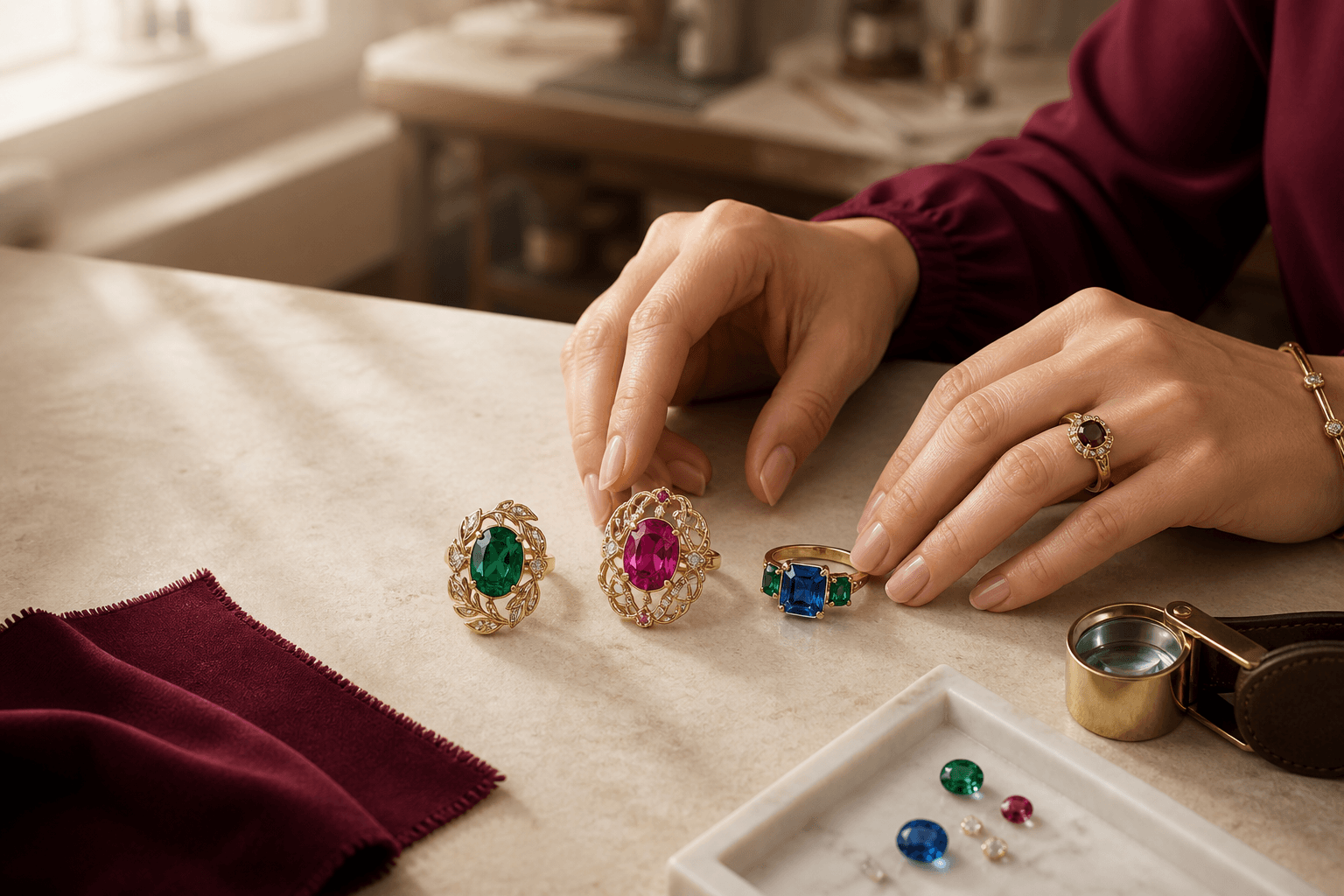
A budget can protect what matters
How can I share a custom jewelry budget without flattening the idea?
Share a comfortable range and name the part of the piece you most want to protect. That may be the stone presence, metal direction, personal detail, scale, fit, or the feeling of the design.
Then mark what can flex. A budget brief helps Leyloon compare meaningful directions, but it does not create a final price before the exact design, materials, stone, fit, and making details are reviewed in a written quote.
Clarity before commitment
Know what this step can decide—and what stays open
What can this page help me decide?
- A comfortable range for the conversation
- The detail or feeling worth protecting first
- Which choices can flex when alternatives are compared
What should stay open for Leyloon review?
- A final price before the exact request is reviewed
- Unconfirmed stone, material, size, or construction assumptions
- Any suggestion that a budget guarantees a particular result
Protect, flex, and ask
Give the range a clear job
A thoughtful budget brief helps compare the same priorities across real design choices instead of chasing a number without context.
- ProtectThe stone, story, scale, metal feeling, or wear need that matters mostRank one priority first
- FlexDetails that may change without losing the ideaName alternatives you would enjoy considering
- Keep openExact specifications or options not yet reviewedDo not fill uncertainty with a guess
- AskThe tradeoff you want the written quote to explainCompare choices around the same design
A human example
The meaning stays, the details can breathe
A pendant needs to keep a small engraved detail, while the chain and accent-stone direction can remain flexible.
- Keep
- Protect the engraving and the scale that makes it readable and wearable.
- Ask next
- Let Leyloon compare reviewed chain and accent directions within the comfortable range before quoting.
Illustrative planning scenario—not a customer story or finished-piece promise.
Before you continue
A short checklist for this decision
Choose a comfortable range, not a hidden test.
Rank the one detail you most want to protect.
Name two details that can flex.
Ask for written options tied to the reviewed design.
The honest path forward
Preview, human review, written quote, your choice, then making
Each state answers a different question. Nothing here turns a visual direction into a final price, approval, purchase, or production step without the review and choice that belong between them.
- Share the range
Use a comfortable boundary for a real design conversation.
- Protect the priority
Keep the detail with the greatest meaning or practical value visible.
- Compare directions
Explore alternatives without quietly changing the whole piece.
- Human review
Leyloon reviews the exact materials, stone, scale, fit, and making details.
- Written quote
You receive reviewed options and choose whether to revise or buy.
How this page stays grounded
First-party process and relevant independent guidance
Leyloon’s own guides describe the design and quote path. Independent sources are included only where they help with a specific rights, material, or pricing boundary.
- Leyloon pricing and quote guideThe first-party process for connecting reviewed choices to a written quote.Open Leyloon guide →
- FTC Guides Against Deceptive PricingIndependent U.S. guidance supporting clear, contextual price communication without invented comparisons.Accessed August 26, 2026Open independent source ↗
Published customer proof
Real experiences, kept separate from promises
Only approved purchase-linked reviews appear here. An illustrative scene is never presented as a customer, and one person’s experience is never treated as a promise for another piece.See what Leyloon customers have shared
Read recent shop reviews on Etsy, then come back when you are ready to shape your own custom jewelry direction.
These reviews reflect individual Leyloon service experiences. Your custom jewelry direction and quote request are reviewed on their own.