Bring the concept to review
A promising concept becomes clearer when Leyloon reviews fit, materials, and making details with you.
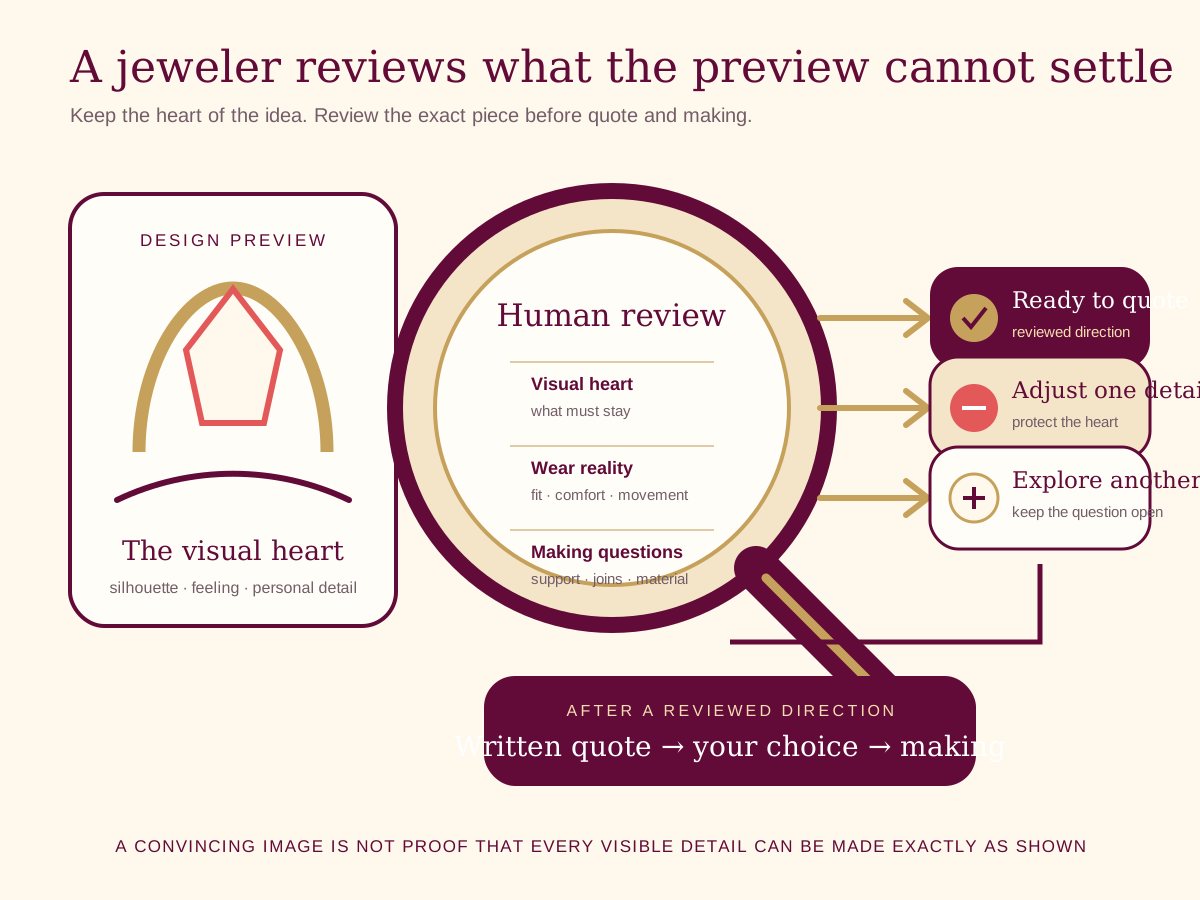
Keep the visual heart of the concept, then bring support, profile, movement, fit, and making questions to human review.
Photorealistic is not the same as makeable
Bring the must-keep feature and the real wear question into human feasibility review.
Support, setting access, weight, balance, attachment, closure, fit, and movement can matter differently for each piece. A preview cannot settle them on its own.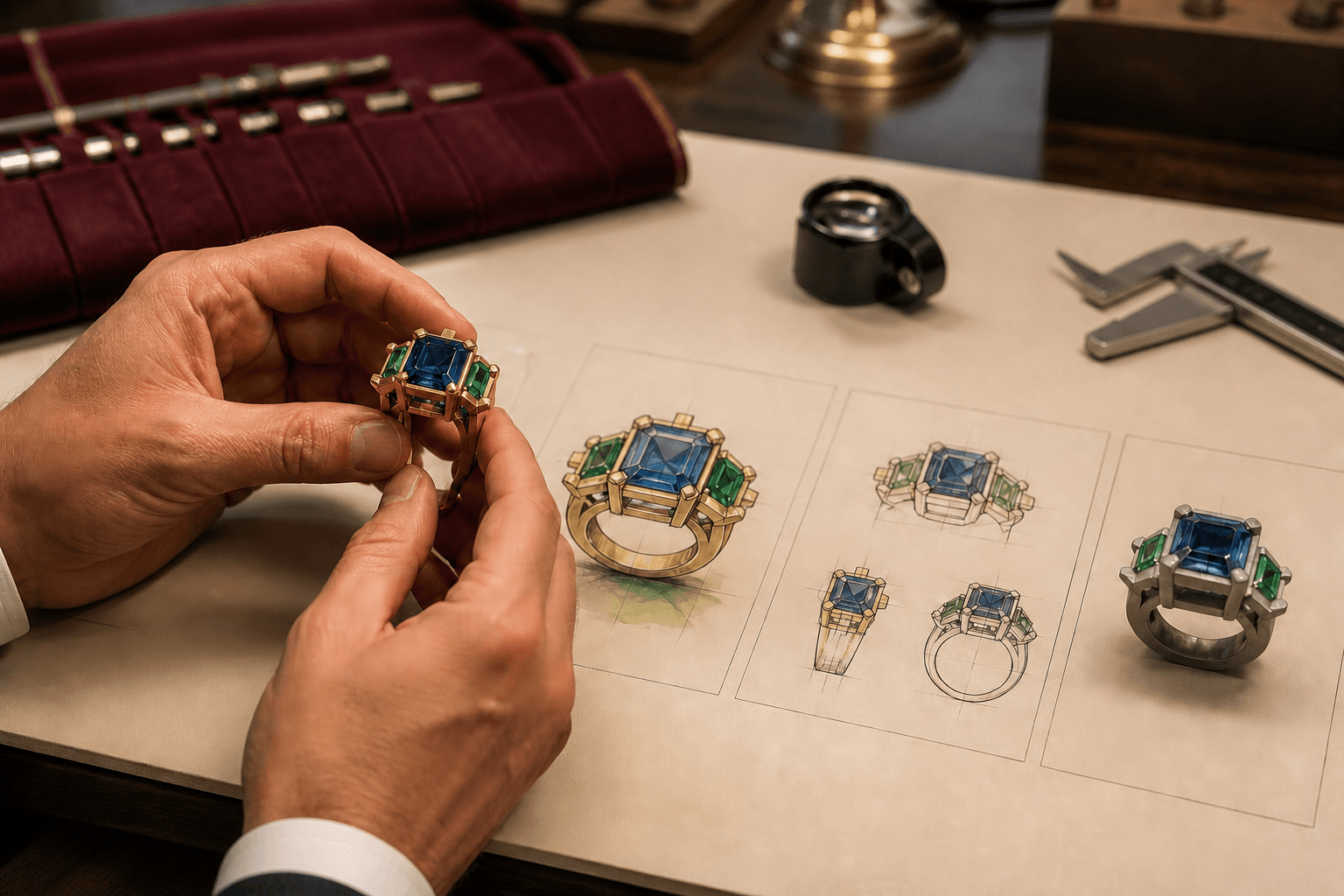
Keep the heart; review the real piece
Can the jewelry concept I generated become a piece I can wear?
A generated concept can make the silhouette, mood, or personal detail visible. The next step is a human review of the exact proportions, stone support, fit, movement, joins, materials, care, and other making questions for that piece.
Leyloon can suggest changes that protect the heart of the direction while making the request clearer. A written quote belongs after that review; you choose whether to buy before making begins.
Clarity before commitment
Know what this step can decide—and what stays open
What can this page help me decide?
- The visual heart of the concept that must stay
- The wear and making questions that need attention
- Which reviewed revision is worth requesting a quote for
What should stay open for Leyloon review?
- A promise that a photorealistic image proves the piece can be made exactly as shown
- Unreviewed dimensions, support, fit, movement, or material assumptions
- Price, timing, approval, or production before the written quote and your choice
A human review lens
Protect the idea while checking the exact piece
The goal is not to erase the concept. It is to understand which details carry its meaning and which details need thoughtful adjustment.
- Visual heartThe silhouette, movement, stone feeling, or personal detail that defines the ideaName what must stay
- Wear realityFit, comfort, movement, pairing, routine, and careDescribe how the piece will live
- Making questionsProportion, support, joins, closure, setting access, and materialAsk Leyloon to review the exact direction
- Clear revisionA change that protects the heart while resolving a real concernReview before requesting a quote
A human example
A dramatic idea becomes a clearer wearable direction
A ring concept has an airy floating center, but the support and daily profile are not visible in the image.
- Keep
- Keep the light, open feeling around the center stone.
- Ask next
- Let Leyloon review support, proportions, profile, fit, material, and setting access, then show a revised direction before quote.
Illustrative planning scenario—not a customer story or finished-piece promise.
Before you continue
A short checklist for this decision
Name the part of the concept that carries its meaning.
Describe the wearer, routine, fit, and movement needs.
List the exact making questions the preview cannot answer.
Review the revised direction before requesting a written quote.
The honest path forward
Preview, human review, written quote, your choice, then making
Each state answers a different question. Nothing here turns a visual direction into a final price, approval, purchase, or production step without the review and choice that belong between them.
- Concept received
The visual direction and its important context stay together.
- Heart identified
You name the silhouette, feeling, or detail that should be protected.
- Human review
Leyloon reviews the exact proportions, fit, support, materials, and making questions.
- Direction refined
Any suggested change is shown as a new direction for you to consider.
- Written quote and choice
The reviewed request can be quoted; you decide whether to buy before making.
How this page stays grounded
First-party process and relevant independent guidance
Leyloon’s own guides describe the design and quote path. Independent sources are included only where they help with a specific rights, material, or pricing boundary.
- FTC Jewelry GuidesIndependent U.S. guidance for truthful material and jewelry representations; the exact piece still needs item-specific review.Accessed August 26, 2026Open independent source ↗
- Leyloon preview guideThe first-party boundary between a visual beginning and details that need human review.Open Leyloon guide →
Published customer proof
Real experiences, kept separate from promises
Only approved purchase-linked reviews appear here. An illustrative scene is never presented as a customer, and one person’s experience is never treated as a promise for another piece.See what Leyloon customers have shared
Read recent shop reviews on Etsy, then come back when you are ready to shape your own custom jewelry direction.
These reviews reflect individual Leyloon service experiences. Your custom jewelry direction and quote request are reviewed on their own.