From thought to direction
Turn a beautiful idea into notes Leyloon can actually use.
Translate the feeling, memory, or image into a visible direction without needing technical jewelry words.
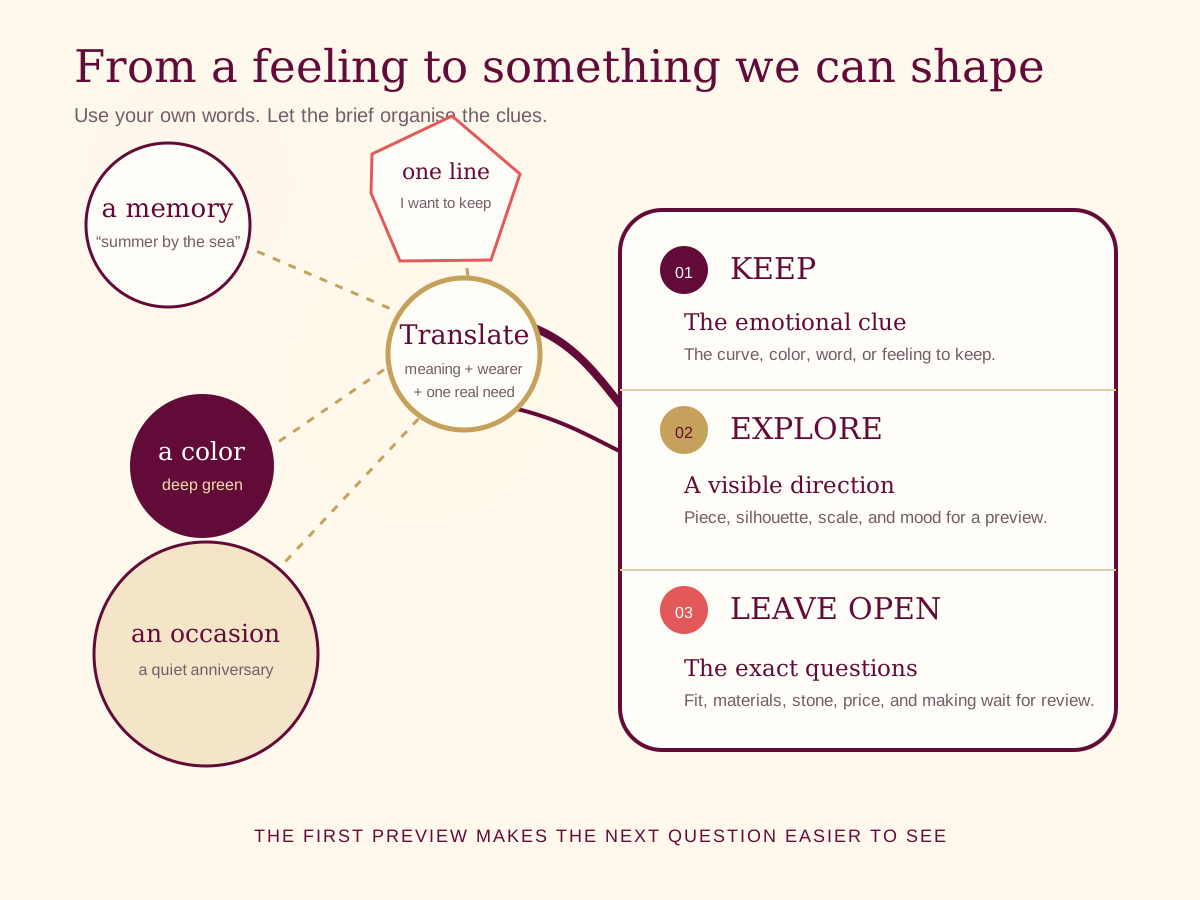
From feeling to useful direction
Keep the emotional center, then add only the details that help shape it.
A good brief does not need technical language. It needs one clear meaning, one priority, and room for the questions you have not answered yet.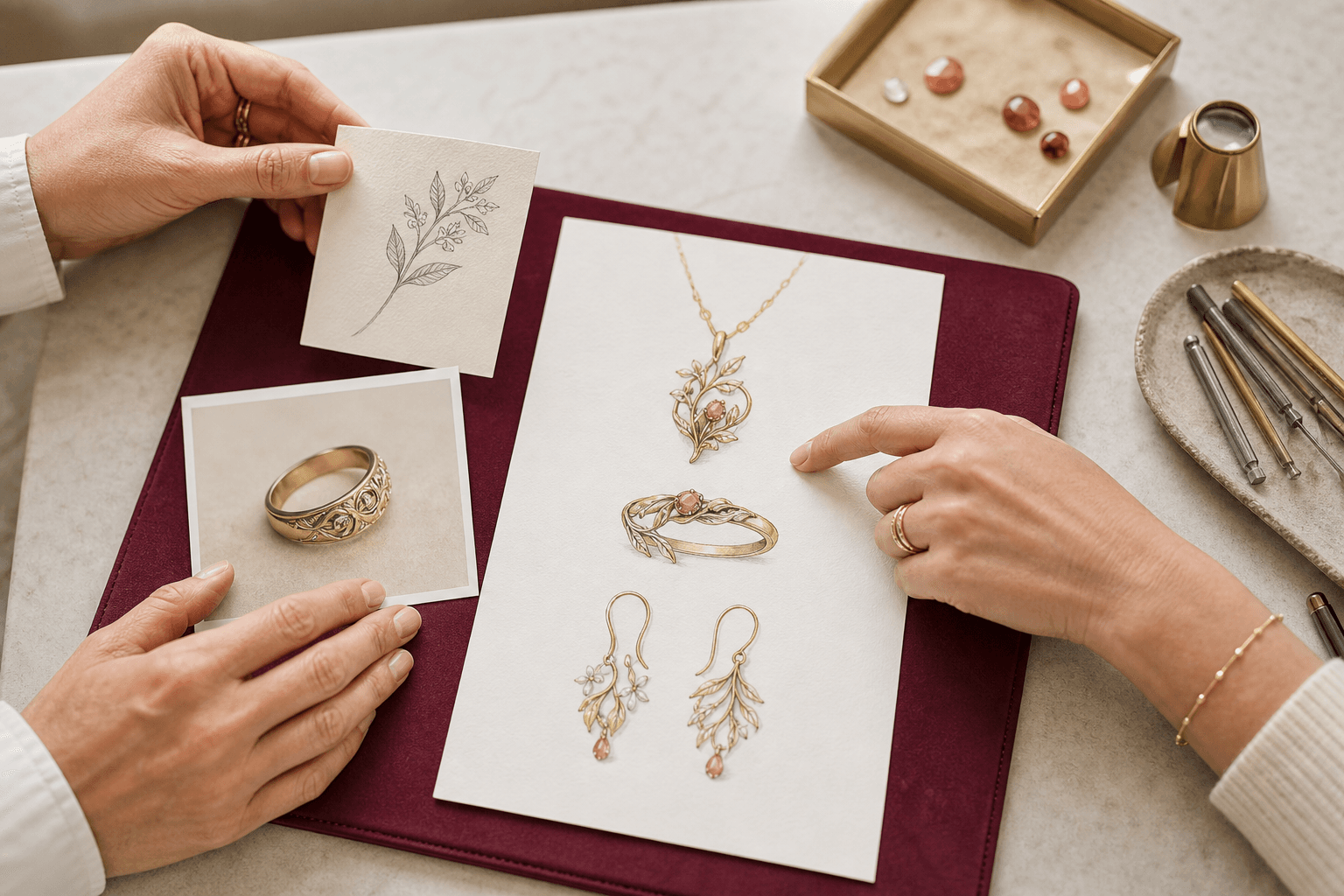
From a feeling to a visible direction
How do I turn a jewelry idea into a brief without knowing technical words?
Name what first caught your heart: a line, memory, color, word, symbol, or way you want the piece to feel. Then add the wearer and one practical detail.
Leyloon can use those clues to create a design preview you can respond to. The preview helps reveal the next question; it does not settle exact materials, measurements, price, or making on its own.
Clarity before commitment
Know what this step can decide—and what stays open
What can this page help me decide?
- The emotional or visual spark worth carrying forward
- The wearer and piece that give the idea context
- One practical need and one open design question
What should stay open for Leyloon review?
- Technical names you do not yet know
- Exact proportions, materials, fit, and construction
- Written quote and purchase decision
Translate, do not over-explain
Move from spark to brief in four small steps
Each step adds useful context without turning a personal idea into a rigid specification.
- SparkThe memory, word, object, color, or lineSay why it matters
- WearerThe person, occasion, and everyday rhythmChoose the piece that carries it naturally
- Visible clueOne shape, scale, texture, or moodDescribe what should remain recognizable
- Open questionThe part you cannot see clearly yetAsk Leyloon to compare it
A human example
A keepsake idea becomes easier to see
A handwritten word matters to your family, but you do not want the piece to feel like a literal nameplate.
- Keep
- Keep the rhythm of one letter or line as the emotional clue.
- Ask next
- Explore an original pendant direction, then review scale, legibility, wear, and making details with Leyloon.
Illustrative planning scenario—not a customer story or finished-piece promise.
Before you continue
A short checklist for this decision
Write the idea in one natural sentence.
Explain the part that carries the meaning.
Name the wearer, piece, and one real-life need.
Say what can change and what should stay.
The honest path forward
Preview, human review, written quote, your choice, then making
Each state answers a different question. Nothing here turns a visual direction into a final price, approval, purchase, or production step without the review and choice that belong between them.
- Name the spark
Begin with the feeling or image that keeps returning to you.
- Build the brief
Add the wearer, piece, visual clue, and open question.
- See a preview
Use the first direction to notice what feels true to the idea.
- Review together
Leyloon reviews the exact materials, fit, proportions, and making questions.
- Quote, then choose
A written quote follows the reviewed request; you decide whether to buy.
How this page stays grounded
First-party process and relevant independent guidance
Leyloon’s own guides describe the design and quote path. Independent sources are included only where they help with a specific rights, material, or pricing boundary.
Published customer proof
Real experiences, kept separate from promises
Only approved purchase-linked reviews appear here. An illustrative scene is never presented as a customer, and one person’s experience is never treated as a promise for another piece.See what Leyloon customers have shared
Read recent shop reviews on Etsy, then come back when you are ready to shape your own custom jewelry direction.
These reviews reflect individual Leyloon service experiences. Your custom jewelry direction and quote request are reviewed on their own.