Record the raw wrist before choosing the ease
A useful wrist note keeps the number, unit, method, and intended resting place together.
Measure on bare skin where the flexible bracelet will sit. Repeat the reading if you can, then choose movement and construction as separate details.
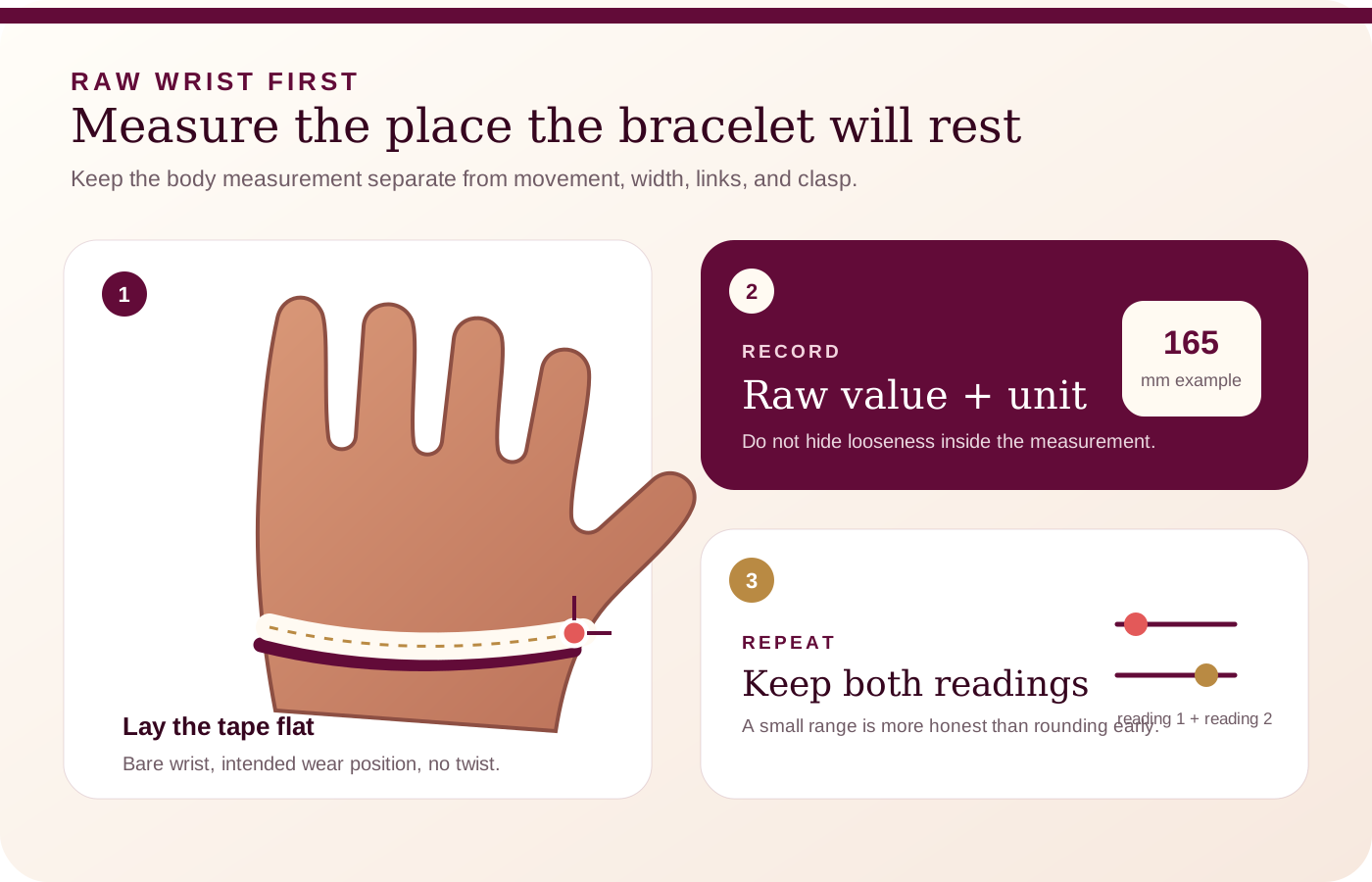
Raw wrist worksheet
Measure once, repeat, then choose the bracelet.
This helper records the body measurement only. It does not add hidden looseness or turn a wrist number into a finished bracelet length.For left/right wear or a planned stack, measure the exact wrist and position you intend to use. A closed rigid bangle needs the separate widest-hand path.
Measuring a closed bangle instead?A careful raw measurement
Measure where it will rest. Add the feeling later.
Use a flexible tape or a non-stretch strip at the place the flexible bracelet will sit. Keep it flat and comfortably close to bare skin. Write down the number, unit, location, and a repeat measurement before you decide how loose it should feel.
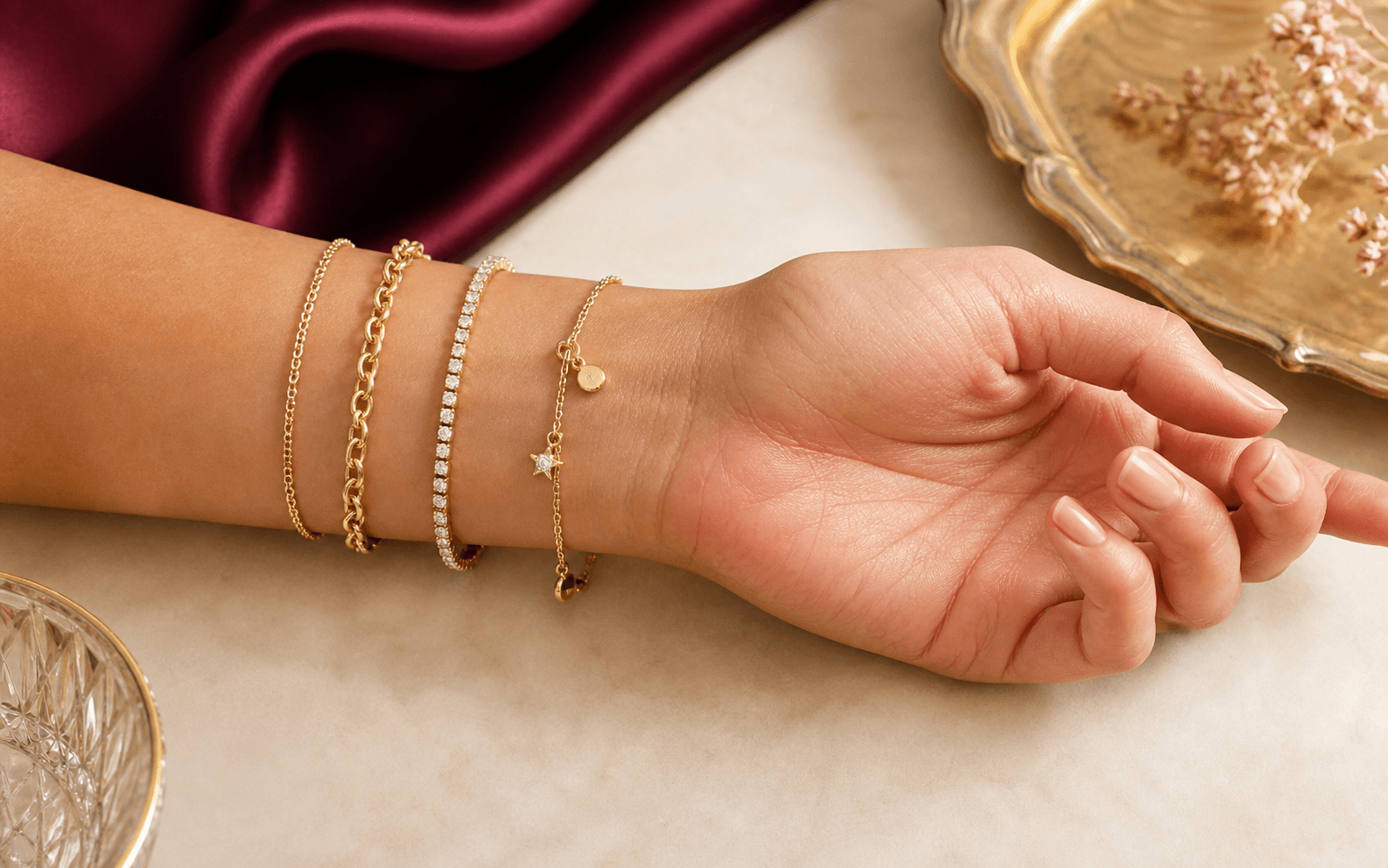
Start with the right question
A small detail can make the whole path clearer.
You are preparing a raw wrist measurement for a flexible bracelet.
You have a tape, or a non-stretch strip and millimeter ruler.
You are saving a private fit note for yourself or a permitted loved-one design.
Use this visual as a clear beginning. Keep the raw measurement, construction, and desired movement separate until the exact design can be reviewed.
A useful comparison
A raw wrist note that a jeweler can use
Repeat a measurement if you can. Keep the original value—do not round it into a finished bracelet size yet.
| Step | Do | Keep with the note | Avoid |
|---|---|---|---|
| Position | Choose the intended resting place | Near hand, wrist bone, or higher wrist | Measuring a different spot by habit |
| Tape | Lay it flat against bare skin | Raw circumference and unit | Twisting, overlap, or compression |
| Repeat | Take a second reading | Any small range you saw | Rounding before you compare |
| Continue | Choose flexible bracelet direction | Movement and construction | Using the result for a rigid bangle |
What changes the choice
Small details that deserve to stay visible
- Where the bracelet sits matters as much as the number.
- The unit and measurement method make the note useful later.
- Comfort, movement, and construction should be chosen after the raw number is recorded.
Common mix-ups
Easy to avoid once you know them
- Adding a finger-under-the-tape gap and then forgetting how much was added.
- Using elastic cord or a twisted tape.
- Reusing a wrist circumference for a closed rigid bangle.
Questions people ask
Take a moment with the part that feels uncertain.
There is no need to guess at a fit detail. Keep the useful clue, then let the next step stay editable.
Should I fit a finger under the tape?
Record the bare wrist first. The bracelet’s movement is easier to discuss when any added room is a separate, visible preference.
Can I use string?
Yes, if it does not stretch. Mark the overlap, measure it against a millimeter ruler right away, and repeat the reading.
Where should I measure?
Measure where you actually expect the bracelet to rest. Keep that location with the number, especially when a style sits lower toward the hand or higher on the wrist.
What happens next
Bring the useful clue into a design direction.
- 01
Start with the measurement or construction you know.
- 02
Choose the style and details that matter to you; you can adjust them as you go.
- 03
Explore your direction, then request a quote when you want Leyloon to review the exact piece. Its status and available options stay connected to that request.
A visual map of this brief
See what stays known—and what remains open
This guide begins with “Measure the wrist, then describe the comfort you want.” The next choices stay grouped, editable, and connected to that same Atelier brief.
- How will you measure?Record the method before interpreting the number. Do not add bracelet ease yet.
- Which unit will you record?Keep the unit beside the raw value so the note is not mistaken for a finished bracelet length.
- Where will the bracelet sit?Measure the bare wrist at the position the flexible bracelet is meant to rest. The location gives the number meaning.
- How will you check the reading?A repeat check catches tape angle, pressure, and unit mistakes before the value becomes a design note.
Start with what matters on this page
Record the wrist carefully before choosing the bracelet
A raw wrist measurement is most useful when its method, unit, location, and repeat check stay beside it. Then choose the flexible construction that should carry the note into Atelier.Published customer proof
Real experiences, kept separate from promises
Only approved purchase-linked reviews appear here. An illustrative scene is never presented as a customer, and one person’s experience is never treated as a promise for another piece.See what Leyloon customers have shared
Read recent shop reviews on Etsy, then come back when you are ready to shape your own fit and jewelry direction.
These reviews reflect individual Leyloon service experiences. Your fit and jewelry direction and quote request are reviewed on their own.