Find a comfortable starting fit
Measure with the way you want the bracelet to sit in mind.
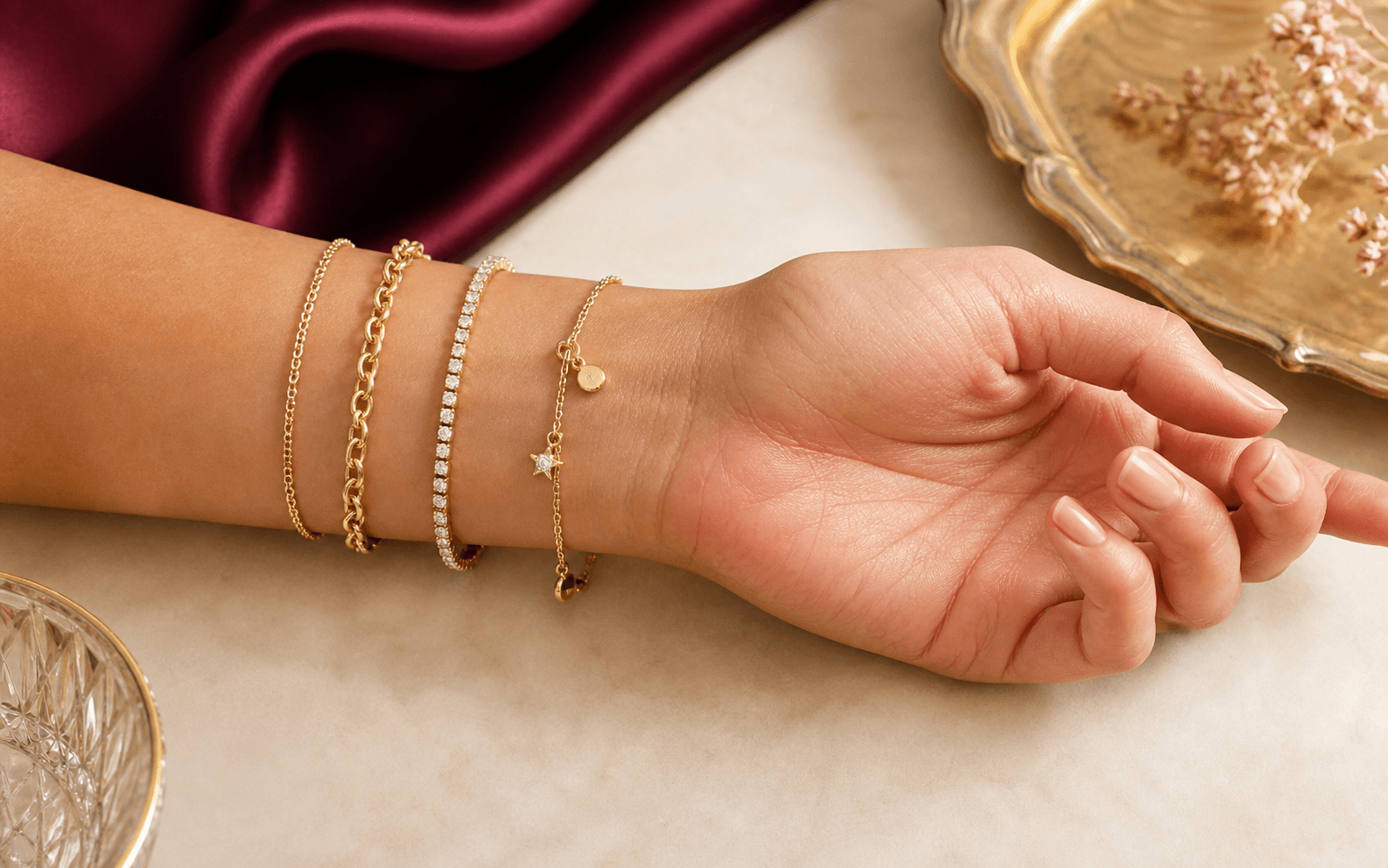
A flexible chain, tennis line, link bracelet, and charm bracelet can feel different at the same wrist measurement. Keep the raw number visible, choose the movement you enjoy, and review the exact construction with Leyloon.
Flexible bracelet fit tool
Keep the raw measurement and the construction beside each other.
Start with a wrist or an existing flexible bracelet. Then choose the details that change usable fit—movement, link or stone construction, width, clasp, and charm load.This tool is for flexible or articulated bracelets. Rigid bangles need a widest-hand measurement and a construction-specific check.
For flexible bracelets
Keep the wrist measurement honest, then choose the feeling.
Start with the raw wrist measurement where the bracelet will rest. Then choose the movement you enjoy and the kind of bracelet you are considering. Links, stones, charms, width, and the clasp can all change the final review.
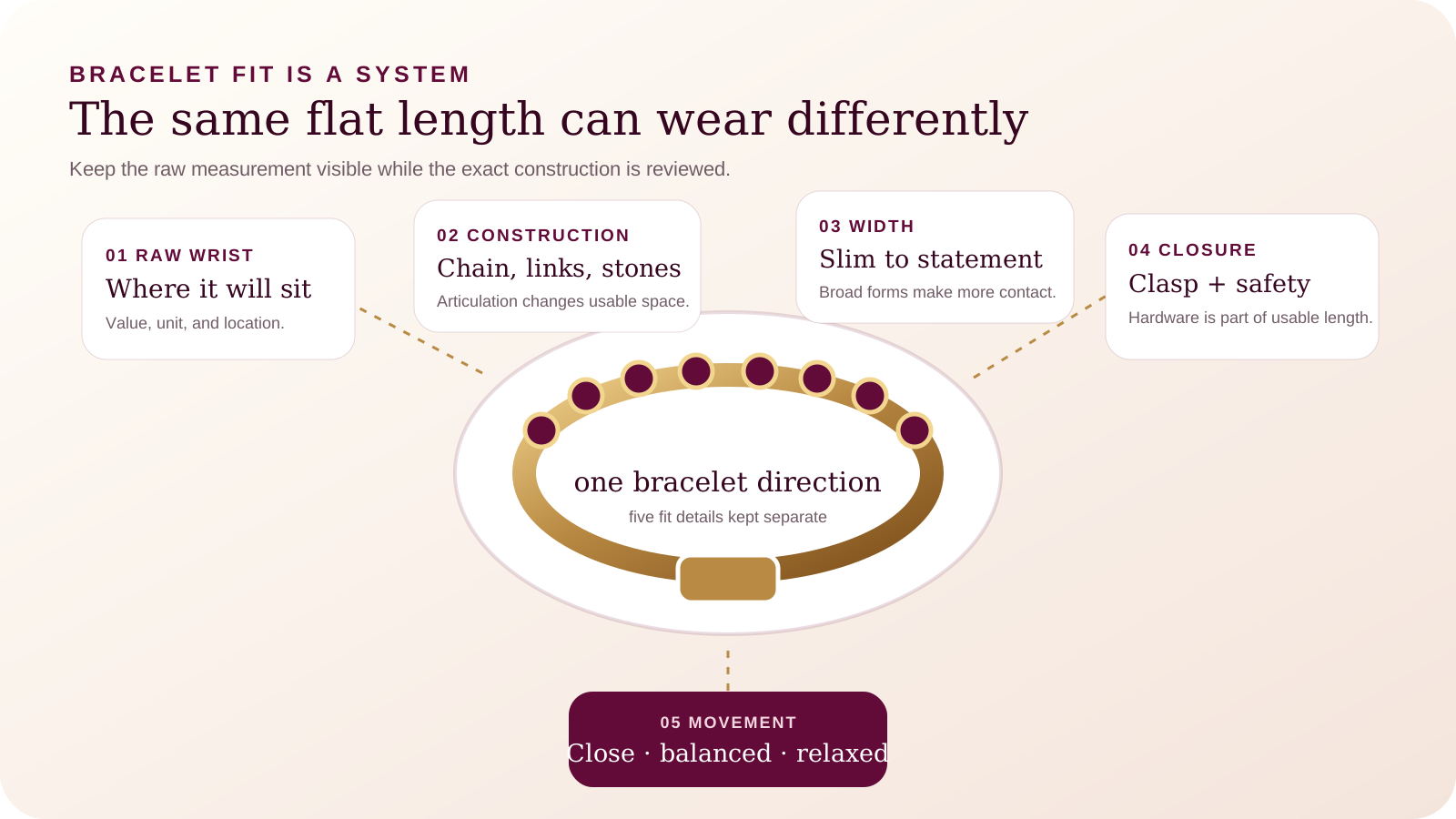
Start with the right question
A small detail can make the whole path clearer.
You are sizing a flexible chain, link, tennis, or charm bracelet.
You can measure the bare wrist at the place where the bracelet will sit.
You want to keep a close, balanced, or relaxed direction visible while you design.
Use this visual as a clear beginning. Keep the raw measurement, construction, and desired movement separate until the exact design can be reviewed.
A useful comparison
What the bracelet tool keeps separate
The result is a starting direction. It does not promise a finished length before the exact construction is reviewed.
| Keep | Why it matters | What stays open |
|---|---|---|
| Raw wrist | Gives the body measurement a clear source | Exact wearing position and unit |
| Movement preference | Shows whether you prefer close or more drape | How the finished construction feels |
| Bracelet form | Links, chain, tennis, and charms behave differently | Width, articulation, and clasp |
| Existing bracelet | Can be a practical reference | Usable inside length and construction match |
What changes the choice
Small details that deserve to stay visible
- Record the raw wrist number and its unit before adding any movement preference.
- A wider link, charm load, or stone setting can change usable interior space.
- The exact clasp and finishing length deserve a final review with the selected design.
Common mix-ups
Easy to avoid once you know them
- Using this bracelet tool for a closed bangle that must pass over the hand.
- Hiding the wrist number behind one predicted finished length.
- Measuring over a watch, another bracelet, or clothing when the design is intended for bare skin.
Questions people ask
Take a moment with the part that feels uncertain.
There is no need to guess at a fit detail. Keep the useful clue, then let the next step stay editable.
Does the tool give an exact bracelet length?
It gives you a thoughtful first direction. Leyloon can then review the actual width, links, stones, charms, clasp, and desired movement with you.
Can I use it for a bangle?
Use the bangle calculator instead. It asks how the bangle opens first, then reveals the widest-hand, wrist, round-inside, or oval-axis path that belongs to that construction.
What if I like a very loose bracelet?
Choose that feeling in the tool and keep it with the raw wrist measurement. The exact design still needs a construction check for comfortable, secure wear.
What happens next
Bring the useful clue into a design direction.
- 01
Start with the measurement or construction you know.
- 02
Choose the style and details that matter to you; you can adjust them as you go.
- 03
Explore your direction, then request a quote when you want Leyloon to review the exact piece. Its status and available options stay connected to that request.
A visual map of this brief
See what stays known—and what remains open
This guide begins with “Use a bracelet size tool as a thoughtful starting point.” The next choices stay grouped, editable, and connected to that same Atelier brief.
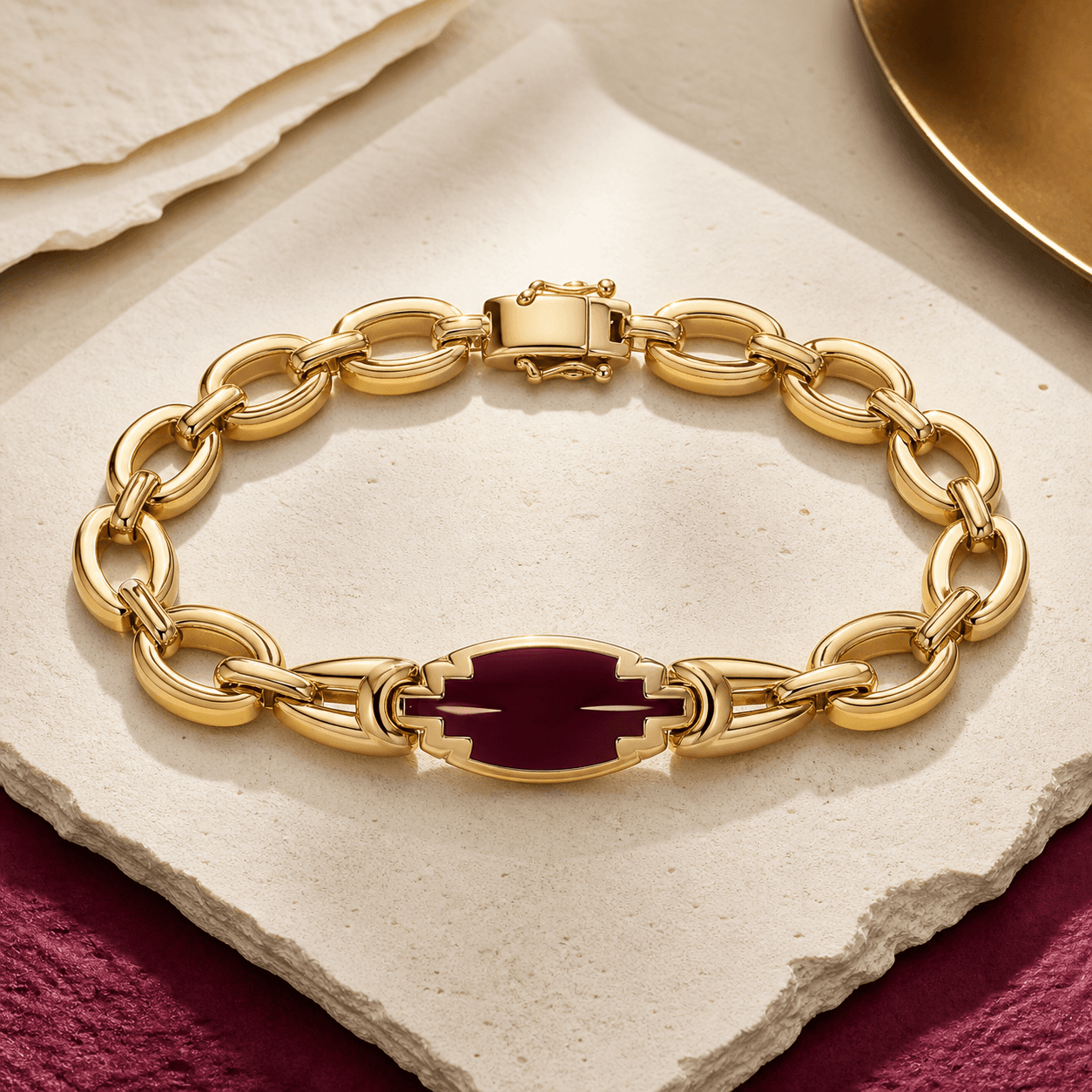
- Flexible bracelet constructionChoose the bracelet body before width, closure, and movement. Closed bangles and open cuffs belong in the bangle path instead.
- Starting wrist fitKeep the wrist length direction separate from the construction, width, closure, and preferred movement. It is a starting direction, not a finished-length promise.
- Bracelet width and presenceChoose the visible width family. Exact millimeters can stay open for the selected links, stones, and comfort review.
- Closure and securityChoose a closure that fits the bracelet construction and the way it will be handled. Leyloon can review exact hardware with the design.
Start with what matters on this page
Shape a flexible bracelet direction around the way it should feel
Start with a flexible bracelet construction. Keep the wrist fit, width, closure, and movement preference separate so the result stays useful when the exact links and hardware are reviewed.Published customer proof
Real experiences, kept separate from promises
Only approved purchase-linked reviews appear here. An illustrative scene is never presented as a customer, and one person’s experience is never treated as a promise for another piece.See what Leyloon customers have shared
Read recent shop reviews on Etsy, then come back when you are ready to shape your own fit and jewelry direction.
These reviews reflect individual Leyloon service experiences. Your fit and jewelry direction and quote request are reviewed on their own.