Connection does not require sameness
Coordinate two wedding bands without making them identical.
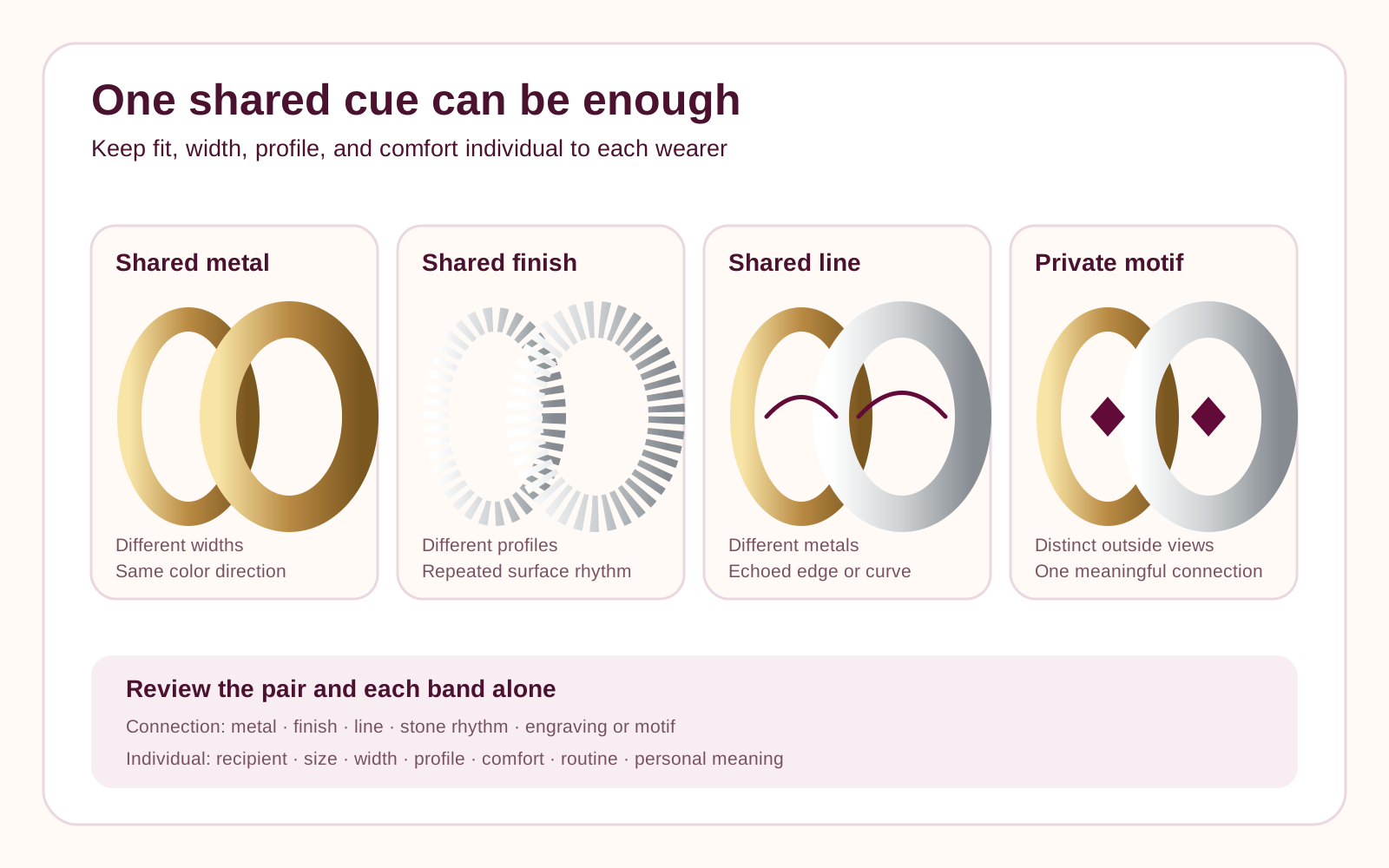
Choose one shared cue, then let each band fit its own wearer. Connection can live in metal, finish, line, stones, or a private detail without making the rings identical.
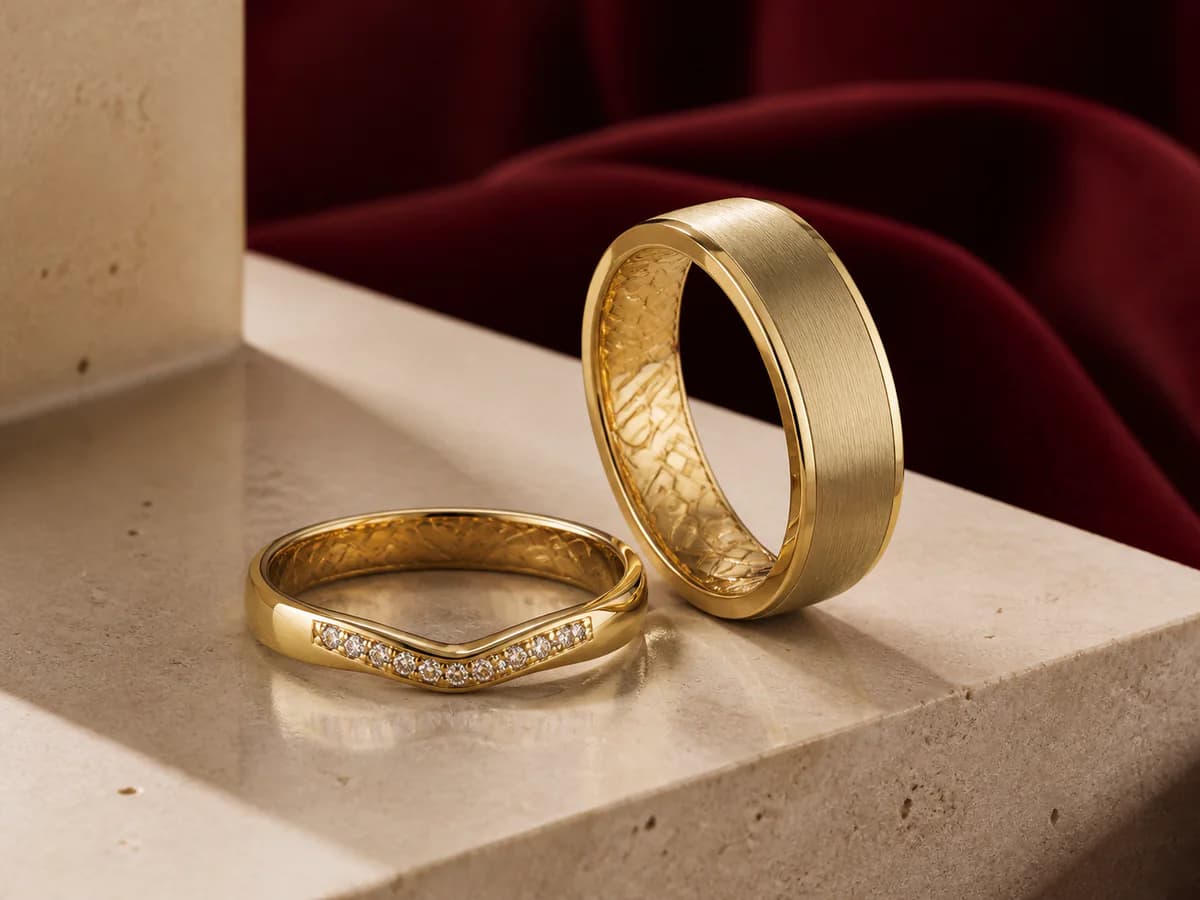
Connection without sameness
Choose the detail that belongs to both bands.
One shared cue can make the pair feel intentional. Keep each wearer’s width, fit, finish, and level of detail separate so coordination never becomes a compromise.One shared cue can be enough
How can two wedding bands coordinate without looking identical?
Choose one or two shared cues: metal color, finish, edge, engraving, stone rhythm, or a private motif. Then let width, profile, fit, and expression suit each wearer.
Review the bands side by side and separately. The connection should still feel meaningful when the rings are on different hands and living different daily routines.
Choose the shared cue
A single repeated material or detail can create a clear relationship.
Respect each wearer
Width, profile, size, finish, stones, and daily routine can remain individual.
Review together and alone
See whether the connection still feels right when each band is viewed by itself.
Coordinate at the right volume
Three honest ways two bands can belong together
Begin with the same shared cue, then change how visible it feels.
| Relationship | Shared cue | Individual freedom | Review focus |
|---|---|---|---|
| Clearly a pair | Visible and repeated | Width and fit remain separate | Proportion and shared detail |
| Quietly related | One subtle echo | Most design choices differ | Whether the cue is still readable |
| Privately connected | Hidden motif or engraving | Face-up designs can differ fully | Permission, wording, and placement |
Two people do not need identical proportions, tastes, hands, or routines for their bands to share meaning.
Two ways this choice can begin
Keep the useful clue. Leave the exact answer open.
Illustrative planning example—not customer proof
One shared edge, two different widths
Both wearers like a beveled line, but one prefers a substantial matte band and the other a slim polished band.
- Keep
- The repeated edge and each person’s width preference.
- Leave open
- Exact dimensions, materials, and finish.
Illustrative planning example—not customer proof
A private connection
The pair wants distinct face-up designs with one detail known only to them.
- Keep
- The shared meaning and desired level of privacy.
- Leave open
- The final motif, engraving, placement, and quote.
Questions worth asking
Clear answers without rushing the fit
Do wedding bands need to match?
No. They can coordinate visibly, quietly, privately, or not at all. The useful choice is the relationship that suits both wearers.
Can the bands use different metals?
Yes as a design direction. Leyloon should still review each exact material, finish, construction, and wear question.
Should both bands have the same width?
No. Width should be chosen for each wearer’s hand, taste, intended fit, and daily use.
Can one band have stones and the other stay plain?
Yes. A shared line, color, finish, or private detail can connect the pair while the stone layouts remain different.
A calm five-point check
Before you carry this direction into Atelier
Ask each wearer what should feel personal to their own band.
Choose one shared cue before adding more repeated details.
Keep both sizes, widths, profiles, and routines separate.
Compare each band alone as well as beside its partner.
Review exact materials and personalization before requesting the quote.
Sources and boundaries
What supports this guidance
Independent sources support technical and consumer-information boundaries. Leyloon links explain Leyloon’s own design and quote path.
- FTC Jewelry GuidesConsumer-protection guidance for describing metals, stones, treatments, and other jewelry details accurately.Accessed 2026-08-27 · Open independent source ↗
- GIA: Wearing an engagement ring and wedding bandIndependent context for pairing and wearing two rings without prescribing one arrangement.Accessed 2026-08-27 · Open independent source ↗
- How Leyloon quote requests workA written quote follows review of the selected direction; requesting one does not approve or buy the piece.Open Leyloon guide →
Published customer proof
Real experiences, kept separate from promises
Only approved purchase-linked reviews appear here. An illustrative scene is never presented as a customer, and one person’s experience is never treated as a promise for another piece.See what Leyloon customers have shared
Read recent shop reviews on Etsy, then come back when you are ready to shape your own setting direction.
These reviews reflect individual Leyloon service experiences. Your setting direction and quote request are reviewed on their own.