Choose the white-metal feeling
Platinum and white gold can create different choices around composition, finish, wear, and care.
Compare the exact specifications and construction with the way you plan to wear the piece. Leyloon can help keep the visual direction and practical questions together.
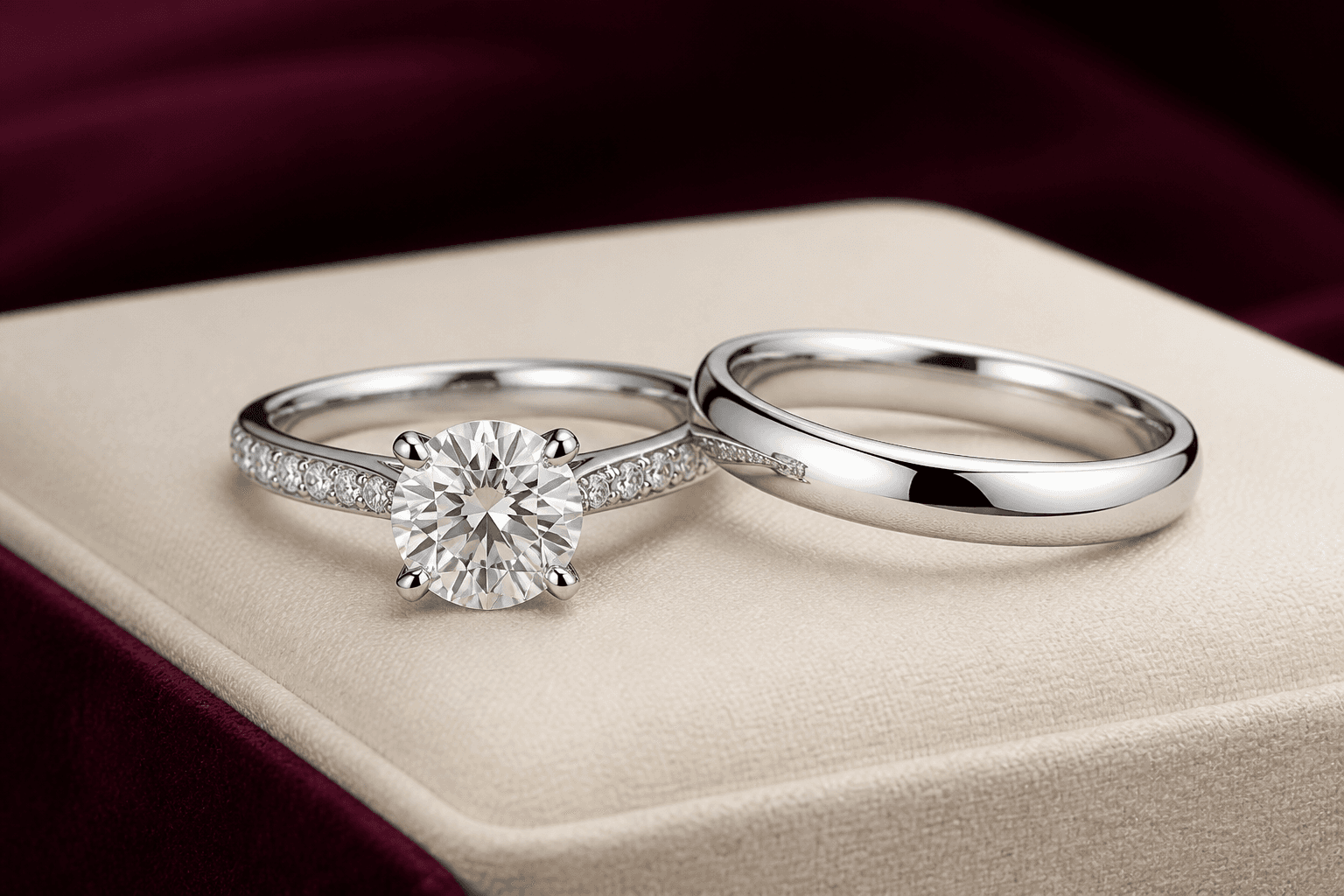
Fit, wear & care—considered together
A clearer decision, with the important context kept beside it
Platinum and white gold can create different white-metal experiences. Compare exact composition, color and plating, weight, surface change, care, sizing, and the intended design.
Use this page when
- You are choosing a white-metal direction for a ring, band, setting, or another custom piece.
- You want the visible finish and long-term care question discussed before a quote request.
Pause and choose another path when
- You expect either material to be scratch-proof, maintenance-free, or suitable for everyone.
- You are comparing names without checking the exact alloy, finish, construction, and availability.
Where this choice often matters
- Choosing the setting and band metal for an engagement ring.
- Matching an existing white-metal piece while keeping color and finish differences visible.
Compare the details
White-metal decisions for the exact piece
Use named specifications from the actual request; do not turn family-level tendencies into promises.
| Question | Platinum direction | White-gold direction | Confirm |
|---|---|---|---|
| Visible color | Natural alloy color | Alloy color and possible plating | Requested finish |
| Weight | Often a denser feel | Depends on alloy and construction | Dimensions and wearer preference |
| Surface over time | Develops its own wear pattern | Finish and plating may change | Care expectations |
| Future work | Exact construction matters | Exact alloy and plating matter | Sizing, repair, and availability |
Keep your direction organised
The complete choice groups for this decision
Platinum and white gold can create different white-metal experiences. Compare exact composition, color and plating, weight, surface change, care, sizing, and the intended design. The groups below keep related choices together, and every selection stays editable when you continue.
Which direction feels closer?
Choose one direction.
- PlatinumReview exact composition and construction.
- White goldReview karat, alloy, and finish.
- Show bothKeep the design identical for a fair comparison.
- Match an existing pieceShare a private reference and known specification.
What matters in the comparison?
Keep every direction that fits.
- Color and platingKeep natural and finished color distinct.
- Weight feelReview actual dimensions.
- Care over timeDiscuss surface and finish expectations.
- Future sizingReview the exact construction.
Questions worth asking
Open the concern that sounds like yours
Choose the question that sounds like yours. Each answer keeps the next step clear without closing decisions that still need review.
Which one stays perfect longer?
Neither should be promised unchanged. Surface wear and care depend on the exact piece and routine.
Is white gold always rhodium plated?
Do not assume. Confirm the exact alloy and finish offered for the request.
Which feels heavier?
Platinum is often denser, but the wearer experiences the actual dimensions and construction, so review the exact design.
Ready when you are
Carry this direction into your design
Leyloon can keep these choices together while you continue. Every detail stays editable. Your choices stay editable as you continue.
- Platinum, white gold, or compareNeeded before the direction is complete
- Exact alloy/karat and plating directionA useful next question
- Polished, matte, textured, or match referenceKeep it open if you are still deciding
- Weight, care, sizing, and existing-piece contextKeep it open if you are still deciding
A visual map of this brief
See what stays known—and what remains open
This guide begins with “Compare platinum and white gold in the same design.” The next choices stay grouped, editable, and connected to that same Atelier brief.
- Piece to designChoose one piece. The following questions adapt inside Atelier.
- White-metal directionHold the design steady while comparing the exact material and finish.
- Surface finishChoose how you want the surface to catch light. Wear and maintenance depend on the exact piece.
- Width and presenceChoose visual presence; exact millimeters stay editable.
Start with what matters on this page
Compare white metals in the same piece
Choose the piece first, then keep its design unchanged while you compare platinum and specified white-gold directions.Published customer proof
Real experiences, kept separate from promises
Only approved purchase-linked reviews appear here. An illustrative scene is never presented as a customer, and one person’s experience is never treated as a promise for another piece.See what Leyloon customers have shared
Read recent shop reviews on Etsy, then come back when you are ready to shape your own custom jewelry direction.
These reviews reflect individual Leyloon service experiences. Your custom jewelry direction and quote request are reviewed on their own.