Length changes the whole composition
Choose where the necklace should sit, then consider the pendant, neckline, layers, and clasp together.
A chain length is not experienced in isolation. Body proportions, pendant scale, clothing, and layering can all change the most useful direction.
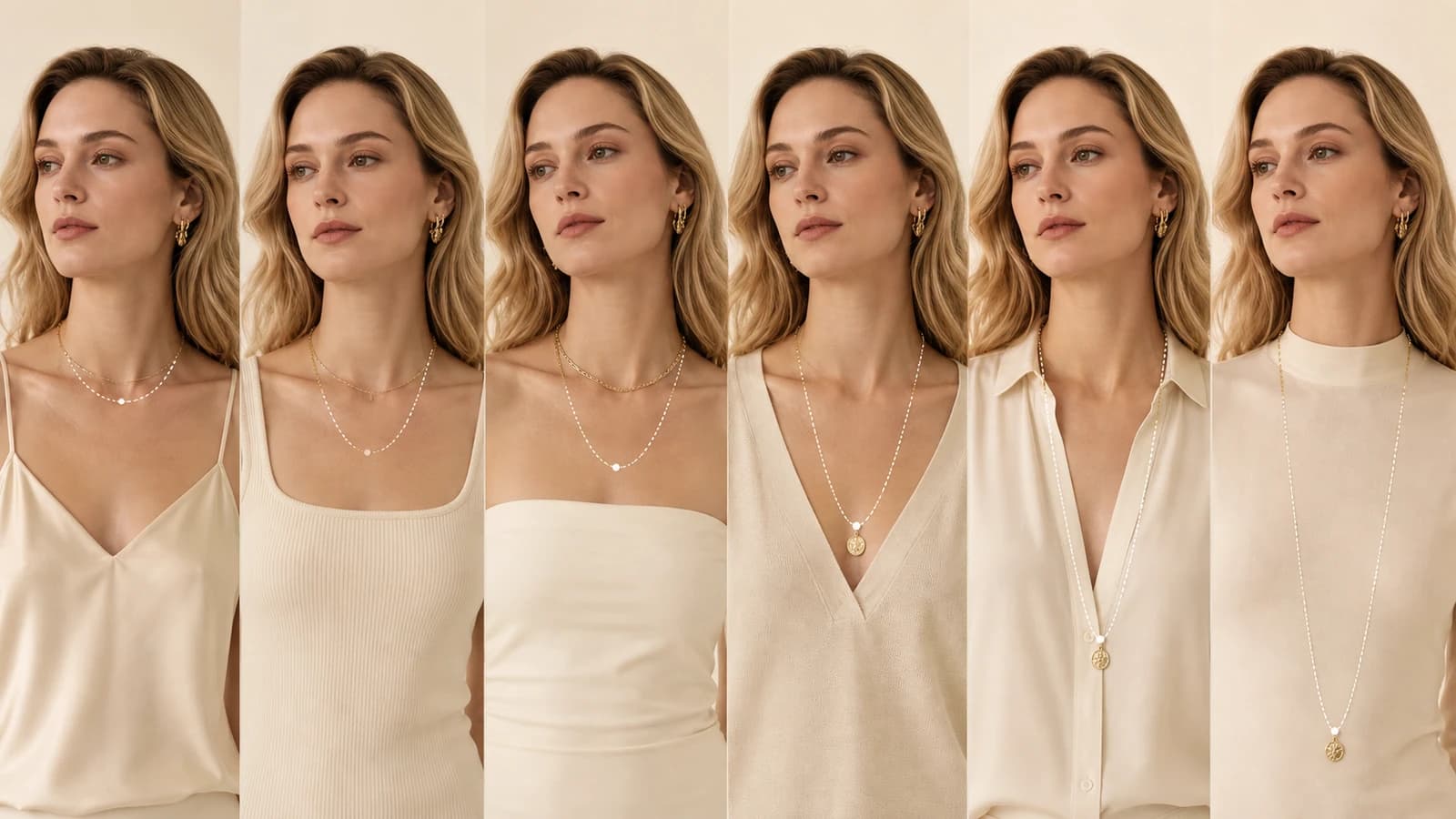
Working necklace visualizer
See how chain length and pendant drop change the focal point.
Bodies, necklines, chain construction, and pendants vary. Use this as a visual direction, then compare the intended dimensions on the wearer when possible.Layering another necklace usually needs intentional spacing, not simply the next standard length.
Fit, wear & care—considered together
A clearer decision, with the important context kept beside it
Compare chain length and pendant drop on a relative silhouette, then keep neckline, body, layering, and exact construction open for review.
Use this page when
- You want to compare several chain lengths around the same pendant idea.
- You know a preferred neckline or layering order and want a visual direction.
Pause and choose another path when
- You expect the screen to be calibrated to a particular person’s body.
- You need exact strength, pendant support, or clasp compatibility from length alone.
Where this choice often matters
- Choosing an everyday pendant length.
- Planning a layered anniversary, memorial, or milestone necklace.
Compare the details
Length is one part of where the focal point lands
Treat the preview as relative, not an exact promise of where a necklace will land on your body.
| Input | What it changes | Keep visible | Still open |
|---|---|---|---|
| Chain length | Overall hanging path | Inches and centimeters | Body and posture |
| Pendant drop | Focal point below the chain | Bail plus pendant | Weight and articulation |
| Neckline | Visual relationship to clothing | Chosen garment shape | Wardrobe variation |
| Layer order | Spacing between chains | Every selected length | Tangling and construction |
Keep your direction organised
The complete choice groups for this decision
Compare chain length and pendant drop on a relative silhouette, then keep neckline, body, layering, and exact construction open for review. The groups below keep related choices together, and every selection stays editable when you continue.
What are you visualizing?
Choose one direction.
- Chain onlyNo pendant drop.
- One pendantKeep bail and pendant drop.
- Layered necklacesKeep each chain separately.
- Adjustable chainKeep its usable range.
What should the preview consider?
Keep every direction that fits.
- Neck circumferenceOptional physical reference.
- NecklineCrew, V, scoop, strapless, or other.
- Pendant dropBail through pendant bottom.
- Layer spacingOrder and focal points.
Questions worth asking
Open the concern that sounds like yours
Choose the question that sounds like yours. Each answer keeps the next step clear without closing decisions that still need review.
Will 18 inches always sit at the collarbone?
No. Neck circumference, body, chain, pendant, and clothing can change where it appears.
How do I plan layers?
Keep every length and pendant drop visible, then compare spacing rather than assuming the next standard length works.
Can my choices continue into Atelier?
Yes. Carry exact length, unit, drop, neckline, and layer notes into the editable fit step.
Ready when you are
Carry this direction into your design
Leyloon can keep these choices together while you continue. Every detail stays editable. Your choices stay editable as you continue.
- Chain length or adjustable rangeNeeded before the direction is complete
- Chain construction and layer orderA useful next question
- Pendant drop and visual scaleKeep it open if you are still deciding
- Closure directionKeep it open if you are still deciding
- Neckline, wearer reference, and relative-preview caveatKeep it open if you are still deciding
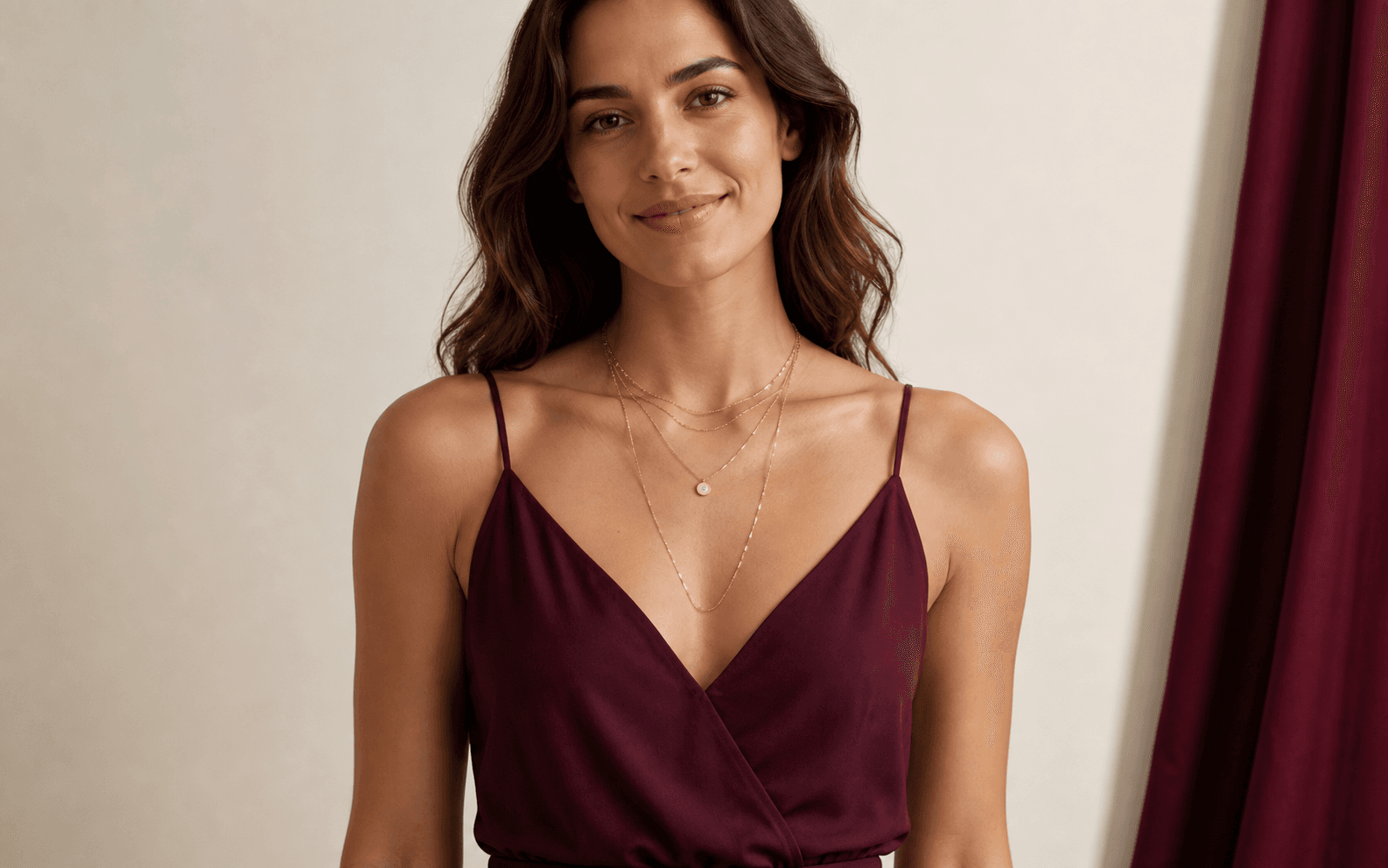
A visual map of this brief
See what stays known—and what remains open
This guide begins with “Necklace length changes where the design rests and how it layers.” The next choices stay grouped, editable, and connected to that same Atelier brief.
- Length and placementChoose where the necklace should sit; pendant size and body proportions can change the result.
- Chain structureChoose the complete chain family before thickness and pendant details.
- ClaspChoose closure security and ease separately from the chain pattern.
- Visual characterPick the feeling you want the design to communicate.
Start with what matters on this page
Choose a clear starting direction
Choose what you know now. Every choice remains editable in Atelier, and you can leave anything else open.Published customer proof
Real experiences, kept separate from promises
Only approved purchase-linked reviews appear here. An illustrative scene is never presented as a customer, and one person’s experience is never treated as a promise for another piece.See what Leyloon customers have shared
Read recent shop reviews on Etsy, then come back when you are ready to shape your own wearable jewelry direction.
These reviews reflect individual Leyloon service experiences. Your wearable jewelry direction and quote request are reviewed on their own.