There is no universal countdown
Protect the piercing you want to keep, and do not force jewelry through resistance.
Placement, healing history, and the individual all matter. A qualified piercer can assess the exact channel; concerning symptoms need medical care.
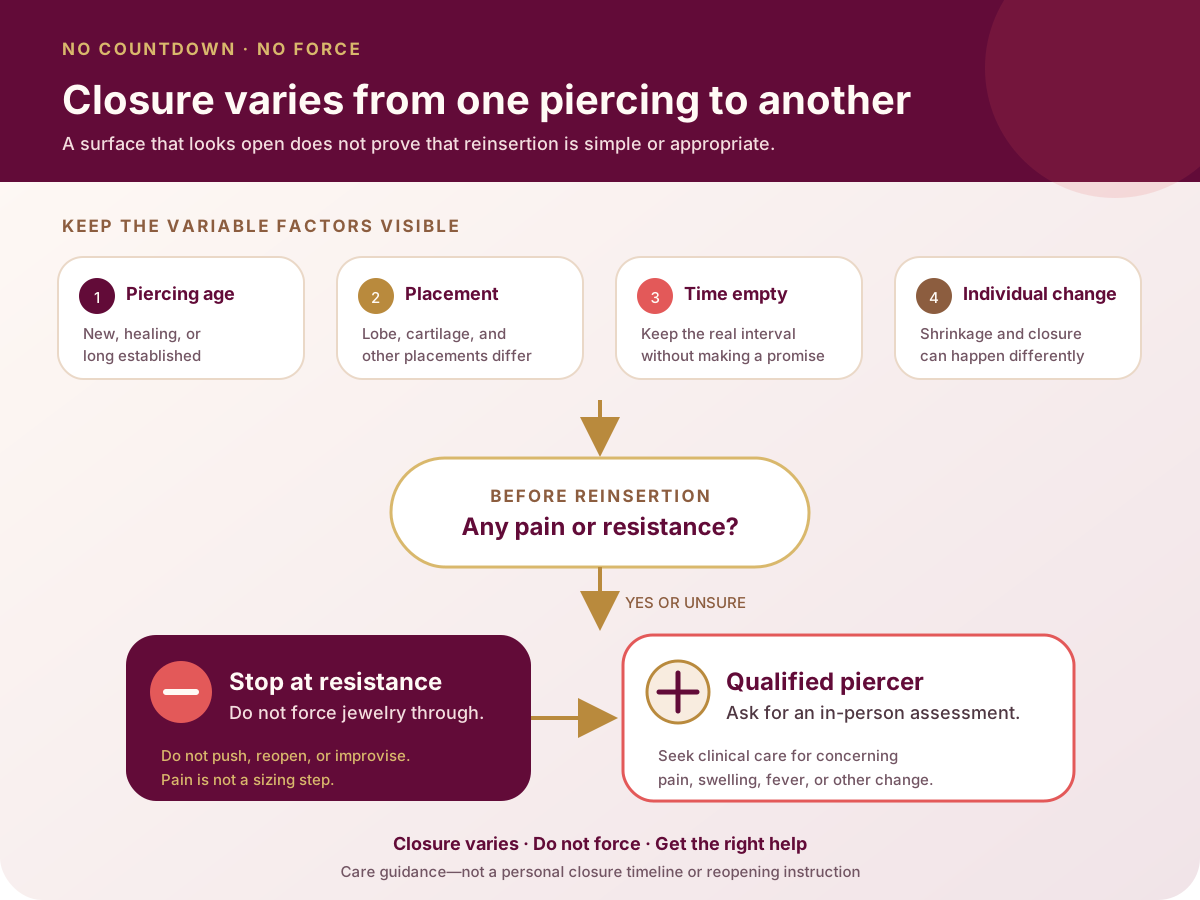
Care answer before jewelry choices
Closure varies; stop before forcing jewelry through resistance
Keeps piercing age, placement, time without jewelry, and individual variation visible while making the stop-and-get-help path unmistakable.
There is no dependable closure countdown. If jewelry meets resistance, stop gently and let a qualified piercer assess the exact channel before you think about another pair.
Use this page when
- Jewelry has been out and you are unsure whether reinsertion is appropriate.
- You want to understand why a new piercing and an old established piercing can behave differently.
Pause and choose another path when
- You plan to push jewelry through pain or resistance.
- There is worsening pain, heat, marked swelling, drainage, fever, or you feel unwell; seek medical advice.
Where this choice often matters
- Jewelry was removed for sleep, sport, work, or a procedure.
- An established piercing has been empty for a while and you want professional help.
Compare the details
Closure is variable, not a countdown
None of these factors can promise that an opening will stay open or close by a particular deadline.
| Factor | Why it matters | Safe observation | Next step |
|---|---|---|---|
| Age of piercing | New channels can be less stable | How long jewelry was worn | Ask the piercer |
| Placement | Lobe and cartilage differ | Exact location | Use placement-specific advice |
| Time empty | Shrinkage may begin | When jewelry came out | Do not force |
| Resistance or pain | Channel may not accept jewelry safely | Stop immediately | Qualified help |
Questions worth asking
Open the concern that sounds like yours
Choose the question that sounds like yours. Each answer keeps the next step clear without closing decisions that still need review.
Can a years-old piercing close quickly?
It can still shrink or close; individual behavior varies.
Can I use a thinner post to reopen it?
Do not improvise or force jewelry through. A qualified piercer can assess it.
What if it goes partway in?
Stop if there is resistance or pain and get professional assistance.
Care comes first
Settle the care question before choosing new jewelry
Once the piercing or care concern is resolved, you can return to the design path without guessing. Your choices stay editable as you continue.
- Future form after professional guidanceA useful next question
- Future post/back directionKeep it open if you are still deciding
- Exact material directionKeep it open if you are still deciding
- Non-medical future-wear preferencesKeep it open if you are still deciding
Closure reality check
There is no reliable personal countdown for an earring hole.
Age, placement, anatomy, scar tissue, jewelry history, and time without jewelry all matter. This checker never predicts an exact closing time.
A visual map of this brief
See what stays known—and what remains open
This guide begins with “An earring hole can narrow, but there is no reliable personal countdown.” The next choices stay grouped, editable, and connected to that same Atelier brief.
- Before choosing earringsKeep the care question separate from the future design. This is private context, not a diagnosis or a promise that a piercing is ready for a jewelry change.
- What is the situation right now?There is no reliable countdown for closure. Do not force jewelry through resistance; ask a qualified piercer, and seek clinical care for concerning changes.
- Earring formChoose the complete silhouette family before scale and closure.
- Backing or closureChoose the closure as a separate comfort and security decision.
Published customer proof
Real experiences, kept separate from promises
Only approved purchase-linked reviews appear here. An illustrative scene is never presented as a customer, and one person’s experience is never treated as a promise for another piece.See what Leyloon customers have shared
Read recent shop reviews on Etsy, then come back when you are ready to shape your own jewelry question.
These reviews reflect individual Leyloon service experiences. Your jewelry question and quote request are reviewed on their own.