Keep the color direction
Describe the tone and feeling you want the finished ring to carry.
Laboratory-grown diamond · Yellow pear direction
Keep yellow pear laboratory-grown diamond direction as your starting direction. You can shape the color, outline, setting, and feeling of the ring before choosing a stone.
Explore the choices that shape this direction, then begin a design brief or return to the stone collection when you are ready.
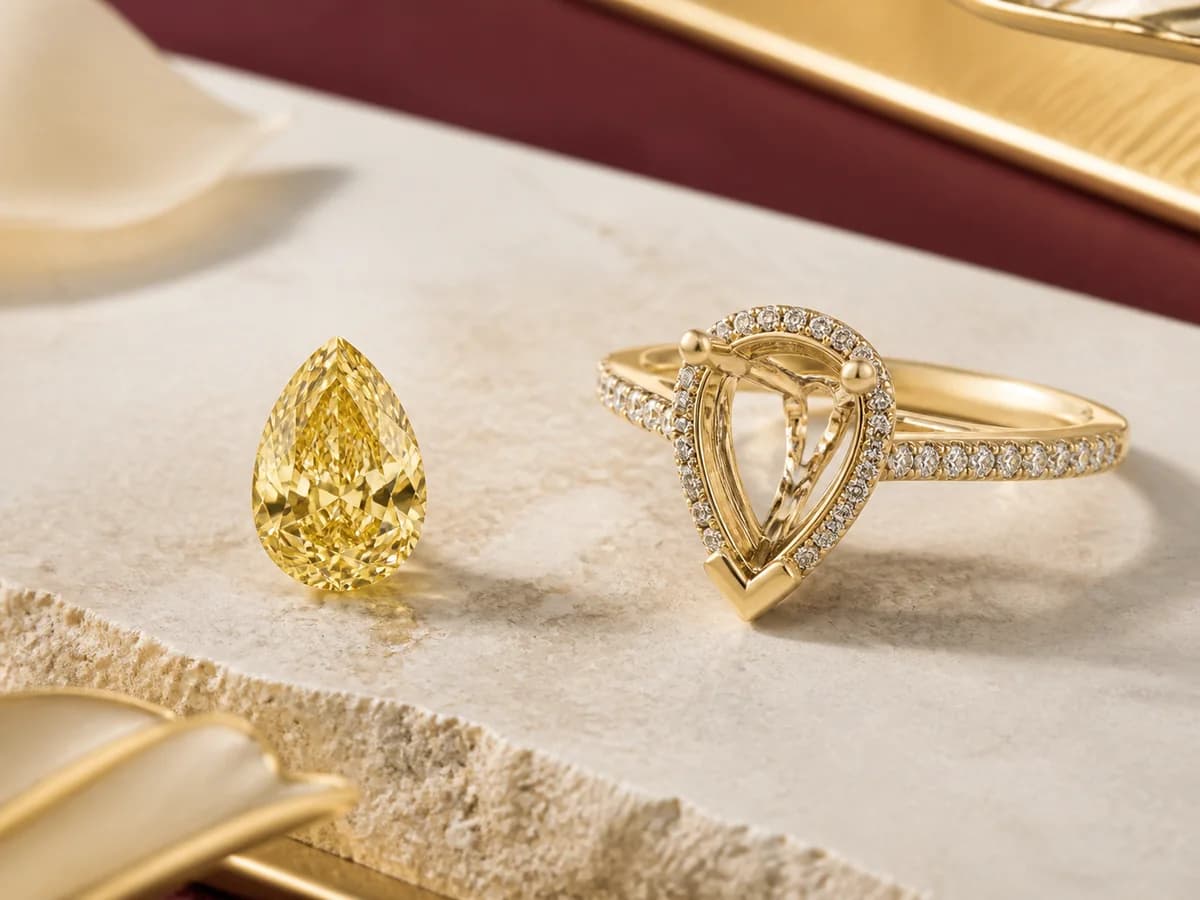
A calm place to begin
Available matches are not showing for this direction right now. You can begin a design brief or return to the stone collection a little later.
Browse the stone collectionDescribe the tone and feeling you want the finished ring to carry.
Decide how the outline, setting, profile, and band should feel together.
Leyloon reviews the details with you before a written quote presents the next choices.
When you are ready
Laboratory-grown diamond · Yellow pear direction
Laboratory-grown diamond direction · not a mined diamond
A yellow pear laboratory-grown diamond direction carries warmth from a rounded end into one deliberate point. It is not a mined diamond or an exact stone and should not be read as an availability or treatment claim.
Choose the shoulder shape and orientation that feel right, then inspect whether yellow remains connected across the belly and point. Exact color, origin description, post-growth treatment, weight, measurements, and comments come only from the exact report and stone record.
Three decisions worth slowing down for
These questions help you describe the direction. They do not stand in for an exact stone record, grading report, or setting review.
Warmth through the outline
A photograph may make one end look brighter or deeper. Compare the exact pear in consistent views so its yellow reads as one intentional composition.
Shoulder character
Full shoulders create a soft teardrop. A narrower taper feels sharper and can make the point more visually dominant.
Point direction
A vertical pear feels classic and directional; east-west or angled placement can feel more sculptural. Every orientation needs an intentional plan for the tip.
A calm side-by-side check
Use the table as a question list. Leave any unknown detail open until one exact stone and its evidence can answer it.
| Decision area | What to notice | Design response | Confirmation needed |
|---|---|---|---|
| Yellow flow | Whether warmth feels connected across the full pear. | Metal and setting frame that support the chosen mood. | Exact media and report findings. |
| Shoulders and wings | Fullness, smooth curves, and balanced sides. | Halo, bezel, or open prong rhythm that follows the outline. | Exact outline, symmetry, and measurements. |
| Center contrast | Whether the bow-tie adds movement or feels heavy. | Keep surrounding detail calm when the center is graphic. | Appearance in motion under consistent light. |
| Point orientation | Vertical, reversed, angled, or east-west gesture. | V-prong, bezel, or structural frame suited to the composition. | Protection, profile, wear, and feasibility review. |
Pear-shape appeal is personal. Keep the point, shoulders, center contrast, and exact report together rather than choosing by one label.
Questions to answer before choosing
It can be a compelling design direction. The exact dimensions, point protection, band structure, comfort, and daily wear still need to be reviewed as one ring.
Facet reflections, color distribution, lighting, and the exact stone may concentrate contrast or color near the point. Compare more than one view before deciding.
No. Metal changes the visual context, but exact stones can still differ in hue, tone, saturation, distribution, and light pattern.
No. Use the exact grading report or assessment and the issuing laboratory's stated findings. A title is not treatment evidence.
Independent technical sources
These sources support the general education on this page. The exact stone and its issuing laboratory record remain the evidence for an individual choice.