Keep the color direction
Describe the tone and feeling you want the finished ring to carry.
Laboratory-grown diamond · Yellow oval direction
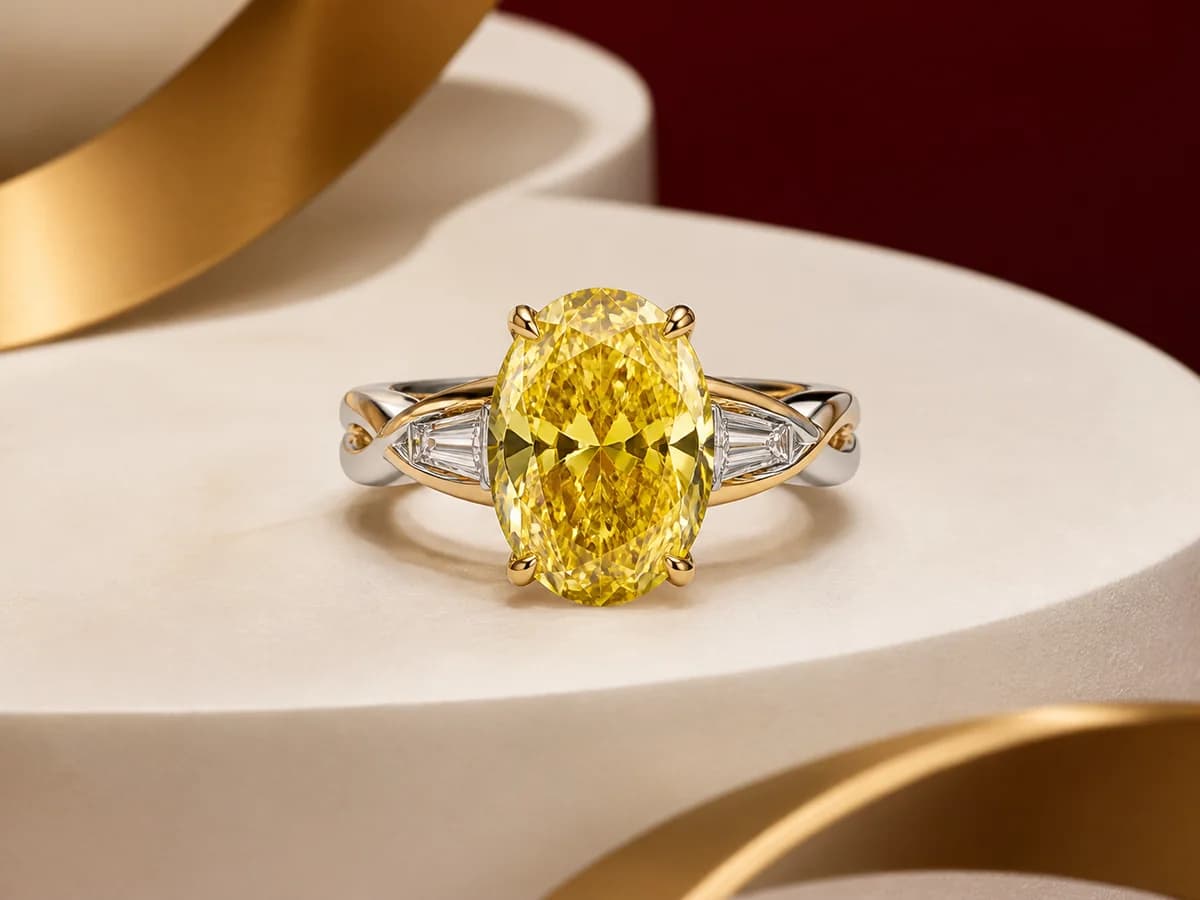
Keep yellow oval laboratory-grown diamond direction as your starting direction. You can shape the color, outline, setting, and feeling of the ring before choosing a stone.
Explore the choices that shape this direction, then begin a design brief or return to the stone collection when you are ready.
A calm place to begin
Available matches are not showing for this direction right now. You can begin a design brief or return to the stone collection a little later.
Browse the stone collectionDescribe the tone and feeling you want the finished ring to carry.
Decide how the outline, setting, profile, and band should feel together.
Leyloon reviews the details with you before a written quote presents the next choices.
When you are ready
Laboratory-grown diamond · Yellow oval direction
Laboratory-grown diamond direction · not a mined diamond
A yellow oval laboratory-grown diamond direction can feel sunlit, golden, lemon-bright, or softly warm depending on the exact stone and setting. It is not a mined diamond or a promise about a particular stone.
Compare whether the yellow stays pleasing from end to end, how the oval sits on the hand, and whether center contrast supports or interrupts the warmth. Exact color, growth, treatment, measurement, and grading details belong to the exact report and record.
Three decisions worth slowing down for
These questions help you describe the direction. They do not stand in for an exact stone record, grading report, or setting review.
Yellow warmth
Some people want a bright yellow note; others prefer a deeper golden mood. Use plain visual language first, then match it to the exact laboratory wording without replacing one with the other.
Oval presence
The oval can feel gently rounded or distinctly elongated. Exact dimensions show face-up presence more honestly than carat weight by itself.
Metal relationship
Warm and cool metals create different visual neighbors for yellow. A two-tone setting can also separate the center frame from the band direction.
A calm side-by-side check
Use the table as a question list. Leave any unknown detail open until one exact stone and its evidence can answer it.
| Question | What may change | What to compare | What not to assume |
|---|---|---|---|
| How warm is the yellow? | Hue, tone, saturation, lighting, and background. | Exact media beside the report wording. | A color name predicts the full appearance. |
| How long is the oval? | Length-to-width relationship and shoulder fullness. | Exact dimensions with the intended ring proportions. | Carat alone predicts face-up presence. |
| How visible is the bow tie? | Faceting, proportions, contrast, and movement. | Several views or video of the exact stone. | One still frame is the whole light pattern. |
| How does metal affect the mood? | Nearby reflection, contrast, and setting coverage. | Yellow, white, rose, or mixed-metal directions. | A metal choice changes the report grade. |
The setting can change the visual context around yellow, but it does not rewrite the exact laboratory findings for the stone.
Questions to answer before choosing
Do not assume the grading approach from the page label. Read the exact laboratory report, report type, color description, and stated scope for that stone.
It is one beautiful direction, not a rule. Compare warm, cool, rose, or mixed-metal frames with the exact stone and the feeling you want from the complete ring.
Not necessarily. Length may increase while width, depth, outline, and distribution change. Use exact measurements and the complete face-up view.
No. Treatment or post-growth information must come from the exact report or assessment when that field is supplied.
Independent technical sources
These sources support the general education on this page. The exact stone and its issuing laboratory record remain the evidence for an individual choice.