Keep the color direction
Describe the tone and feeling you want the finished ring to carry.
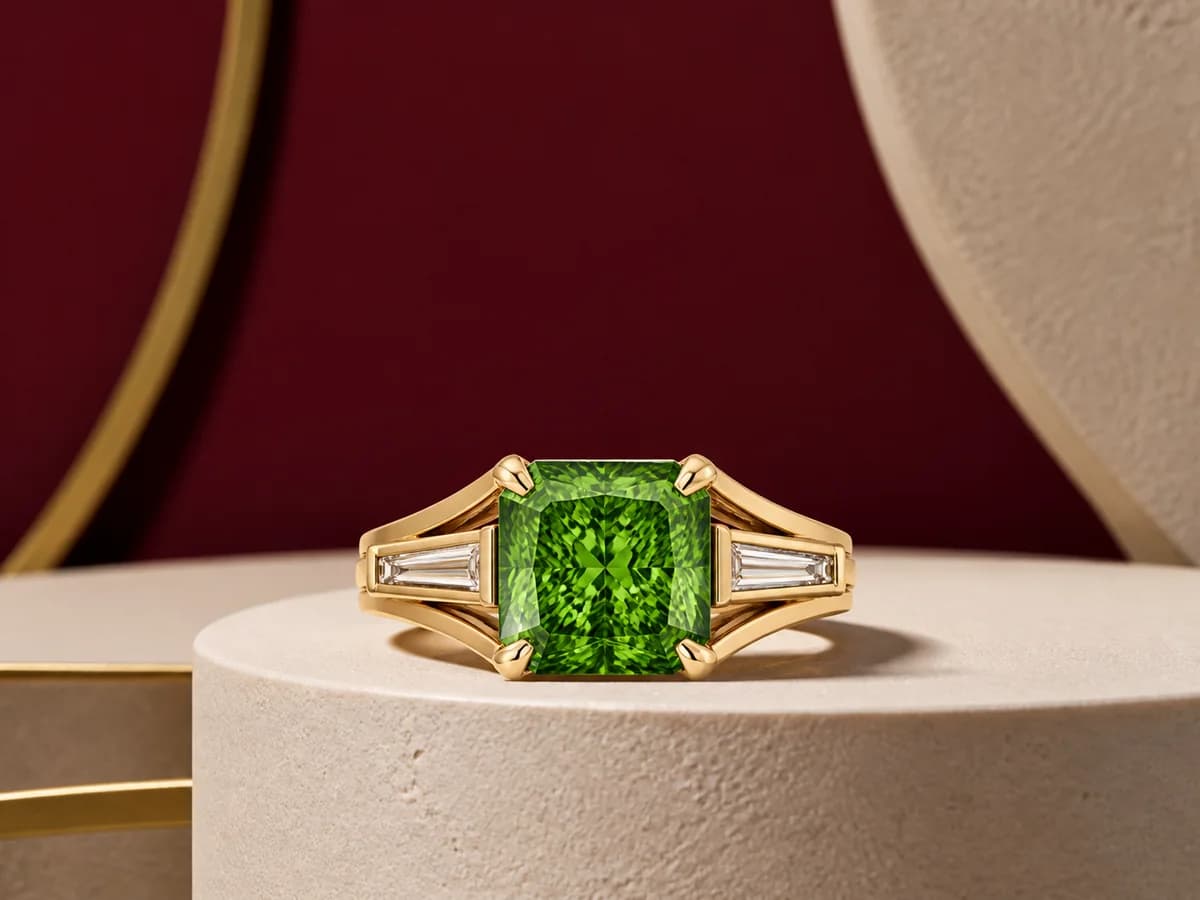
Laboratory-grown diamond · Green radiant direction
Keep green radiant laboratory-grown diamond direction as your starting direction. You can shape the color, outline, setting, and feeling of the ring before choosing a stone.
Explore the choices that shape this direction, then begin a design brief or return to the stone collection when you are ready.
A calm place to begin
Available matches are not showing for this direction right now. You can begin a design brief or return to the stone collection a little later.
Browse the stone collectionDescribe the tone and feeling you want the finished ring to carry.
Decide how the outline, setting, profile, and band should feel together.
Leyloon reviews the details with you before a written quote presents the next choices.
When you are ready
Laboratory-grown diamond · Green radiant direction
Laboratory-grown diamond direction · not a mined diamond
A green radiant laboratory-grown diamond direction brings saturated color into a crisp, clipped-corner outline. It is a design starting point, not a mined diamond, an exact stone, or evidence of present availability.
Decide whether the ring should feel square and architectural or elongated and fluid, then watch how the faceting carries green through bright and dark areas. The exact report remains the authority for origin description, color wording, treatment information, and measured proportions.
Three decisions worth slowing down for
These questions help you describe the direction. They do not stand in for an exact stone record, grading report, or setting review.
Color concentration
Radiant faceting can break color into many small areas. Look for a pattern that keeps the chosen green present without relying on one dark photograph.
Radiant geometry
A near-square radiant can feel centered and graphic. An elongated radiant creates a longer line across the finger and changes the balance of the side setting.
Setting support
Prongs, a bezel, or a more structural frame can each support the clipped corners differently. Keep the top view and side profile in the same design discussion.
A calm side-by-side check
Use the table as a question list. Leave any unknown detail open until one exact stone and its evidence can answer it.
| Design choice | Square direction | Elongated direction | Verify later |
|---|---|---|---|
| Overall mood | Centered, compact, and architectural. | Longer, directional, and more linear. | Exact dimensions and wearer preference. |
| Color pattern | Color may feel concentrated in a compact field. | Color travels through a longer faceted path. | Exact hue, tone, saturation, and distribution. |
| Light pattern | Balanced mosaic across a shorter outline. | Longer bands of bright and dark contrast may appear. | Real movement in consistent media. |
| Setting frame | A compact prong or bezel rhythm. | Longer side support and band transition. | Corner safety, profile, fit, and feasibility. |
Radiant shapes do not share one universal ideal proportion. Compare the exact outline and light pattern you will actually wear.
Questions to answer before choosing
It can change how color and contrast appear, but the result belongs to the exact stone. Compare its color distribution and movement rather than assuming the cutting style guarantees intensity.
Neither is automatically better. Choose the outline that fits the ring's mood and the wearer's hand, then compare exact dimensions and setting support.
No. They change the outline, but the exact stone, inclusions, setting, prongs or bezel, profile, and daily wear still need review together.
No. A report records findings within its stated scope. Beauty, light pattern, ring fit, price, and personal preference still require exact visual and design review.
Independent technical sources
These sources support the general education on this page. The exact stone and its issuing laboratory record remain the evidence for an individual choice.