Keep the color direction
Describe the tone and feeling you want the finished ring to carry.
Laboratory-grown diamond · Green oval direction
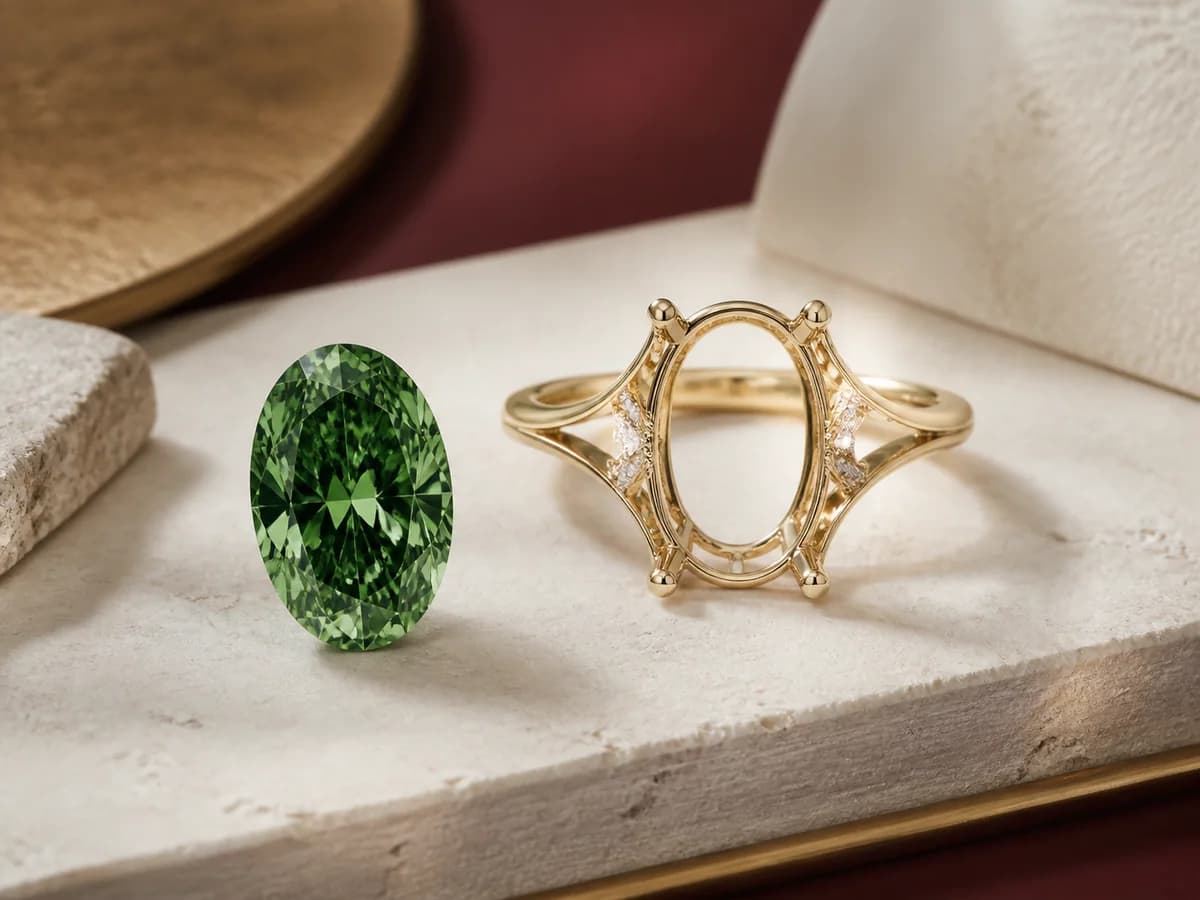
Keep green oval laboratory-grown diamond direction as your starting direction. You can shape the color, outline, setting, and feeling of the ring before choosing a stone.
Explore the choices that shape this direction, then begin a design brief or return to the stone collection when you are ready.
A calm place to begin
Available matches are not showing for this direction right now. You can begin a design brief or return to the stone collection a little later.
Browse the stone collectionDescribe the tone and feeling you want the finished ring to carry.
Decide how the outline, setting, profile, and band should feel together.
Leyloon reviews the details with you before a written quote presents the next choices.
When you are ready
Laboratory-grown diamond · Green oval direction
Laboratory-grown diamond direction · not a mined diamond
This guide is for a green oval laboratory-grown diamond direction, not a mined diamond or an exact stone. Start by noticing whether you enjoy a soft botanical green, a deeper forest impression, or a brighter green that stays lively across the oval.
Then compare the oval outline and the way light and shadow move through its center. Color description, growth method, post-growth treatment, measurements, and every grading detail must come from the exact report and stone record when one is shown.
Three decisions worth slowing down for
These questions help you describe the direction. They do not stand in for an exact stone record, grading report, or setting review.
Color character
Green can appear calmer near the ends, stronger through the center, or uneven from one side to the other. Judge the complete face-up pattern rather than a single bright frame.
Oval outline
A softly rounded oval and a slender oval can feel like different rings. The exact length-to-width relationship is useful only when it supports the outline you enjoy.
Center contrast
Many ovals show some darker contrast through the center. Notice whether it adds definition, flashes in motion, or stays heavy enough to interrupt the green you want to see.
A calm side-by-side check
Use the table as a question list. Leave any unknown detail open until one exact stone and its evidence can answer it.
| Decision | Look for | Compare with | Keep conditional |
|---|---|---|---|
| Green distribution | Color that remains pleasing from center to ends. | Consistent face-up views and movement. | Exact color and treatment wording on the report. |
| Oval character | Full shoulders and an outline that feels balanced. | Exact length, width, and intended ring proportions. | Any universal ideal ratio. |
| Bow-tie contrast | A center pattern you enjoy rather than ignore. | Motion, lighting, and more than one still image. | Appearance inferred from measurements alone. |
| Setting relationship | Metal and prongs that frame the green intentionally. | Open gallery, bezel, halo, and side-detail directions. | Final fit, feasibility, and price before review. |
Carat measures weight, not face-up size. Use the exact dimensions and viewing evidence together when a stone record is available.
Questions to answer before choosing
No. Hue, tone, saturation, color distribution, cutting style, lighting, and the exact stone can change what you see. Keep the report wording and the visual comparison together.
No. Carat is weight. Face-up presence depends on exact length, width, depth, outline, proportions, and the setting around the stone.
Nearby metal and setting details can change the visual relationship around a stone. Compare the exact stone beside the intended metal direction before settling the design.
Do not infer it from a picture or color name. Read the exact grading report or assessment and use the issuing laboratory's stated scope and terminology.
Independent technical sources
These sources support the general education on this page. The exact stone and its issuing laboratory record remain the evidence for an individual choice.