Quiet focus or a brighter frame
Halo or solitaire? Compare the same center with and without a frame.
A solitaire keeps the visual focus on one stone and its setting. A halo adds a surrounding frame that changes scale, detail, and care, so compare the complete ring rather than one feature alone.
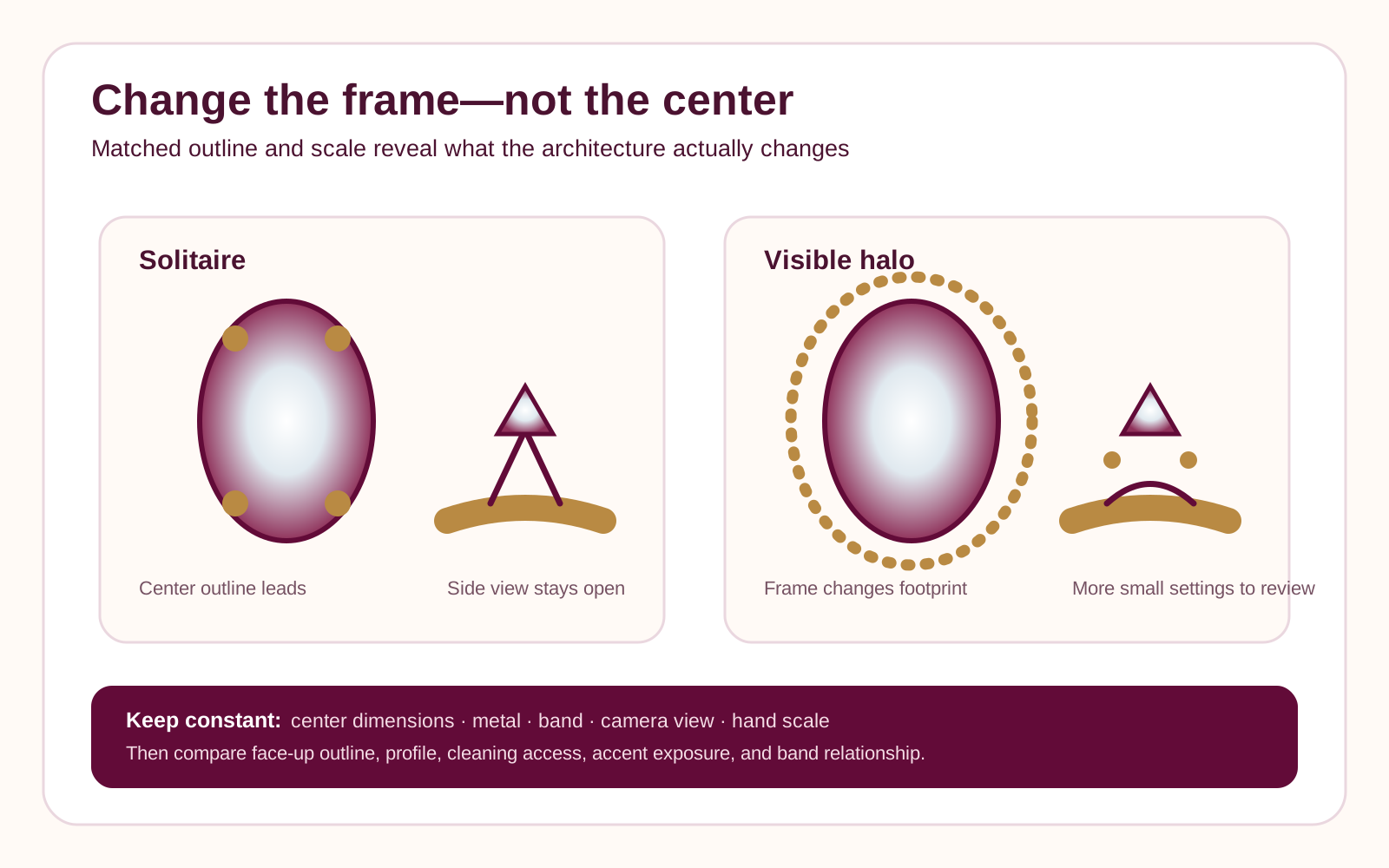
Interactive setting comparison
Hold the center steady and change only the frame
This avoids comparing unrelated stones, camera angles, or proportions when the real decision is halo or solitaire.- SolitaireThe center outline remains the clearest visual lead.
- Visible haloA surrounding row changes the face-up frame and surface detail.
- Compare bothKeep center dimensions, metal, band, view, and hand scale constant.
A thoughtful answer before the next step
Is a halo or solitaire better for my engagement ring?
What matters here
Compare face-up presence, cleaning, side profile, small-stone maintenance, wedding-band fit, and the kind of attention the wearer enjoys.
Real ways this can begin
Find the path that feels closest to yours
A halo can frame a colored center and create a decorative face, while a solitaire can keep the center outline visually uninterrupted.
Keep what you already know, then compare the open choices without starting over.
When the direction feels ready, start a design with these preferences and continue with the next open choice.
Compare the decision in context
Compare three useful directions for halo versus solitaire engagement rings
There is no automatic winner. Compare how “Solitaire,” “Visible halo,” and “Subtle halo” answer the same practical needs.
| Direction | Solitaire | Visible halo | Subtle halo |
|---|---|---|---|
| Works well when | One stone and clean negative space should lead. | A framed outline and added surface detail feel right. | You want a restrained frame or side detail rather than a broad top halo. |
| Reason to reconsider | The desired outline depends on surrounding color or sparkle. | A quiet look or easier cleaning is the priority. | The added setting height or complexity conflicts with wear. |
| Keep in the brief | Keep the same shape, scale, and color across comparisons. | Choose round, elongated, angular, floral, or custom framing. | Compare delicate accents with a more visible border. |
| Review before choosing | Review height, gallery, and how the halo meets the band. | Choose whether the frame blends with or outlines the stones. | Keep flush, curved, or spaced pairing in the design. |
See how the choice changes
Three ways choosing between visual framing and a quieter center can begin
These examples show how choosing between visual framing and a quieter center may begin. They are planning scenarios, not customer stories or finished-piece promises.
When “Solitaire” may fit
One stone and clean negative space should lead.
- Direction
- Begin with the “Solitaire” option, then compare it with “Visible halo” while the rest of the piece stays steady.
- Why it helps
- This keeps the leading priority clear. Before choosing, check whether the desired outline depends on surrounding color or sparkle.
Why “Visible halo” is worth comparing
A framed outline and added surface detail feel right.
- Direction
- Place the “Visible halo” option beside “Solitaire” and “Subtle halo” so the tradeoff stays visible.
- Why it helps
- This comparison shows what visible halo adds without hiding whether a quiet look or easier cleaning is the priority.
Before choosing “Subtle halo”
You want a restrained frame or side detail rather than a broad top halo.
- Direction
- Keep the “Subtle halo” option in the design long enough to test it against “Solitaire” and “Visible halo.”
- Why it helps
- Keeping this direction visible lets you test it honestly. Review whether the added setting height or complexity conflicts with wear before deciding.
Questions people ask in plain language
Answers for choosing between visual framing and a quieter center
Open the answer that helps with choosing between visual framing and a quieter center. Each response stays tied to “Is a halo or solitaire better for my engagement ring?”
What should I compare first for halo versus solitaire engagement rings?
Preview halo and solitaire versions with the same center, profile, band, and metal so the added outline is the only main variable.
When does solitaire support this design?
The comparison helps when you like both a clean center-led ring and a more detailed outline but need to see which one feels more personal.
What could make solitaire less suitable for the wearer?
Reconsider a detailed halo when easy cleaning, a very quiet look, or minimal surface detail leads; reconsider a spare solitaire when surrounding color or texture is central to the idea.
How should everyday wear influence a solitaire setting?
More accent settings create more areas to inspect and clean, while any exposed center stone still needs care appropriate to its exact setting and routine.
Which structure and fit details should stay with solitaire?
Before continuing, review these three details together: keep the same shape, scale, and color across comparisons; choose round, elongated, angular, floral, or custom framing; and compare delicate accents with a more visible border. You can adjust each one again in Atelier.
Carry the useful details forward
Keep the brief clear when you continue
Compare face-up presence, cleaning, side profile, small-stone maintenance, wedding-band fit, and the kind of attention the wearer enjoys.
Keep the same shape, scale, and color across comparisons.
Choose round, elongated, angular, floral, or custom framing.
Compare delicate accents with a more visible border.
Review height, gallery, and how the halo meets the band.
Choose whether the frame blends with or outlines the stones.
Keep flush, curved, or spaced pairing in the design.
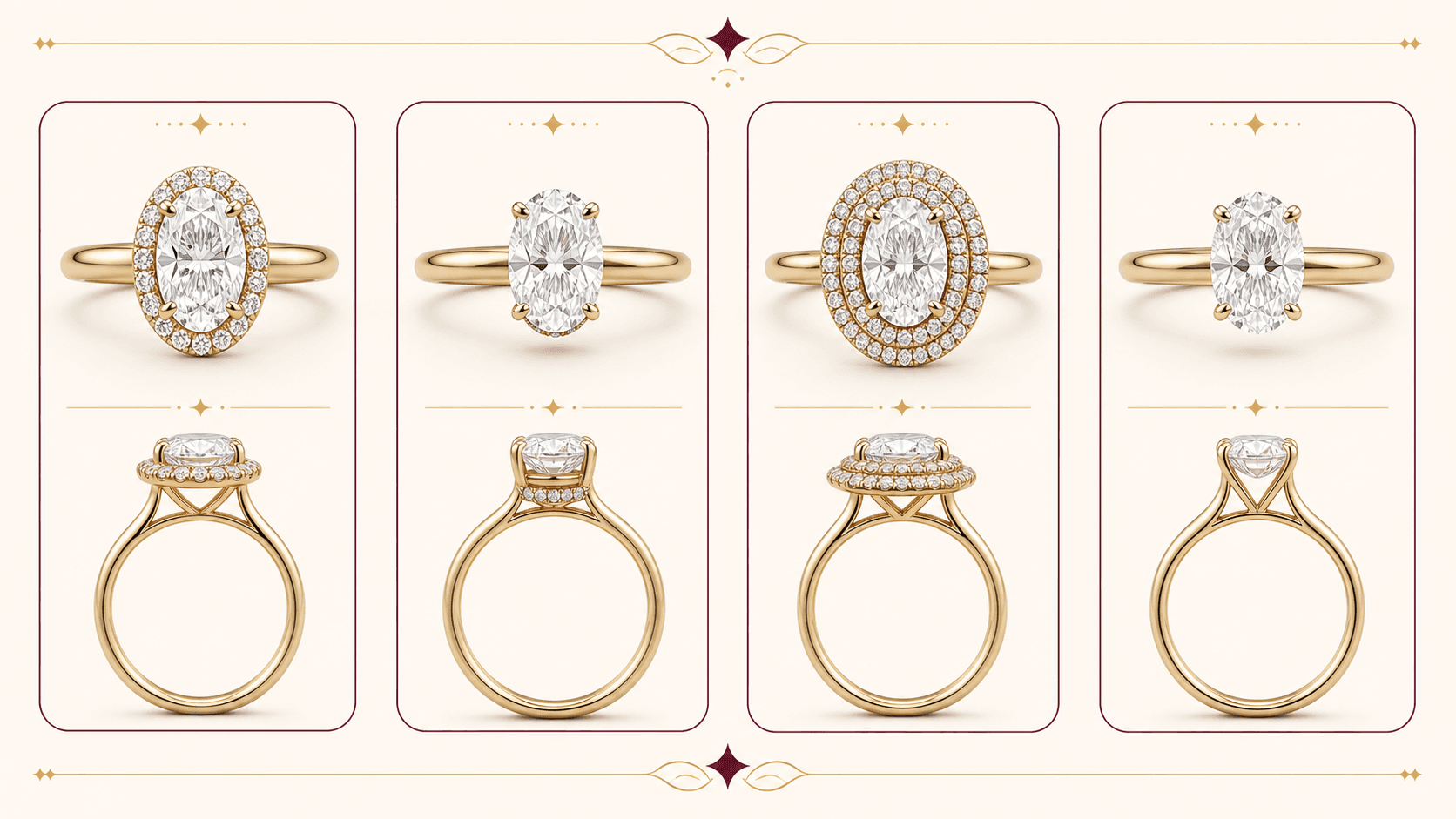
A visual map of this brief
See what stays known—and what remains open
This guide begins with “Decide whether the center stands alone or shares its outline with accents.” The next choices stay grouped, editable, and connected to that same Atelier brief.
- Face-up architectureHold the center stone steady and choose whether it should stand alone or sit inside a visible frame.
- How much detail fits your routine?Think about the look you enjoy alongside cleaning access and small-setting inspection.
Start with what matters on this page
Hold the center steady and choose how it should be framed
Compare solitaire and halo around the same center direction. Then add only the height, detail level, and band relationship you care about.Published customer proof
Real experiences, kept separate from promises
Only approved purchase-linked reviews appear here. An illustrative scene is never presented as a customer, and one person’s experience is never treated as a promise for another piece.See what Leyloon customers have shared
Read recent shop reviews on Etsy, then come back when you are ready to shape your own setting direction.
These reviews reflect individual Leyloon service experiences. Your setting direction and quote request are reviewed on their own.