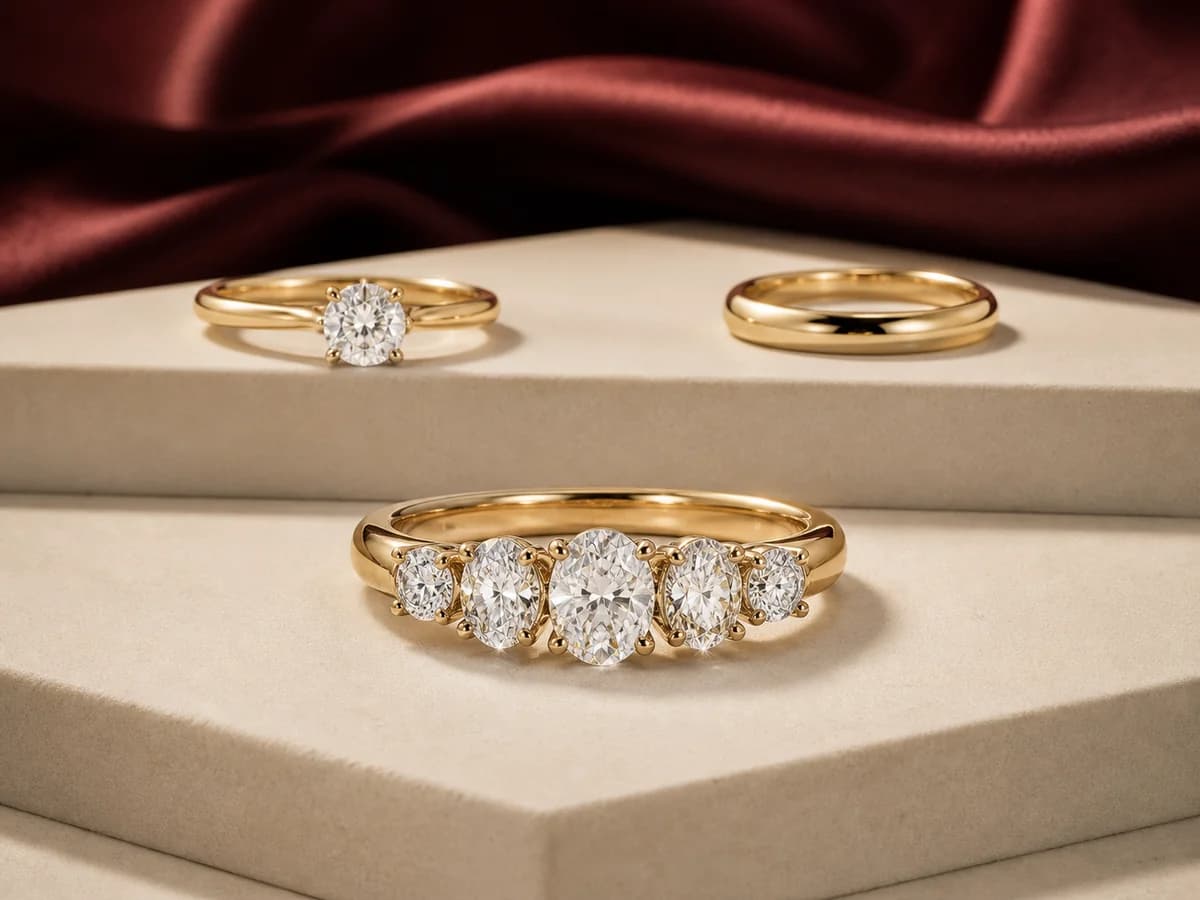
An anniversary band can join an existing stack, be worn on another finger, or stand alone. Start with the milestone and wear plan, then compare the actual ring's fit, profile, coverage, materials, settings, and care. No current product or offer is shown here.
A milestone-led anniversary-band guide with a deliberate no-live-product fallback: it explains placement, stack, fit, coverage, material, setting, and care decisions while suppressing unresolved offers and inventory.
What this guide covers
- Choose the milestone, wearer, intended finger or stack, and leading meaning.
- Compare band geometry, coverage, width, profile, materials, settings, and maintenance.
- Resolve current products only from a live catalog source, then recheck fit and disclosures before deciding.
Live anniversary-band results are intentionally unavailable
Product status · no live results
No verified current catalog connection is active on this page. It therefore does not display a product, stone, image, price, currency, inventory, size option, certificate, delivery estimate, offer, or reservation. Browse links remain general until a current product can be confirmed.
Useful paths while products are unresolved
Use these decision categories as an editorial fallback; none represents current inventory.
Add to a stack
Review the actual existing rings, total width, order, gap or contact, settings, materials, movement, and care.
Wear on another finger
Size that finger directly and choose a width, profile, material, and setting for its own wear conditions.
Choose partial coverage
Confirm the actual stone span, orientation, solid section, setting, sizing questions, and underside feel.
Choose full coverage
Confirm circumference-wide settings, exact size, underside, orientation, inspection, and limited alteration questions.
Prepare an anniversary-band shortlist
- 1 — Name the milestone and wear plan
Choose the meaning, wearer, intended finger or stack, and whether the ring should lead, support, or stand alone.
- 2 — Define the physical brief
Record size, width, profile, coverage, material, finish, stones, setting, personalization, and care questions.
- 3 — Resolve current candidates
Use only active canonical entities with current disclosures, dimensions, size options, price, currency, availability, image, and destination.
- 4 — Try and recheck
Review the exact candidate on the intended finger or with the complete stack before relying on fit or compatibility.
Anniversary-band questions
Is there a required stone for each anniversary?
No requirement is established here. Choose meaning, materials, stones, fit, and wear based on the person and exact piece.
Must an anniversary band join the wedding stack?
No. It can join a stack, be worn separately, or stand alone. Physical fit and personal preference should guide the choice.
Are the shown categories available now?
No inventory is shown. Current products, prices, sizes, disclosures, availability, and offers require a verified live resolver.