Keep the color direction
Describe the tone and feeling you want the finished ring to carry.
Laboratory-grown diamond · Blue radiant direction
Keep blue radiant laboratory-grown diamond direction as your starting direction. You can shape the color, outline, setting, and feeling of the ring before choosing a stone.
Explore the choices that shape this direction, then begin a design brief or return to the stone collection when you are ready.
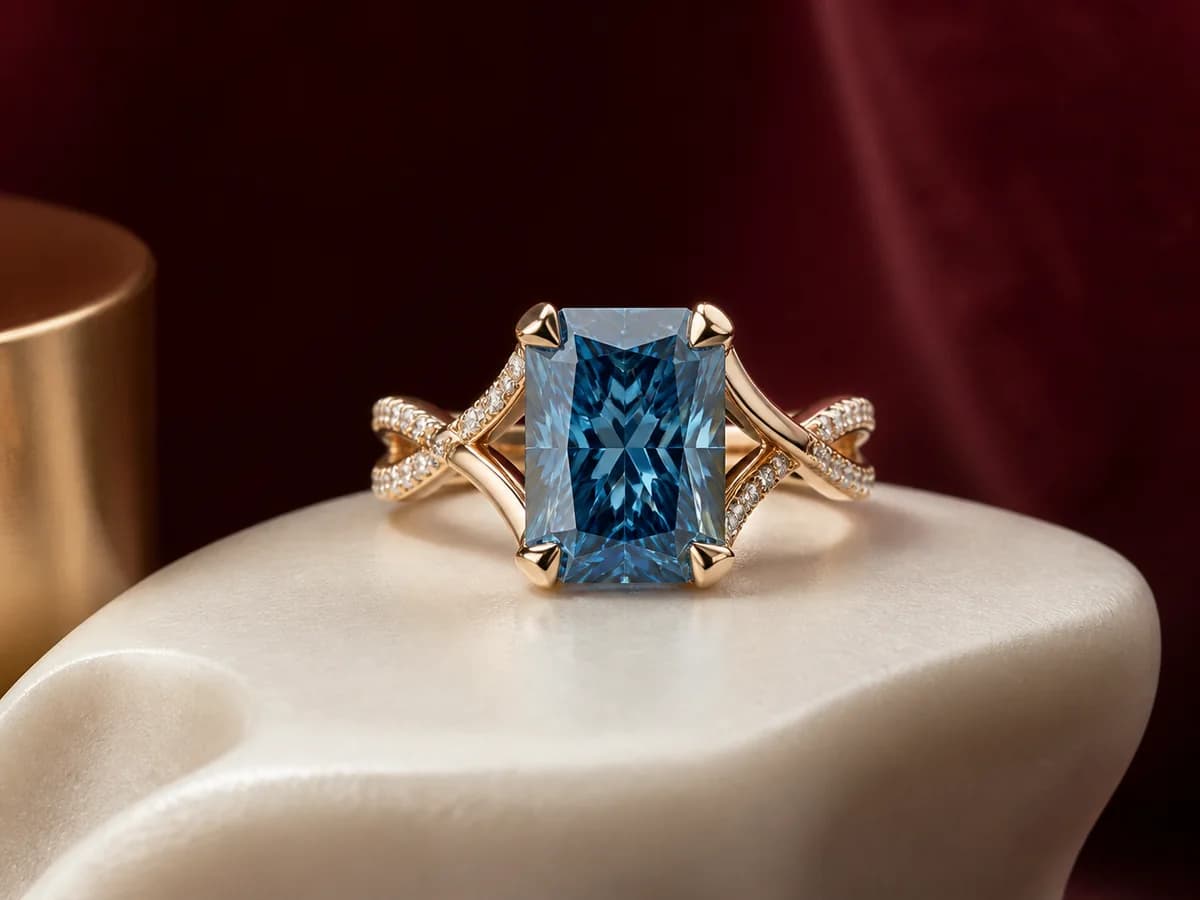
A calm place to begin
Available matches are not showing for this direction right now. You can begin a design brief or return to the stone collection a little later.
Browse the stone collectionDescribe the tone and feeling you want the finished ring to carry.
Decide how the outline, setting, profile, and band should feel together.
Leyloon reviews the details with you before a written quote presents the next choices.
When you are ready
Laboratory-grown diamond · Blue radiant direction
Laboratory-grown diamond direction · not a mined diamond
A blue radiant laboratory-grown diamond direction pairs a cool color story with clipped corners and a mosaic of facets. It is not a mined diamond, an exact stone, or a promise about a report, price, or availability.
Choose whether the blue should feel pale and airy, deeper and dramatic, or visibly contrasted through motion. Then compare compact and elongated outlines while leaving exact color, treatment, measurements, and grading conclusions to the exact report and record.
Three decisions worth slowing down for
These questions help you describe the direction. They do not stand in for an exact stone record, grading report, or setting review.
Blue character
Blue can read differently as tone, saturation, lighting, and surrounding metal change. Name the visual impression you want without inventing a laboratory grade.
Facet rhythm
Radiant facets can form a fine, sparkling mosaic or larger zones of contrast. The most pleasing balance is personal and must be judged on the moving stone.
Architectural frame
A compact frame feels centered; an elongated frame needs a graceful transition into the shoulders. Corner support can be protective and visually quiet or intentionally graphic.
A calm side-by-side check
Use the table as a question list. Leave any unknown detail open until one exact stone and its evidence can answer it.
| Priority | Quiet direction | Bold direction | Exact-stone boundary |
|---|---|---|---|
| Blue impression | Paler or more open color with gentle contrast. | Deeper or more saturated visual presence. | Report wording, treatment findings, and consistent media. |
| Facet pattern | Broader calm zones with measured flashes. | Fine mosaic or stronger bright-dark rhythm. | Movement, lighting, and exact cutting pattern. |
| Outline | Compact radiant with centered balance. | Elongated radiant with a stronger line. | Length, width, depth, and finger context. |
| Setting | Quiet prongs and open sides. | Graphic bezel, halo, or structured shoulders. | Corner support, profile, feasibility, and quote. |
Color and light pattern can interact, but neither a page illustration nor a headline grade replaces viewing the exact stone and its report.
Questions to answer before choosing
No. The product description must clearly identify what the material is. For an exact choice, read the laboratory-grown disclosure, stone record, and report rather than relying on color alone.
Faceting, contrast, lighting, and setting can change the visual impression, but no cutting style guarantees a darker result. Compare the exact stone.
Cool, warm, rose, and mixed-metal directions create different frames. Choose the complete ring mood, then compare it with the exact stone before final review.
No. It records findings within its scope. Appearance, setting fit, feasibility, price, and preference remain separate decisions.
Independent technical sources
These sources support the general education on this page. The exact stone and its issuing laboratory record remain the evidence for an individual choice.